


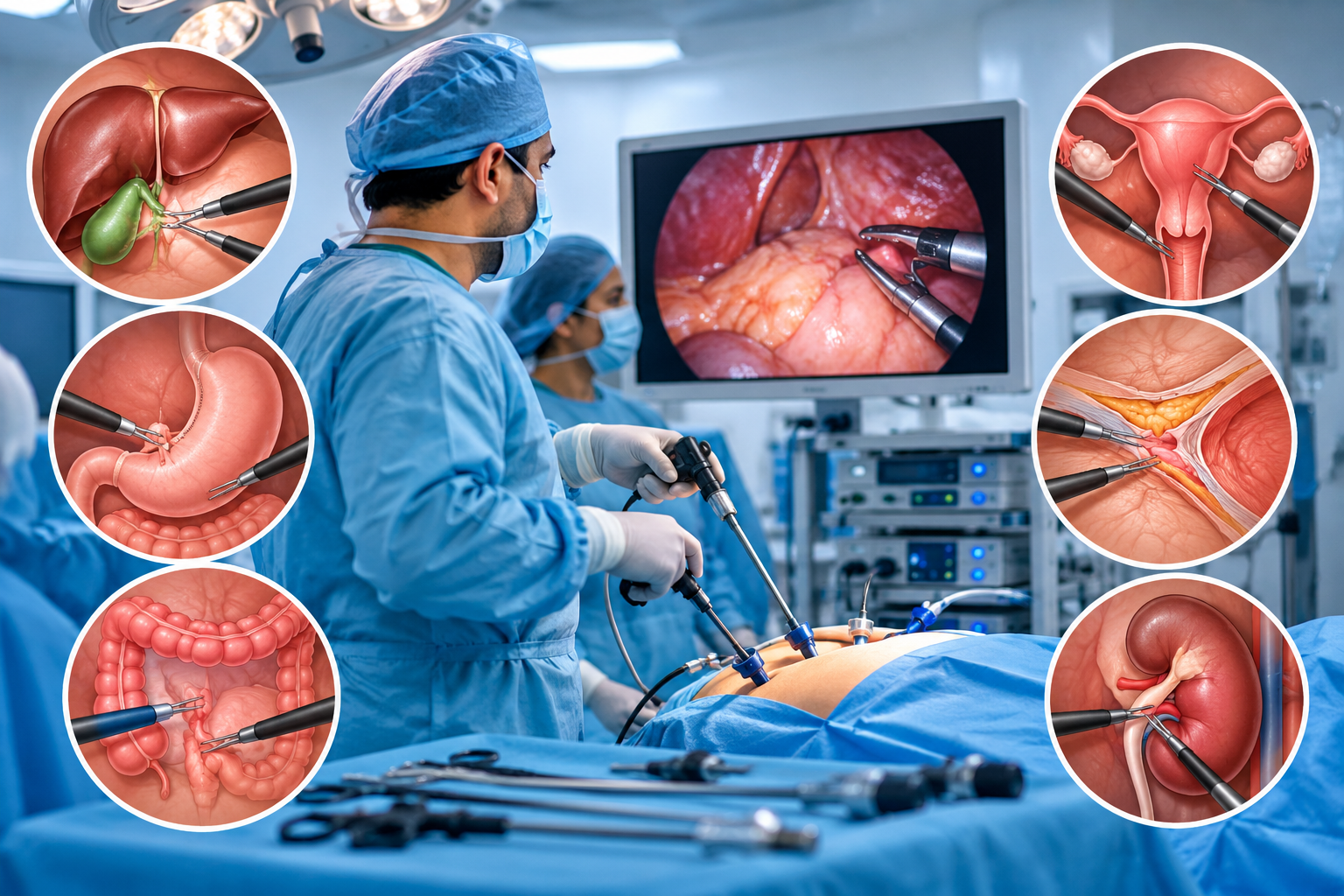

Over the past few decades, advances in surgical technique have made it possible to treat many abdominal and gastrointestinal conditions through small incisions rather than a single large cut. This approach, broadly known as minimally invasive or laparoscopic surgery, has become a routine option for a range of procedures, though it isn’t the right fit for every situation.
Patients often come across the term “keyhole surgery” and wonder whether it applies to their own condition. The honest answer is that it depends — on the specific diagnosis, the patient’s overall health, their anatomy, any previous abdominal surgeries, and the operating surgeon’s clinical assessment. If you’re researching a Laparoscopic Surgeon in Cuttack, this article walks through the types of procedures that may be performed laparoscopically, the conditions they’re commonly used for, and what factors go into deciding whether this approach is appropriate for an individual patient.
What Is Laparoscopic Surgery?
Laparoscopic surgery, often called keyhole surgery or minimally invasive surgery, is performed using a small number of tiny incisions instead of one larger cut. Through these incisions, the surgeon inserts a laparoscope a thin instrument fitted with a camera along with specialized surgical instruments.
The camera projects a magnified view of the internal structures onto a screen, allowing the surgeon to carry out the procedure while viewing the operative area in real time. Many laparoscopic procedures are performed under general anaesthesia, and the small incisions are closed once the operation is complete. It’s important to understand that not every operation can, or should, be performed this way. The decision depends on the nature of the condition being treated and a careful assessment by the surgeon.
What Types of Surgery Can Be Performed Laparoscopically?
Several categories of abdominal and gastrointestinal surgery may be performed laparoscopically, depending on the patient’s specific condition.
1. Gallbladder Surgery :- Removal of the gallbladder is one of the more commonly performed laparoscopic procedures, typically used for symptomatic gallstones and certain other gallbladder conditions.
2. Appendix Surgery :- Laparoscopic appendectomy is one possible surgical approach for appendicitis, depending on the presentation and the surgeon’s assessment.
3. Hernia Surgery:- Certain abdominal or groin hernias may be repaired using laparoscopic or other minimally invasive techniques in selected patients, though the approach depends on the type and location of the hernia.
4. Gastrointestinal Surgery:- Selected procedures involving the stomach, small intestine, colon, or other parts of the digestive tract may be performed laparoscopically, depending on the underlying condition.
5. Colorectal Surgery:- Some colorectal procedures can be carried out laparoscopically, depending on the disease being treated, the patient’s anatomy, and the overall surgical plan.
6. Diagnostic Laparoscopy:- In certain situations, laparoscopy may be used purely for diagnostic purposes — to directly examine abdominal structures when other investigations haven’t provided sufficient clarity.
Not every procedure listed here is appropriate for every patient, and this overview isn’t a recommendation for any individual case. The right approach is determined only after a proper clinical evaluation.
Common Conditions Treated With Laparoscopic Surgery
When clinically appropriate, a laparoscopic approach may be used to treat conditions such as:
- Gallstones and certain gallbladder diseases
- Appendicitis
- Abdominal and groin hernias
- Selected gastrointestinal conditions
- Certain colorectal conditions
- Some abdominal cancers, in carefully selected cases
- Other conditions requiring abdominal surgery
The specific procedure recommended always depends on the underlying diagnosis. It’s worth noting that not all gastrointestinal cancers are suitable for a laparoscopic approach — cancer surgery requires careful case selection and appropriate oncological planning, which may sometimes favour an open surgical approach instead.
When Should You Consult a Laparoscopic Surgeon?
Patients may be referred to, or choose to consult, a laparoscopic surgeon in a number of situations, including:
- Persistent abdominal pain of unclear cause
- Symptomatic gallstones
- Recurrent hernia symptoms
- Appendicitis
- Certain digestive conditions requiring surgical treatment
- A diagnosed condition for which minimally invasive surgery may be an option
- A recommendation for surgical consultation from another doctor
It helps to keep one point in mind: the goal isn’t simply to choose laparoscopic surgery because it sounds less invasive. The goal is to determine the safest and most appropriate surgical approach for that individual patient, based on their diagnosis and circumstances — which may or may not turn out to be a laparoscopic procedure.
How Is Laparoscopic Surgery Planned?
Planning for any surgical procedure, laparoscopic or otherwise, typically starts well before the operating room. It generally includes:
- A detailed medical history
- Physical examination
- Review of current and past symptoms
- Review of any previous treatment
- Blood tests, when appropriate
- Imaging studies such as ultrasound, CT, or MRI where indicated
- Other diagnostic investigations as needed
Based on this information, the surgeon considers the diagnosis, disease severity, the patient’s anatomy, any previous abdominal surgery, overall health, anaesthesia-related factors, and the technical complexity of the procedure. Not every patient requires every test listed the specific work-up is tailored to the individual case.
Benefits and Limitations of Laparoscopic Surgery
Potential benefits, where clinically applicable, can include:
- Smaller incisions in many procedures
- Less disruption to surrounding abdominal tissue in many cases
- Potentially reduced post-operative discomfort for some patients
- Earlier mobility in certain cases
- Shorter hospital stays for certain procedures
- Smaller scarring compared with some open approaches
These outcomes vary by procedure and by patient, and they should not be treated as guaranteed for every case.
Limitations are equally important to understand:
- Laparoscopic surgery is not appropriate for every condition
- It is not appropriate for every patient
- Complex cases may still require open surgery
- Previous abdominal surgery can affect technical feasibility
- Conversion to open surgery may sometimes become necessary during the procedure
- Surgical risks are still present, as with any operation
Laparoscopic surgery is not risk-free, and its suitability is always assessed on an individual basis.
When Is Open Surgery Required?
Open surgery remains an important and, in many cases, necessary surgical approach. A surgeon may recommend open surgery when:
- The condition is complex
- There is extensive disease present
- The patient’s anatomy makes a laparoscopic approach unsuitable
- Significant bleeding occurs during surgery
- Safe laparoscopic access cannot be achieved
- The procedure requires a larger operative field for safe completion
- Conversion from laparoscopic to open surgery becomes necessary mid-procedure
When conversion to open surgery happens during an operation, it typically reflects a safety-driven decision by the surgical team rather than a failure of the procedure.
What to Expect During Recovery
Recovery after laparoscopic or open surgery varies depending on the type of procedure, its complexity, the patient’s overall health, the surgical approach used, and whether any complications occur. General aspects of recovery may include:
- Post-operative monitoring
- Pain management guided by the medical team
- A gradual return to food and fluids
- Early movement, as advised by the surgical team
- Wound care
- Temporary activity restrictions
- Scheduled follow-up appointments
There is no universal recovery timeline. Your treating surgeon will provide individualized post-operative instructions based on your specific procedure and progress.
Choosing a Laparoscopic Surgeon in Cuttack
Patients searching for a Laparoscopic Surgeon in Cuttack are often looking for evaluation and treatment of conditions such as gallstones, appendicitis, hernias, or selected gastrointestinal disorders. considering a laparoscopic surgery specialist can help to think about:
- Relevant surgical qualifications and training
- Experience with the specific procedure being considered
- Whether an appropriate diagnostic evaluation has been carried out
- A clear explanation of both surgical and non-surgical options
- An honest discussion of risks and potential benefits
- Plans for appropriate follow-up care
- Transparent treatment planning overall
Frequently Asked Questions
1. What is Laproscopic Surgery?
Ans :- It’s a minimally invasive surgical technique performed through small incisions using a camera and specialized instruments, instead of one large incision.
2. What types of surgery can be performed laparoscopically?
Ans :- Common examples include gallbladder removal, appendectomy, selected hernia repairs, and certain gastrointestinal and colorectal procedures, depending on the individual case.
3. Is laparoscopic surgery suitable for everyone?
Ans :- No. Suitability depends on the diagnosis, disease severity, patient anatomy, overall health, and prior surgical history.
4. Is laparoscopic surgery less painful than open surgery?
Ans :- Many patients experience less post-operative discomfort with laparoscopic procedures, but this varies by individual and by the specific operation performed.
5. How long does recovery after laparoscopic surgery take?
Ans :- Recovery time varies widely depending on the procedure and the patient. Your surgeon can give you an individualized estimate.
6. Can cancer surgery be performed laparoscopically?
Ans :- In select, carefully evaluated cases, yes. However, not all gastrointestinal cancers are suitable for a laparoscopic approach, and treatment planning must follow appropriate oncological principles.
7. When is open surgery necessary?
Ans :- Open surgery may be required for complex or extensive disease, certain anatomical factors, or when safe laparoscopic access cannot be achieved.
8. How do I choose a laparoscopic surgeon in Cuttack?
Ans :- Consider the surgeon’s relevant qualifications, experience with your specific condition, and whether they provide a clear, transparent explanation of your treatment options.
Conclusion
Laparoscopic surgery is a well-established, minimally invasive approach used for a range of abdominal and gastrointestinal conditions, though it isn’t the right choice for every patient or every condition. Whether it’s appropriate for you depends on your diagnosis, individual health factors, disease severity, anatomy, and the complexity of the surgery involved all of which your surgeon will assess. If you’ve been advised to consider surgery, or are researching a Laparoscopic Surgeon in Cuttack, a proper consultation is the best way to understand which surgical approach genuinely fits your situation.
About Dr. Harish Chandra Mishra Laparoscopic, Cancer & GI Surgeon in Cuttack, Odisha

Dr. Harish Chandra Mishra is a laparoscopic, cancer, and gastrointestinal surgeon in Cuttack, Odisha, focused on the evaluation and surgical management of abdominal and gastrointestinal conditions, including procedures performed using minimally invasive techniques.
If you have been diagnosed with a condition that may require surgery, a professional consultation can help you understand your treatment options and whether a laparoscopic approach may be appropriate for your individual case. Reach out to Dr. Harish Chandra Mishra’s clinic to schedule a consultation.
Visit Life Institute of Gastroenterology and Gynecology | Best 24/7 Surgical Hospital.
Address :- Potapokhari, Block Chhaka, Naya Bazaar, Kataka, Odisha 753004.

