


What is Jaundice?
What Causes Yellow Discoloration of Skin and Eye in Jaundice?
- The word “Jaune” comes from the French word jaune, which means yellow. Jaundice is a yellow discoloration of the skin, conjunctiva, sclera, mucous membrane, and urine. This yellow discoloration is due to a build-up of a chemical called bilirubin in the tissues of the body (typically detected clinically once serum Bilirubin levels rise above 2mg/dl).
- Normal Bilirubin metabolism: There are millions of red blood cells in your bloodstream. Each blood cell lasts for about 120 days and is then broken down by cells in the body into various waste chemicals. The hemoglobin ( function to to carry oxygen) within old and damaged red blood cells breaks down into bilirubin and is carried within blood bloodstream as unconjugated bilirubin (attached to albumin).
- The liver cells (Hepatocytes) take up this bilirubin and convert this to water-soluble bilirubin Glucoronate (called conjugated bilirubin). The liver cells pass out this into tiny tubes called bile ducts. The bilirubin is therefore now part of bile. Bile is a mix of various waste chemicals passed out by the liver cells. They join together (like branches of a tree) to form the larger common bile duct that finally drains at the ampulla (after joining the pancreatic duct) into the gut at 2 and part of the duodenum. Jaundice is caused by several illnesses involving liver and blood and is a sign of blood or liver diseases.
- The human body goes through normal wear and tear of cells and tissue. The liver is a detoxifying organ. Functions of the liver include: Metabolism- The liver detoxifies and metabolizes fat, carbohydrates, protein, medication, and chemicals. Excretion- Metabolite product, bilirubin, cholesterol, and hormone. Enzyme activation- The liver activates several enzymes. Glycogen Storage-Liver stores glucose as glycogen. Glucose is converted to glycogen. Glycogen to Glucose- The liver converts stored glycogen back to glucose when the body needs to produce more energy to support activities. Storage of Vitamins and Minerals- organs- Liver stores and activates vitamins and minerals. Synthesis of Plasma Protein and Clotting Factor- Liver produces plasma protein and clotting factors.
Jaundice is caused by excessive Bilirubin Levels due to :
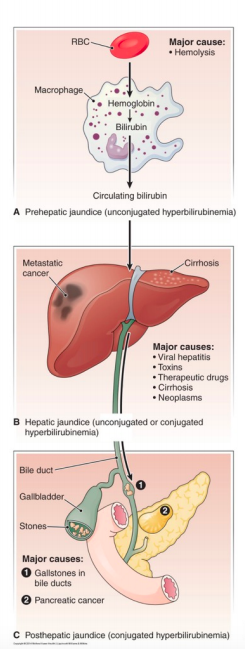
- Hemolysis – Excessive breakdown of RBS produces a lot more bilirubin than the liver can metabolize.
- Liver Disease- Causes decreased number of functional liver cells. The liver is unable to remove all normal secreted amounts of bilirubin. That results in increased bilirubin blood level.
- Gall Bladder Disease and Bile Duct Obstruction- The Liver is unable to discard bilirubin in bile.
What is the Function Of the Liver?
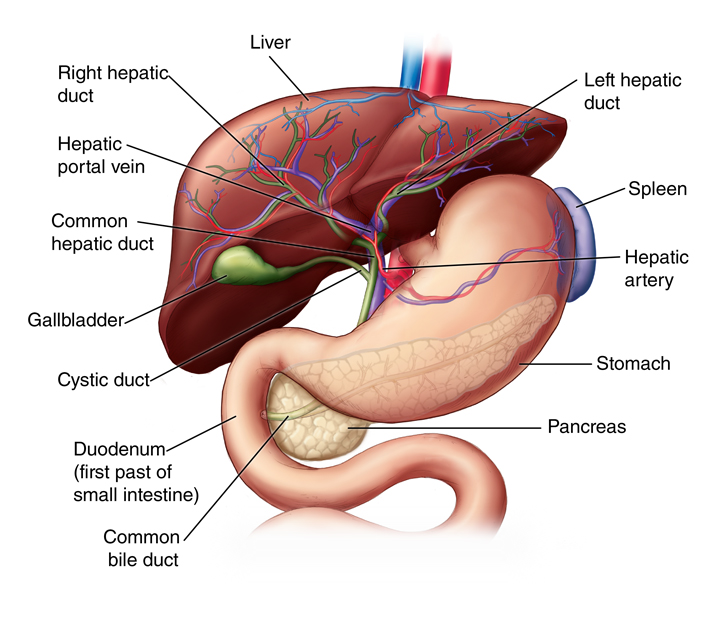
The human body goes through normal wear and tear of cells and tissue. The liver is a detoxifying organ. Functions of the liver include:
- Metabolism- The liver detoxifies and metabolizes fat, carbohydrates, protein, medication, and chemicals.
- Excretion- Metabolite product, bilirubin, cholesterol, and hormone.
- Enzyme activation- The liver activates several enzymes.
- Glycogen Storage-Liver stores glucose as glycogen. Glucose is converted to glycogen.
- Glycogen to Glucose- The liver converts stored glycogen back to glucose when the body needs to produce more energy to support activities.
- Storage of Vitamins and Minerals- organs- Liver stores and activates vitamins and minerals.
- Synthesis of Plasma Protein and Clotting Factor- Liver produces plasma protein and clotting factors.
What are the causes of jaundice?
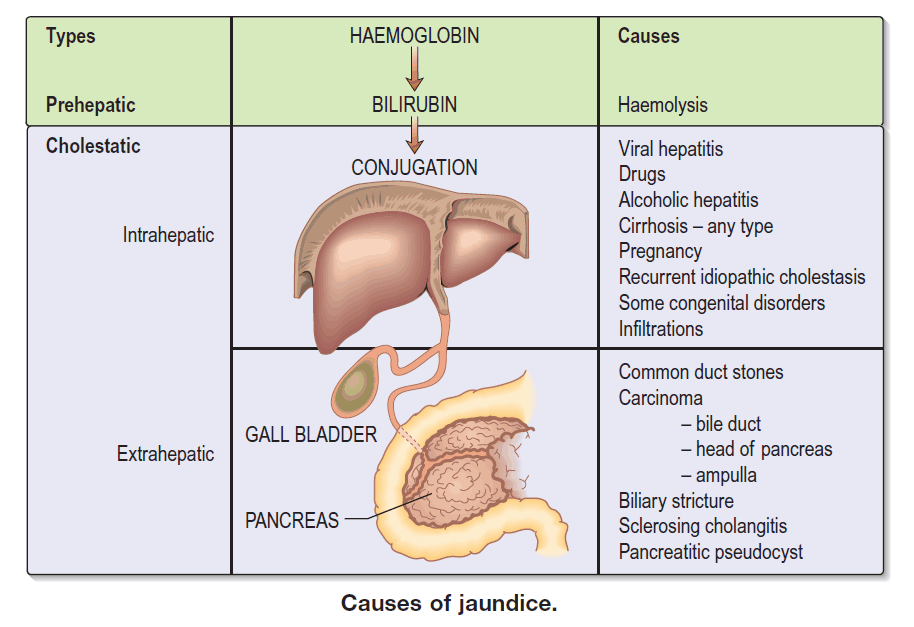
Conditions affecting the red blood cells :
- Genetic diseases – sickle cell anemia, thalassemia, spherocytosis, and glucose 6- phosphate dehydrogenase deficiency.
- Hemolytic uraemic syndrome.
- Malaria.
Conditions affecting the liver cells :
- Hepatitis – (means inflammation of the liver). Many causes such as Infection with one of the hepatitis viruses (A, B, C, D, and E, etc), infections with germs (bacterial infections), Inflammation by poisons or as a side-effect of some medicines, Alcoholic hepatitis, and Autoimmune hepatitis.
- Cirrhosis – (where normal liver tissue is replaced by scar tissue by fibrosis). It tends to progress slowly and often does not cause symptoms in its early stages. However, as the function of the liver gradually becomes worse, serious problems can develop and jaundice may occur.
- Inherited (hereditary) defects in the enzymes that process bilirubin – Gilbert’s syndrome, Dubin-Johnson syndrome, Crigler-Najjar syndrome, and Rotor’s syndrome.
Conditions affecting the tiny bile ducts :
- primary biliary cirrhosis,
- primary sclerosing cholangitis.
- Drug-induced – side-effect of some medicine.
Conditions affecting the common bile duct (sometimes called obstructive jaundice
or posthepatic jaundice) :
- Gall stones – with Mirrizzi syndrome or CBD stones.
- Pancreatic cancer in the head of the pancreas or periampullary cancer.
- Pancreatitis – (Inflammation of the pancreas) – Acute and Chronic Pancreatitis.
- Biliary atresia, Biliary stricture, Choledochal cyst.
- Cancer of the gallbladder or bile duct (Cholangiocarcinoma).
What symptoms are seen in patients with Jaundice?
- Initially, yellow discoloration starts in the eyes, as the bilirubin level
increases, the skin, and other parts also become yellow. - Other symptoms associated with jaundice (depend on the
cause)include - excessive tiredness (fatigue),
- tummy (abdominal) pain,
- weight loss,
- being sick (vomiting),
- high temperature (fever),
- pale stools (feces) / steatorrhoea
- Itching (Pruritus),
- Loss of appetite and loss of weight
- Dark or deep yellow urine (progressively increasing).
Jaundice in newborn babies (neonatal jaundice) :

Neonatal jaundice is a common type of jaundice that happens to newborn babies. Types of neonatal jaundice include:
- Physiological jaundice: This happens because the liver isn’t fully formed yet. It is common for newborn babies to develop mild jaundice when they are 2-3 days old. It is due to a mild increase in the breakdown of red blood cells combined with a liver that is not quite fully functioning. The liver soon matures and the jaundice begins to disappear towards the end of the first week and has gone by day 10. The baby is well and has no other problems.
- Prematurity: This results in a baby being born too early and being unable to poop out bilirubin properly.
- Breastfeeding or Breast milk jaundice: occurs from a baby having trouble breastfeeding or not getting enough breast milk.
- Incompatible blood type: This results from a baby and mother having different blood types, which can cause the mother to make antibodies that break down her baby’s red blood cells.
- Other causes: The are various other causes of jaundice in newborn babies. Some are due to serious diseases of the blood or liver or to other problems. As a rule, the jaundice is not likely to be physiological jaundice if the baby is unwell and/or the jaundice is present in the first 24 hours after birth or lasts for more than 10 days.
- Neonatal jaundice isn’t usually a cause for concern. But if bilirubin builds up to extremely high levels, your child can experience brain damage (known as kernicterus) from bilirubin getting into brain tissue.
- Seek emergency medical attention if you notice that your child has any of the following symptoms:
- long periods of high-pitched crying
- arching of their neck and back
- fever
- throwing up
- having trouble feeding
How to treat Jaundice?
- There is no specific treatment for jaundice in children and adults. Treatment depends on the cause. See individual leaflets on the various diseases that can cause jaundice.
- Itching if bothersome may be relived by cholestyramine (which is also ineffective in patients with complete biliary obstruction)
- Local health tradition (LHT) is often associated with lengthy and mystic rituals, in addition to prescription drugs ( Pastes, powders, oils, ashen materials, etc.). Locally available natural materials are used for the preparation of drugs, which are not commercially made and marketed (Ayurvedic or Unani). The most common local medicinal plants used in the treatment of Jaundice are Kardoi, Simolu, Bar Jamu, Jam Lakhuti, Dhan, Anarash, and Bala. Another method used is the “Necklace of beads”. All such methods are found successful in cases of self-limiting diseases like Viral hepatitis (The benefit is mainly due to advice of associated dietary restriction).
- However such methods are detrimental to be used in cases associated with Extra-hepatic biliary obstruction like Bile duct stones and pancreatic or periampullary cancers, where usually such patients present in late-stage resulting in poor long-term results and higher mortality.

What to investigate patients with jaundice?
- There are various causes of jaundice, some are more common than others and some are more serious than others. It is vital to obtain the correct diagnosis, as the treatment and outlook (prognosis) can vary greatly, depending on the cause. However, sometimes, finding the cause can be a bit of a detective process and is not always easy or straightforward.
- Past Medical History: History of past hepatobiliary disorders, drug history (eg. ATT, etc.), H/O vaccination, Hemolytic anemia, infiltrative disorders, Surgical history, social (IV drug abuse & sexual history), and family history are important and help in evaluating the cause of jaundice.
- Physical Examination: Vital signs (Hypotension/tachycardia), General Appearance
(cachexia, lethargic), Head & Neck- Eye – yellow discoloration and KF ring, Abdomen –
Collateral vessels, ascites (shifting dullness, fluid thrill), surgical scar, Hepatomegaly and splenomegaly, and in men to look for Testicular atrophy and gynecomastia. Upper limb – look for asterixis, skin changes – palmar erythema, hyperpigmentation, petechial spots, and purpura, Neurological examination – mental status assessment. - Various blood tests are usually done:
- Liver Function test (LFT) : (A) Increased indirect bilirubin with normal aminotransferase and Alkaline phosphatase indicates a hemolytic cause. (B) Increased direct Bilirubin (indicates conjugate hyper-bilirubinemia) with Increased aminotransferase (SGOT/SGPT) – indicates hepatocellular damage and (C) raised Alkaline phosphatase (ALP / or GGT) suggests biliary obstruction or intrahepatic cholestasis as the cause of jaundice. This can help to narrow down the possible causes of jaundice.
- Prothrombin time with INR – detects coagulopathy and need for Fresh plasma transfusion and Vit K Injection. Serological markers for different Hepatitis viruses
- Measurement for Antimitochondrial antibodies ( for primary billiary cirrhosis) and markers of Autoimmune hepatitis auto antibodies ( ANA, Anti-SMA, LKM ).
- Various other more detailed blood tests may be needed (Serum ceruloplasmin and copper for Wilson’s disease).
- Urine tests may help to show if the levels of various chemicals in the blood are raised. This can help to narrow down the possible causes of jaundice.
- Ultrasound of the abdomen and pelvis: to look for the liver, common bile duct, and pancreas may identify a cause ( Particularly can identify the cause of any blockage to the bile duct).
- MRCP & ERCP – help in determining the cause of extrahepatic biliary obstruction.
- Liver biopsy – Not commonly required, but can help in the diagnosis of Auto-immune hepatitis or biliary tract disorders (e.g. Primary biliary cirrhosis, primary sclerosing cholangitis).
- Upper GI Endoscopy – Helps to evidence of chronic liver failure (like varices, PHG)
Diet for Jaundice: What Should I Add or Remove?
What your diet should include:
- Your liver processes everything you eat and drink. It helps your body take in nutrients from food and turn them into energy. Your liver also moves toxins and old, damaged blood cells out of the body. When this process is disrupted, it can cause the waste product bilirubin to build up. This can result in jaundice.
- Eating a healthy diet allows your liver to work more efficiently and clear excess toxins from your body. Some certain foods and beverages have a proven effect on liver health. This includes:
- Water: Drinking at least eight glasses of water a day helps your liver flush out toxins. It also supports a healthy weight and thins the blood, making it easier for your liver to filter.
- Coffee or herbal tea: Moderate coffee consumption improves liver health by reducing: your risk of cirrhosis, levels of harmful liver enzymes, and inflammation. It can also increase your antioxidant levels, which helps clear toxins from the body.
- Milk thistle: Not only is the herb milk thistle high in antioxidants, but it also contains silymarin. Silymarin helps repair damaged liver cells. To reap these benefits, add milk thistle leaves to your salad, roast its seeds for a midday snack, or prepare a fresh herbal tea. Although milk thistle is generally safe to use, you should check with your doctor before use if you: are pregnant, breastfeeding, have a hormone-specific cancer, or taking prescription medications
- Digestive enzymes: Naturally occurring digestive enzymes may help reduce bilirubin. You can find digestive enzymes in honey, orange peels, pineapple, papaya, and mango.
- Fruits and vegetables: Although fruits containing digestive enzymes are best, eating a variety is key. It is recommended to eat at least 2 1/2 cups of vegetables and 2 cups of fruit every day. Good choices for liver health include grapefruit, avocado, Brussels sprouts, grapes, and mustard greens.
- Fiber: Especially soluble fiber — helps move bile out of the liver. This can reduce toxicity. This is found in a variety of foods, including fruits, vegetables, legumes, nuts, and whole grains. High-fiber foods include cruciferous vegetables, such as kale and broccoli, berries, oatmeal, almonds, brown rice, and quinoa. Try to eat one or more servings of high-fiber food at each meal.
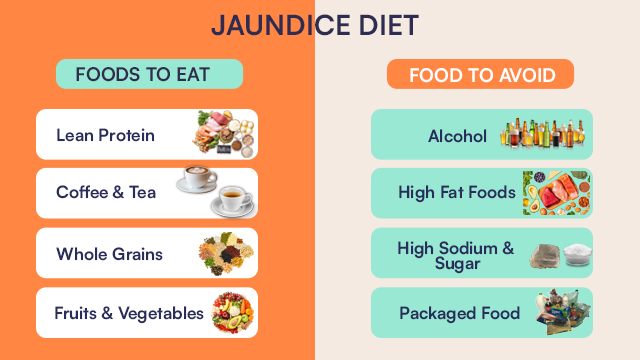
Diet for Jaundice: What Should I Add or Remove?
What you should cut back on or avoid?
Quick tips :
- Alcohol can cause additional damage to your liver, so it’s best to avoid it completely.
- Opt for lean proteins, such as fish, which are less likely to contribute to liver damage.
- Saturated fats, like those found in meat, are also harder for your liver to process.
- Unsaturated fats, such as olive oil, can be used in moderation.
- Refined sugar can cause fat buildup in your liver, so opt for foods containing natural sugars. Use agave as a sweetener and look to fruits to satisfy your sweet tooth.
- Reduce your sodium intake by avoiding canned and processed foods.
It’s important to avoid or limit eating or drinking things that can
cause additional damage to your liver. This includes:
- Iron: Too much iron can cause liver scarring (cirrhosis). Protein is a good source of iron, so get to know the appropriate amount for you when trying to decrease liver issues. Always opt for lean proteins, such as fish and chicken, instead of beef or pork.
- Fat: High-fat and fried foods should be eaten in moderation or eliminated completely, as they can cause fat buildup in the liver. Saturated fats, like those in meat and dairy, may be harder for your liver to process than unsaturated fats. Although unsaturated fats, such as olive oil, are considered healthy, they should still be eaten in moderation. Current research suggests that unsaturated fats may still contribute to fatty liver disease.
- Sugar: Refined sugar, high-fructose corn syrup, and other forms of processed sugar can also cause fat buildup in the liver. Many processed foods that are high in sugar are also high in fat, doubling the risk of damage. Try reaching for a piece of fruit or low-fat, low-sugar yogurt the next time you get a sweet tooth. Along with refined sugar, limiting artificial sweeteners is a good idea as well as these can cause extra work for the liver to process.
- Salt: A diet high in salt may also contribute to liver damage and water retention. Eliminating processed and canned foods can be an easy way to reduce your sodium intake. Instead of reaching for the salt shaker, try using herbs like garlic powder, onion powder, or oregano to add flavor to your dish.
Three types of jaundice
Tips and tricks for healthy eating during Jaundice :
Some general rules of thumb include:
- Eat small, frequent meals, rather than three large ones.
- Sip/drink water throughout the day.
- Don’t use sugar in coffee or tea.
- Substitute whole milk and cream with low-fat varieties.
Instead of using table salt, experiment with different flavorings - (like spices, extracts, and lemon or lime juice).
Replace alcoholic beverages with low-calorie mocktails.
If you need any kind of consultancy talk to us.

