


What is cancer ?
- Cancer is a term used to describe a group of illnesses all having certain common characteristics i.e. an over-growth of cells that form a tumour.
What is common in all cancers – is a lack of normal cell growth.
- Cancer comes in many shapes and sizes, and how it affects the body varies greatly.
What does a tumor do?
Tumors cause medical problems in two ways :
- Directly, by pressing on and damaging nearby organs.
- Indirectly, by breaking off and invading other distant tissues
and organs.
How do cells work ?
- Cell multiplication is normal. We all start life as just one single cell, the ovum, which is fertilized by sperm and begins to multiply, producing more cells.
- These cells grow and mature to become nerve cells, muscles, blood cells, or connective tissue (e.g. skin).
- Groups of these different types of cells then come together to form our organs (eyes, ears, legs, lungs, skin, etc). Each of our organs is made up of many different types of cells and each cell has a particular function within that organ; the cells work in cooperation with each other to make the organ work effectively.
- In the heart, for example, specific cells called cardiac muscle cells pump blood. However, nerve cells are also located in the heart. These cardiac nerve cells are needed to conduct the electrical signals to produce each contraction.
- Therefore, many different types of cells must work in cooperation with each other
in order for an organ to work effectively. - Normal cell growth & repair: Occasionally, cells within an organ die off or wear out and new cells then replace them. This growth of new cells is a highly complex, tightly regulated process.
How does cancer progress?
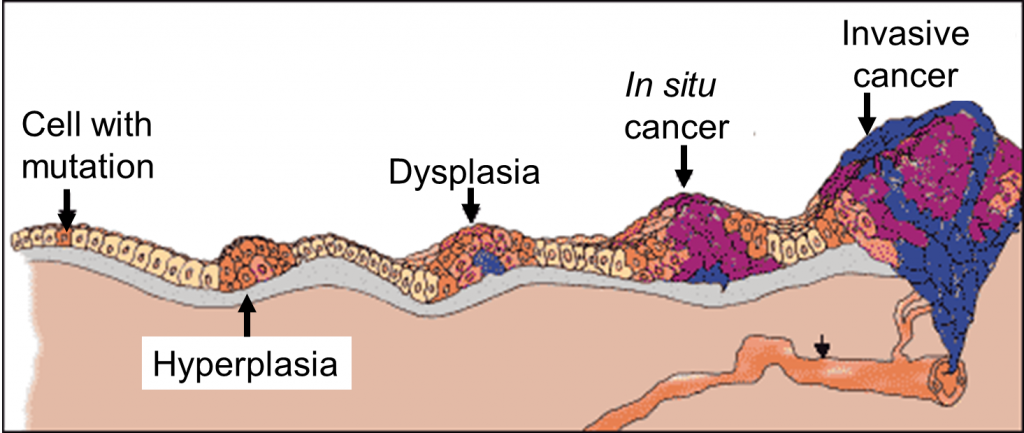
Tumors :
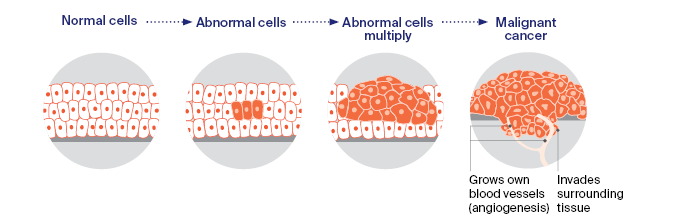
- With cancer – the growth of new cells becomes faulty. When a cancer cell begins to grow, rather than just replacing the cells that have been damaged or lost, it multiplies out of control, taking over the organ.
- Cancer cell grows so much it forms a mass of cells called a tumor.
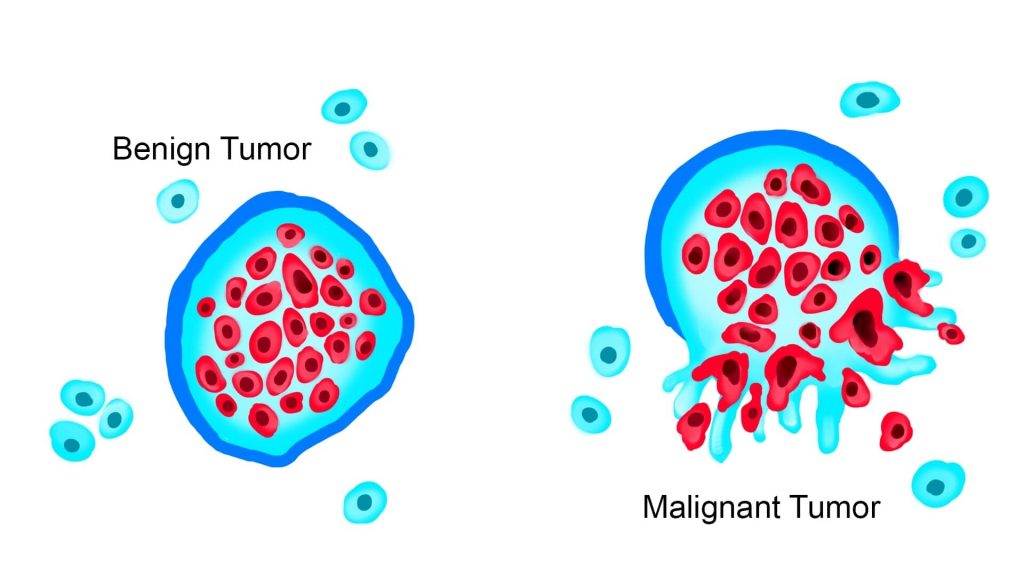
Benign tumors :
- Cells – Normal, non-cancerous,
- Well encapsulated
- Slow growing
- Noninvasive (does not spread)
- Problems in organs where they occur
- May be removed surgically or treated with drugs and/or radiation to reduce their size, which usually cures the disease.
Malignant tumors
- Cells –large dark nuclei, abnormal shape, cancerous cells (atypical)
- Encapsulated
- Fast growing
Invasive / metastasize (spread ) in 3 ways :
1. Direct extension – into nearby organs.
2. Lymphatic system – Enter lymph canals.
3. Bloodstream – to distant organs
What are the different types of cancer?
Carcinoma :
- Carcinomas are malignant tumors that grow from cells lining the internal or external surfaces of the body.
- For example, a cancer of the lining of the stomach is called a carcinoma, as is cancer arising from cells lining the breast ducts.
- These are often just called cancers.
Sarcoma :
- Sarcomas are malignant tumors that arise out of cells in the supporting structures of the body (e.g. bone, muscle, and cartilage).
Blood cancers :
- Not all abnormal cells cause a lump (tumor).
- With blood cancers like leukemia, lymphoma, and myeloma abnormal blood cells build up in the bone marrow or blood. This can affect the way your body normally works and cause symptoms.
What are different Carcinogens (cancer-causing factors)?
- Everyone is born with a risk that they could get cancer at some stage in their life.
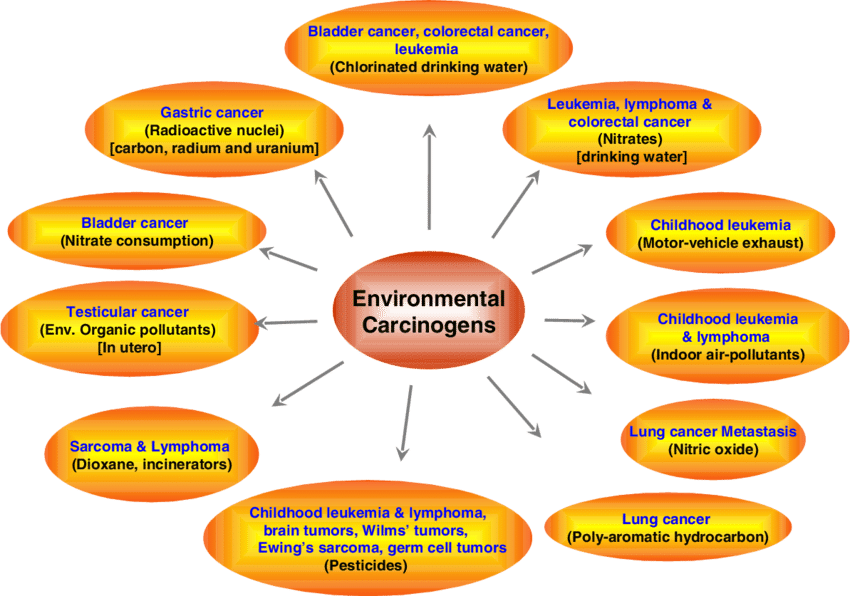
What causes cancer?
Physical mutagens of DNA can be caused by :
- Ionizing radiation: cosmic rays, radiation used in medical treatment, and radon gas.
- Ultraviolet (UV) radiation: From the sun, sunbeds, or electric welding torches.
- Mineral fibers: Asbestos – stimulates immune-mediated damage, giving rise to
cancer lungs. - Chemical mutagens: Benzopyrene (found in cigarette smoke), alcohol, vinyl chloride (used for making plastics), aflatoxin (found in certain molds), and heterocyclic amines (found in over-cooked foods).
Biological mutagens (may be viral or bacterial) :
- About 1 in 5 of all cancers worldwide are caused by microbes (viruses or bacteria).
Viruses that can be a risk factor for different cancers include :
- Human papillomavirus (HPV) – causes cervical and many other types of cancer.
- Ebstein-Barr virus – some types of lymphoma.
- Hepatitis B virus – Liver cancers.
- Helicobacter pylori – many stomach cancers.
10 early warning signs you cannot ignore :
- New lumps or growths on your skin.
- A sore or bruise that does not heal.
- A mole that changes in shape, size, or color or bleeds in unusual circumstances.
- An ongoing cough or hoarseness that lasts longer than three weeks.
- Indigestion or difficulty in swallowing.
- A change in bowel or bladder habits for no good reason.
- Shortness of breath.
- Loss of appetite.
- Unexplained weight loss or tiredness.
- Blood anywhere it normally should not be – in urine, bowel motions, or from spitting.
Spot cancer early (Know the signs of cancer)
- You are more likely to survive cancer if you spot it at an early stage.
- Take time today to check your body for changes that could be cancer and talk to your doctor if you notice anything unusual.
Unexplained changes :
- lump or swelling -Check your whole body, not just your testicles or breasts.
- Bleeding that is not normal for you – Blood in cough, Blood in stool/urine,
menorrhagia, etc. - Weight loss – 10% in six months (Big weight loss, not related to dieting).
- Pain that does not go away (> 4 weeks that you cannot explain).
Persistent changes :
- A cough, changes in your voice, or feeling short of breath ( if any of these problems for
- A sore that does not heal. If a spot, wart or sore does not heal in a few weeks (even if it is painless).
- Difficulty swallowing, indigestion or heartburn. ( happens a lot or is very painful)
- Bloating – If does not go away within a few weeks.
- Mouth or tongue ulcer. – For > 3 weeks is not normal.
- You are more likely to survive cancer if you spot it at an early stage.
Unusual changes :
- A new mole or change to an existing mole. Get into the habit of checking your skin every month for new moles. Also watch for changes in the color, shape, and size of existing moles.
- A change in your bowel or bladder habits. If you
have constipation, diarrhoea or problems passing
urine for more than a few weeks, talk to your
doctor. - Any change in your breast. Get into the habit of
looking at and feeling your breasts for changes in
shape, size, nipples, and skin. Also, watch for
pain in one breast. - “If you notice any other unusual change in how your body works, talk to your doctor. The chances are it will not be cancer. But getting it checked is not wasting anyone’s time. It could save your life.”
Does cancer run in families?
- Sporadic Cancer (60-85% of all cancers) happens by chance in one or two related
family members, typically at older ages. - Familial Cancer (10-30% of all cancers): A clustering of cancer in a family that may
be due to genes and or other shared factors, such as environment and lifestyle. - Hereditary Cancer (5-10% of all cancers): A clustering of cancer in a family due to
inherited gene changes (mutations), which can be passed from parent to child.
Who is suitable for genetic analysis for hereditary cancers?
Cancers diagnosed with younger than average age :
- Breast cancer < 50 years
- Colon cancer < 50years
Multiple family members with similar or related cancers :
- Breast and ovarian
- Colon and Uterine
- Melanoma and pancreatic
- Rare cancers – male breast cancer, Triple negative Ca Breast (<60yrs)
- Multiple generations affected with related cancers
- People diagnosed with cancer > once
- Ashkenazi Jewish (AJ) ancestry with breast or ovarian cancer
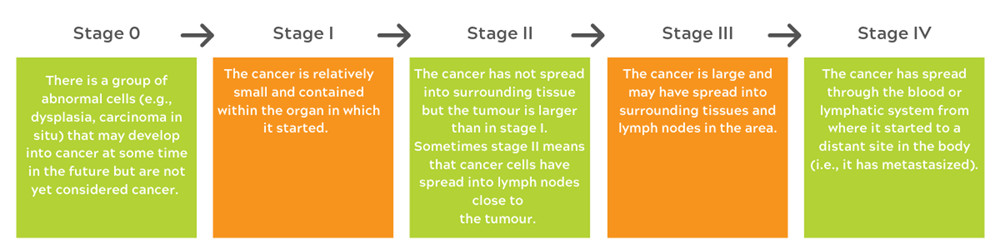
How does cancer progress?
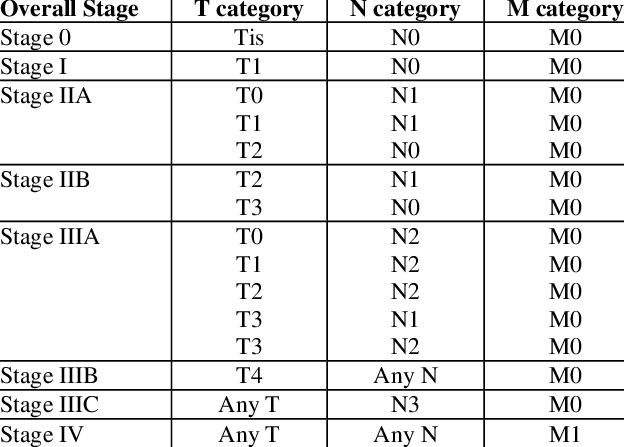
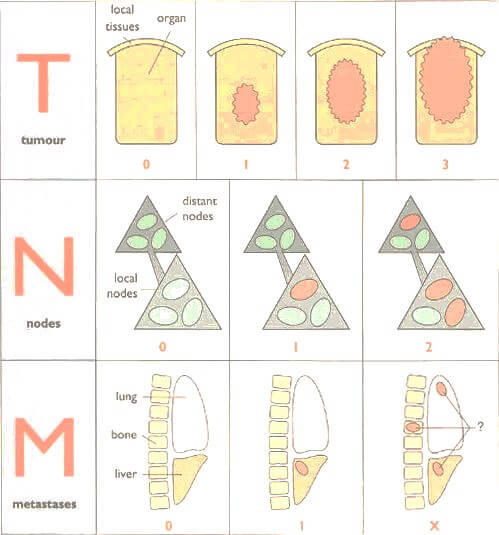
T – Tumor stage –
Local spread by tumor
N – Nodal involvement –
Local / Regional
M- Metastasis –
present/absent
How is cancer treated?
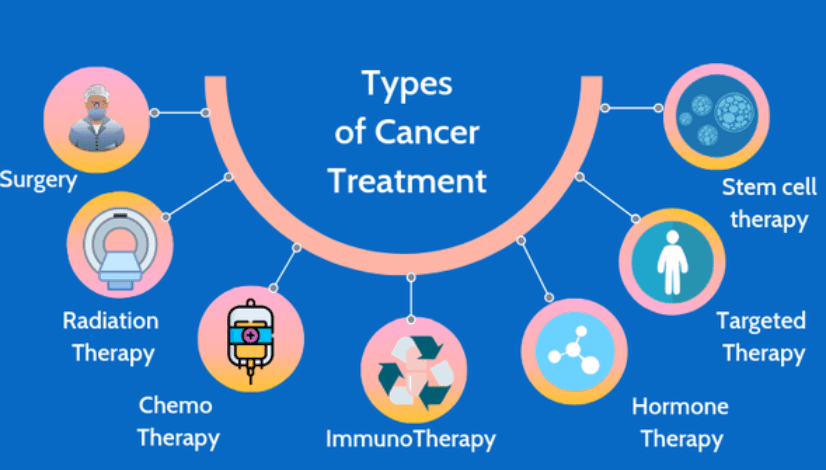
Factors deciding the mode of treatment:
- How large the cancer is.
- Whether it has spread (stage)
- Your general health – CVS, co-morbidities
- Nutritional status
Have a full discussion with a specialist
- Pros and cons
- Likely success rate
- Possible side-effects
- Other possible treatment options
Aims of treatment :
- Aim to cure the cancer (Curative) – early stages of the disease ( Remission means there is no evidence of cancer following treatment. If you are in remission, you may be cured. However, in some cases, cancer returns months or years later. This is why doctors are sometimes reluctant to use the word cured.) – with surgery/ Surgery+Chemotherapy.
- Aim to control the cancer – limit the growth or spread of the cancer so that it progresses less rapidly. This may keep you free of symptoms for some time.
- Aim to ease symptoms (Palliative)- If a cure is not possible, treatments may be used to
- reduce the size of the cancer, which may ease symptoms such as pain. If the cancer is advanced, you may require treatments such as Food supplements, Painkillers, and Appetizers.
Is my cancer curable?
- There are many different types of cells in the body and many different types of cancer arise from different types of cells.
- Some grow and spread more quickly than others. Some are easier to treat than others, particularly if diagnosed at an early stage.
- Some respond much better than others to chemotherapy, radiotherapy or other treatments, while some have a better outlook(prognosis) than others.
- For some types of cancer, there is a very good chance of being cured. For some types of cancer, the outlook is poor. So, cancer is not just one condition.
- In each case, it is important to know exactly what type of cancer has developed, how large it has become, whether it has spread, and how well the particular type of cancer responds to various treatments.
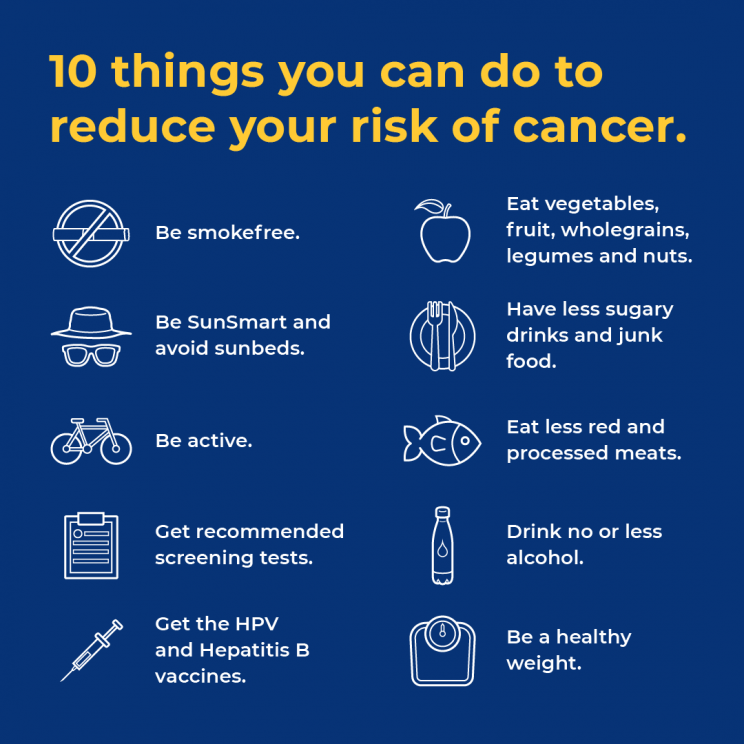
Can I stop cancer from developing?
If you need any consultancy talk to us

