


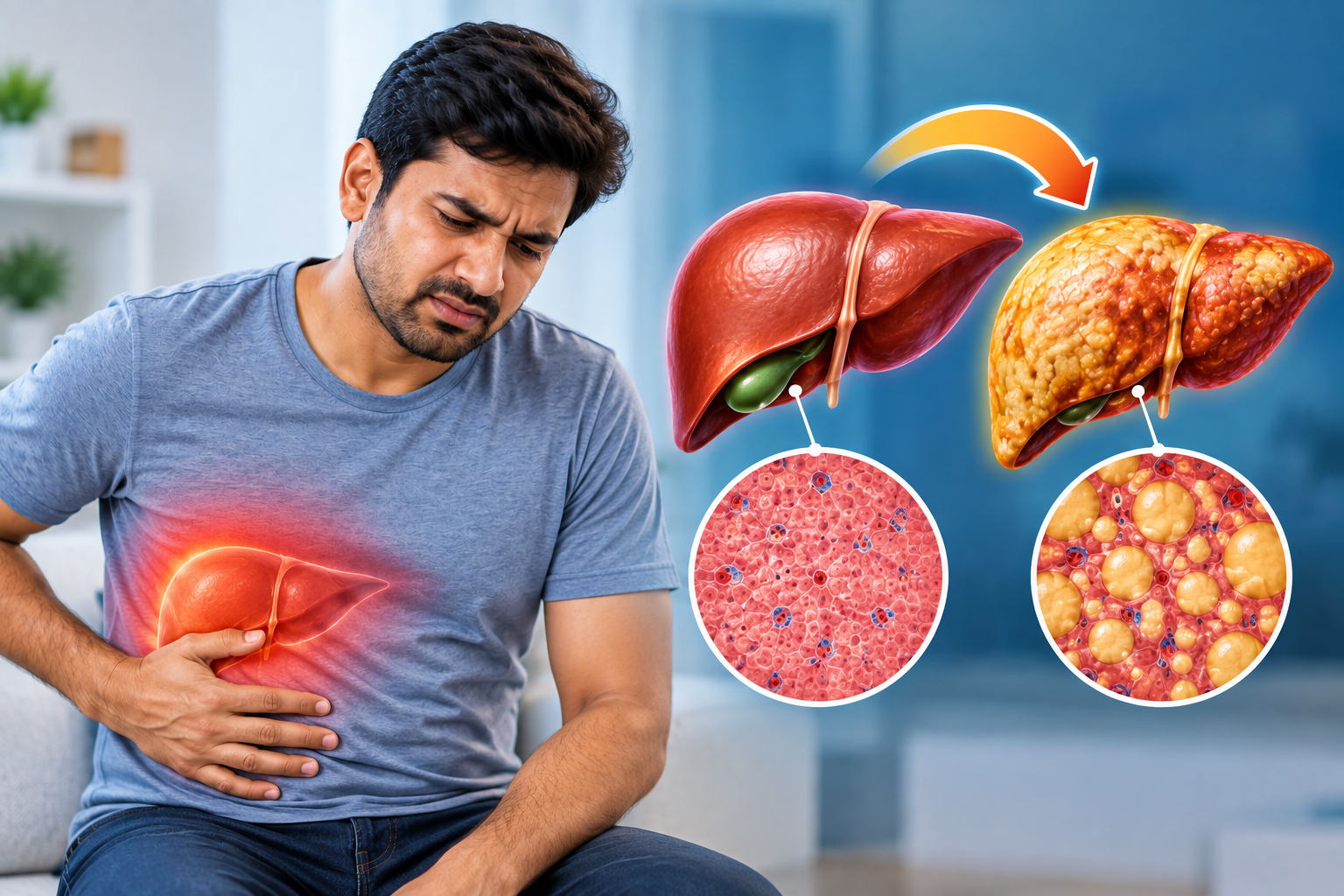

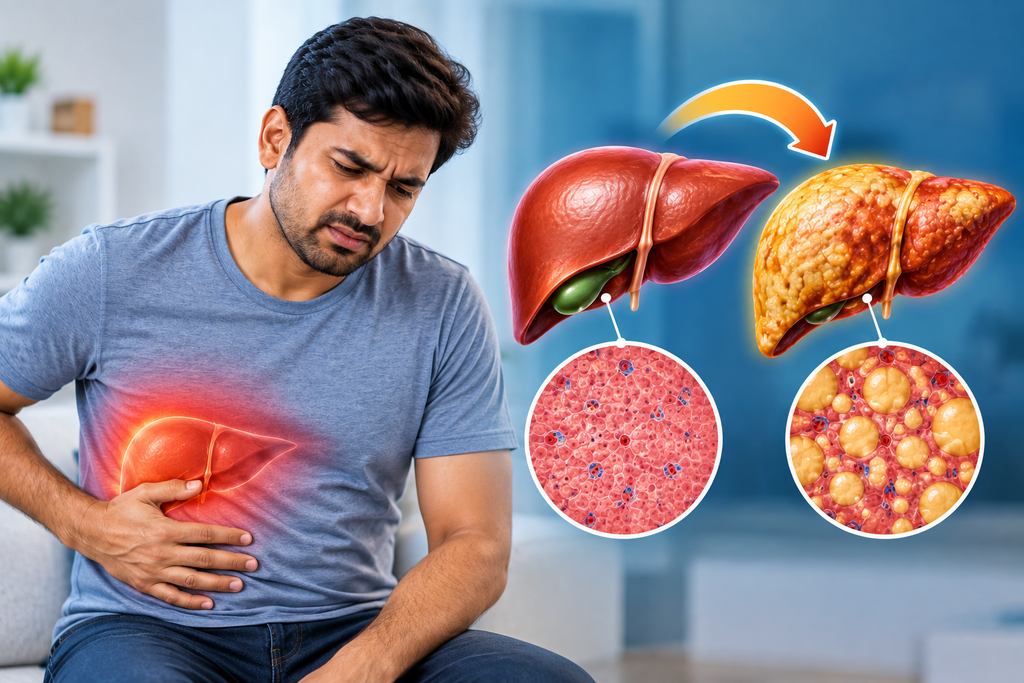
Fatty liver disease (also called hepatic steatosis) means that excess fat specifically triglycerides has accumulated inside liver cells. The MSD Manual defines it as an abnormal accumulation of certain fats within the liver cells, and it is often associated with excess body weight, diabetes, high cholesterol, high blood pressure, and other metabolic risk factors.
Fatty liver can be broadly divided into:
- Simple steatosis: Fat accumulation without significant inflammation. This is often the earlier stage.
- Steatohepatitis (MASH): Fat accumulation with liver inflammation and cell injury, which raises the risk of fibrosis and cirrhosis.
The terminology has evolved. What was previously called non-alcoholic fatty liver disease (NAFLD) is now more accurately termed Metabolic Dysfunction-Associated Steatotic Liver Disease (MASLD). This change reflects the understanding that fatty liver is frequently a metabolic condition linked to insulin resistance, high blood sugar, abnormal lipids, high blood pressure, or excess abdominal fat. The Indian National Association for Study of the Liver (INASL) has adopted this new nomenclature, emphasizing metabolic dysfunction as the central driver — a perspective that also informs Fatty Liver Treatment in Cuttack, where specialists focus on identifying and managing these underlying metabolic factors.
Fatty liver is not always a harmless finding. In some people, it can progress to inflammation, fibrosis, and cirrhosis. However, not everyone with fatty liver will develop advanced liver disease.
What Causes Fatty Liver?
Common contributing factors and risk factors include:
- Overweight and obesity: Particularly excess abdominal fat. In South Asian populations, a BMI above approximately 23 is already concerning, and waist circumference above 90 cm in men and 80 cm in women is a significant marker.
- Insulin resistance and type 2 diabetes: These are strongly linked to fatty liver.
- High cholesterol or triglycerides
- Metabolic syndrome: A cluster of high waist circumference, high blood pressure, elevated blood sugar, high triglycerides, and low HDL cholesterol.
- Unhealthy dietary patterns: High intake of refined carbohydrates, sugary drinks, and ultra-processed foods.
- Physical inactivity
- Alcohol consumption: Alcohol-related fatty liver disease is a separate condition and may require different management.
- Certain medications or medical conditions
Fatty liver can have multiple causes, and not every patient has the same risk factors.
What Are the Symptoms of Fatty Liver?
Early fatty liver often causes few or no noticeable symptoms. The MSD Manual notes that patients with fatty liver usually have no symptoms, though some may experience fatigue.
Possible symptoms may include:
- Fatigue or persistent tiredness
- Mild discomfort in the upper-right abdomen
- General weakness
- Symptoms related to associated metabolic conditions (such as diabetes or high cholesterol)
Symptoms alone cannot determine the severity of liver disease. Many people with significant liver fat or early fibrosis feel entirely well.
When Does Fatty Liver Need Medical Care?
Medical evaluation is particularly important when there is:
- Persistent elevation of liver enzymes (ALT, AST)
- Diabetes or insulin resistance
- Obesity or metabolic syndrome
- Abnormal liver imaging showing fatty change
- Suspected liver inflammation (MASH)
- Evidence of liver fibrosis
- Persistent liver-related symptoms
- Significant alcohol use
- A history of other liver disease
- Signs suggesting advanced liver disease
Even people without symptoms may need evaluation if fatty liver is identified on an ultrasound or other investigation. A liver specialist can assess the severity of the condition and determine whether treatment is required.
Can Fatty Liver Become Serious?
The potential progression of fatty liver disease follows a spectrum:
Simple steatosis → inflammation in some patients → fibrosis → cirrhosis in a smaller proportion of patients → possible liver-related complications
Complications of advanced liver disease may include:
- MASH (Metabolic Dysfunction-Associated Steatohepatitis): Liver inflammation that can lead to scarring
- Liver fibrosis: Scarring of the liver tissue
- Cirrhosis: Severe scarring that impairs liver function
- Liver failure
- Increased risk of hepatocellular carcinoma (HCC) in advanced disease
It is important to understand that not every person with fatty liver will progress to cirrhosis or cancer. Many people remain at the simple steatosis stage, and some improve with lifestyle changes.
How Is Fatty Liver Diagnosed?
Diagnosis typically involves a combination of:
- Medical history and physical examination
- Liver function tests: Including ALT, AST, and other liver enzymes
- Blood glucose and HbA1c
- Lipid profile
- Abdominal ultrasound: Often the first imaging test to detect fatty liver
- FibroScan (transient elastography): A non-invasive test that measures liver stiffness and fat content. FibroScan can help detect advanced liver disease years before clinical symptoms develop.
- FIB-4 index: A non-invasive calculation using routine blood tests to assess fibrosis risk
- CT or MRI when clinically indicated
- Additional tests to rule out other causes of liver disease
Liver biopsy may be considered in selected cases but is not required for everyone. Non-invasive methods, including the FIB-4 index and FibroScan, are widely recommended as first-line assessments for liver fibrosis.
Fatty Liver Treatment in Cuttack: What Are the Treatment Options?
Treatment depends on the cause and severity. The foundation of treatment for most patients remains focused on eliminating potential causes and controlling metabolic risk factors.
Lifestyle Management:
- Weight management: Weight loss is the most effective treatment for fatty liver. Even a 5% reduction in body weight reduces liver fat, and a 7–10% loss improves inflammation.
- Healthy dietary changes: A Mediterranean-style diet, reduced-calorie diet, and limiting sugary drinks and ultra-processed foods.
- Regular physical activity: At least 150 minutes of moderate aerobic activity per week is generally recommended.
- Avoiding or limiting alcohol when medically appropriate.
- Reviewing medications with a doctor to identify any that may affect the liver.
Medical Management:
- Management of diabetes: Good blood sugar control is essential.
- Management of cholesterol and triglycerides
- Blood pressure management
- Medications: In selected cases, doctors may consider specific medications. Resmetirom, a thyroid hormone receptor beta agonist, has been approved for treating patients with MASH and moderate to severe fibrosis (F2 and F3). Other medications may be considered based on individual circumstances. Do not take any medication without consulting a doctor.
Treatment of Advanced Liver Disease:
- For patients with cirrhosis or liver failure, management may involve specialist care, monitoring for complications, and in some cases, liver transplantation.
It is important to avoid crash diets, extreme fasting, and unproven detox programs or supplements. These may cause harm rather than benefit.
Can Fatty Liver Be Reversed?
Liver fat accumulation can improve in many patients when the underlying metabolic and lifestyle factors are appropriately addressed. Weight loss, dietary changes, and increased physical activity have been shown to reduce liver fat and improve inflammation.
However, the possibility of improvement depends on the stage of liver disease and individual circumstances. Advanced fibrosis or cirrhosis may not fully reverse, but treatment can still slow progression and prevent complications. No doctor can promise complete reversal or a specific timeline.
What Diet Is Recommended for Fatty Liver?
General dietary guidance includes:
- More vegetables and high-fibre foods
- Appropriate portions of whole grains
- Lean protein sources
- Healthy unsaturated fats
- Reducing sugary drinks
- Limiting highly processed foods
- Reducing excessive refined carbohydrates
- Avoiding excessive calorie intake
- Moderating or avoiding alcohol depending on individual circumstances
There is no single “fatty liver diet” that is universally required. A dietitian or doctor can provide personalised guidance.
Exercise and Fatty Liver
Regular physical activity supports metabolic and liver health. Guidelines suggest:
- Aerobic activity: At least 150 minutes of moderate activity per week
- Resistance training: May provide additional benefits
- Reducing sedentary time: Even short walks after meals can help
Exercise reduces liver fat independently of weight loss and maximizes results when combined with dietary changes. However, exercise alone is not a guaranteed cure for fatty liver.
When Should You See a Liver or Gastrointestinal Specialist?
Consultation with a gastroenterologist, hepatologist, or appropriately qualified specialist may be useful if you have:
- Fatty liver found on ultrasound
- Persistently abnormal liver tests
- Suspected fibrosis
- Diabetes with fatty liver
- Multiple metabolic risk factors
- Unexplained liver abnormalities
- Symptoms suggesting advanced liver disease
A fatty liver specialist in Cuttack can assess the severity of your condition and recommend appropriate management. Patients seeking a liver specialist in Cuttack or a gastroenterologist in Cuttack can arrange a consultation to discuss their symptoms and test results.
Warning Signs That Need Prompt Medical Attention
Seek prompt medical care if you experience:
- Yellowing of the eyes or skin (jaundice)
- Abdominal swelling
- Leg swelling
- Confusion or unusual drowsiness
- Vomiting blood
- Black or tarry stools
- Severe or worsening abdominal pain
These symptoms may indicate advanced liver disease or another significant condition. They require immediate medical assessment and should not be managed through self-treatment.
How to Choose a Fatty Liver Specialist in Cuttack
Consider:
- Relevant medical qualifications and experience managing liver conditions
- Ability to evaluate liver fibrosis using non-invasive methods
- Access to appropriate diagnostic testing (FibroScan, blood tests, imaging)
- Clear explanation of treatment options
- Follow-up and monitoring
- Management of associated conditions such as diabetes and high cholesterol
Frequently Asked Questions
What is fatty liver?
Fatty liver means excess fat has accumulated in the liver. It is often linked to metabolic conditions such as obesity, diabetes, and high cholesterol.
What are the early symptoms of fatty liver?
Most people have no symptoms. Some may experience fatigue or mild upper-right abdominal discomfort.
Can fatty liver be reversed?
Liver fat can improve with weight loss, dietary changes, and exercise, especially in early stages. Advanced fibrosis may not fully reverse.
Does fatty liver always require treatment?
No. Simple steatosis without inflammation or fibrosis may only require monitoring and lifestyle changes.
What is the best treatment for fatty liver?
The foundation is lifestyle management: weight loss, healthy diet, and regular exercise. Medical management of diabetes and cholesterol is also important.
What foods should be avoided with fatty liver?
Limit sugary drinks, refined carbohydrates, ultra-processed foods, and excessive alcohol.
Is fatty liver dangerous?
It can be serious if it progresses to inflammation, fibrosis, or cirrhosis. However, not everyone with fatty liver develops advanced disease.
Can fatty liver cause liver cirrhosis?
Yes, in a proportion of patients, fatty liver can progress to cirrhosis over time.
How is fatty liver diagnosed?
Diagnosis involves blood tests, imaging (ultrasound, FibroScan), and clinical evaluation.
What is FibroScan?
FibroScan is a non-invasive test that measures liver stiffness and fat content.
When should I see a fatty liver specialist?
If you have fatty liver on imaging, abnormal liver tests, diabetes with fatty liver, or signs of fibrosis.
Where can I get fatty liver treatment in Cuttack?
Fatty liver treatment in Cuttack is available at hospitals and gastroenterology centres with specialist care.
Can fatty liver cause liver cancer?
Advanced fatty liver disease with cirrhosis increases the risk of hepatocellular carcinoma, though this does not occur in all patients.
Conclusion
Fatty liver is a common condition that ranges from simple fat accumulation to advanced liver disease. Early evaluation can help determine the severity and appropriate course of action. Lifestyle management including weight loss, healthy diet, and regular exercise remains the cornerstone of treatment for most patients.
For patients in Odisha, fatty liver treatment in Cuttack is available at hospitals with gastroenterology and liver specialist services. If you have fatty liver on imaging, abnormal liver tests, or metabolic risk factors, seek individualized medical advice rather than relying on self-diagnosis or unproven remedies. A specialist can assess your condition and guide you toward the most appropriate management.
About Dr. Harish Chandra Mishra
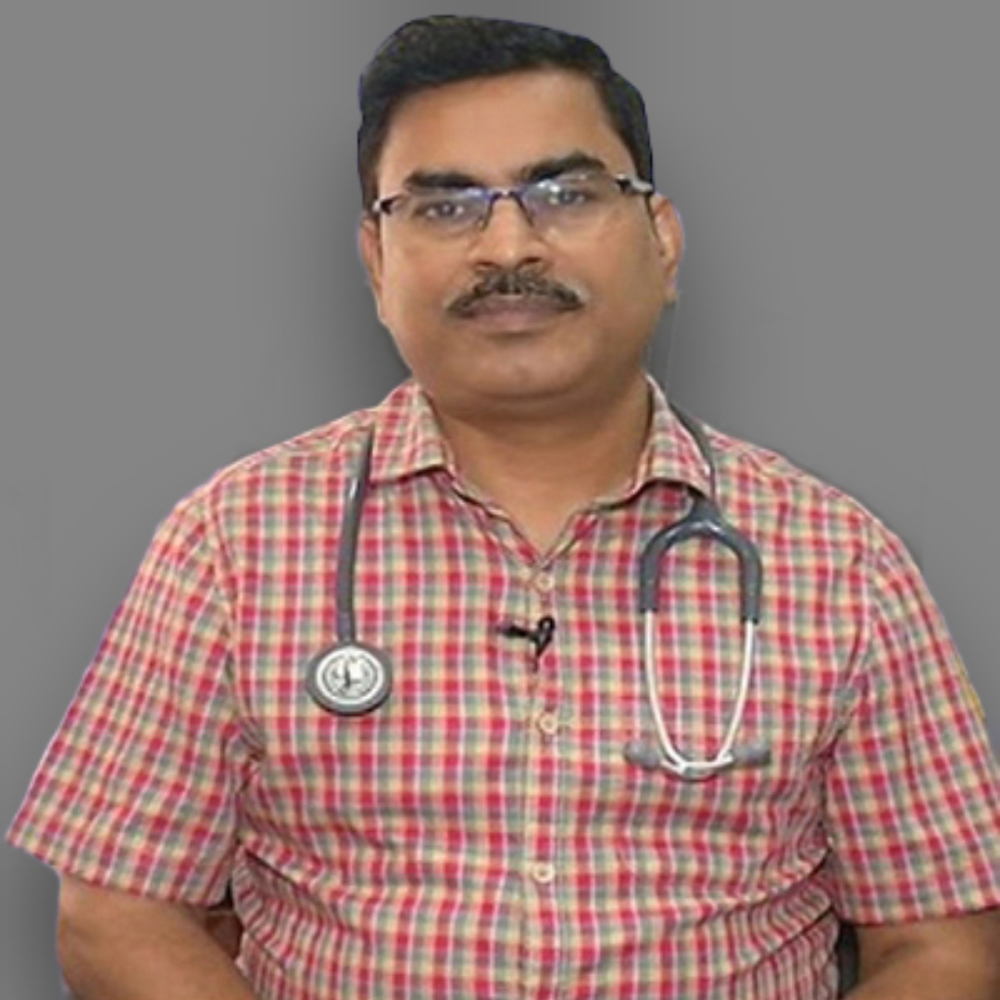
A professional doctor can help patients understand the underlying causes of fatty liver and recommend an appropriate treatment and management plan based on their individual condition. Dr. Harish Chandra Mishra approaches each patient with this understanding at the center of his practice.
As a Laparoscopic, Cancer & GI Surgeon, Dr. Mishra focuses on the diagnosis and surgical management of gastrointestinal and liver-related conditions, including complex cases associated with advanced fatty liver disease and its complications. His approach emphasizes accurate evaluation, personalized treatment planning, lifestyle and medical management where appropriate, and surgical intervention when required.
Fatty liver can range from a mild condition with few symptoms to more advanced liver disease involving inflammation, fibrosis, or other complications. Dr. Mishra takes a comprehensive approach to patient care, considering the severity of the condition, associated risk factors, and overall health before recommending the most suitable treatment pathway.
Visit Life Institute of Gastroenterology and Gynecology | Best 24/7 Surgical Hospital
Address :- Potapokhari, Block Chhaka, Naya Bazaar, Kataka, Odisha 753004

