


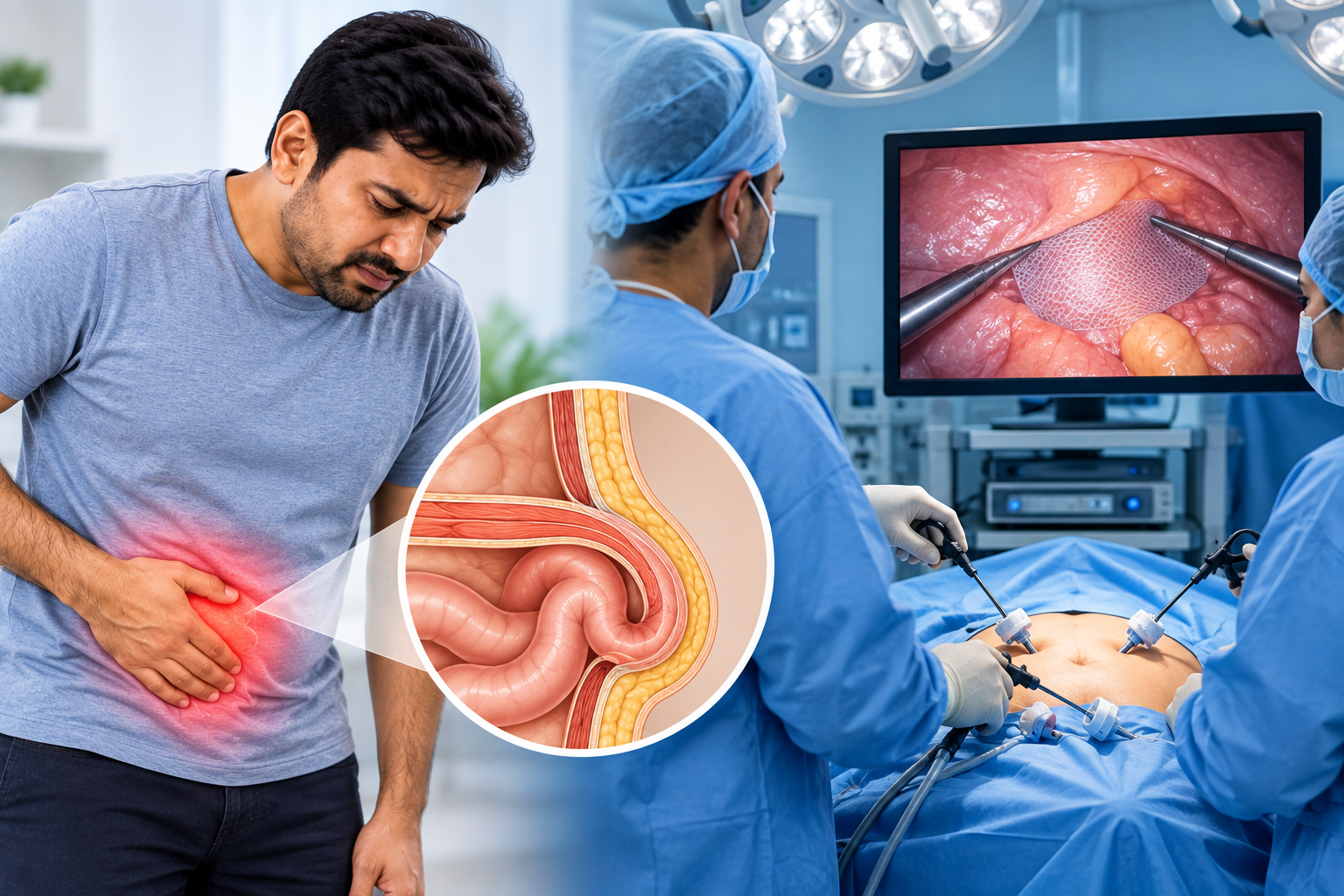

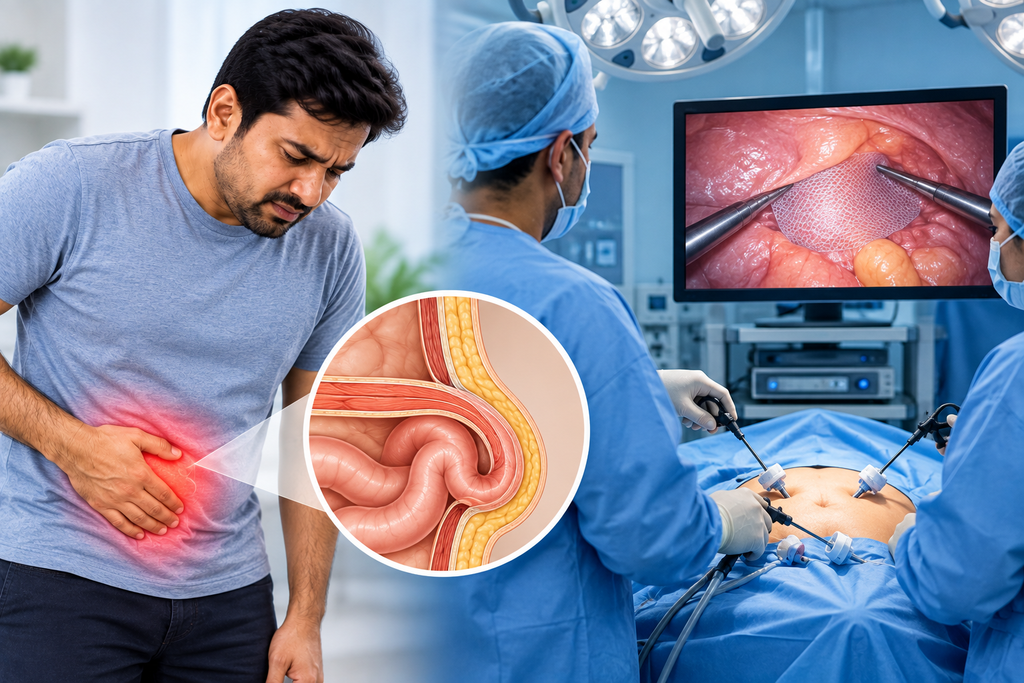
Consider a common situation. A shopkeeper lifts a heavy sack and later notices a soft bulge in his groin. It disappears when he lies down, so he ignores it for months. Then it grows and starts to ache. This is how many hernias begin. A hernia is a weakness in the abdominal wall that lets tissue push through, and it deserves proper evaluation. Not every hernia needs immediate surgery, but some need planned or urgent repair. This guide explains when hernia surgery in Cuttack may be considered and when a laparoscopic approach may suit you.
What Is a Hernia?
A hernia develops when part of the intestine or fatty tissue pushes through a weak spot in the abdominal muscle. This can produce a visible lump or swelling. The lump often becomes more noticeable when you cough, stand, lift or strain, and may settle when you lie down.
Common Types of Hernia
- Inguinal hernia: in the groin; the most common type.
- Femoral hernia: just below the groin crease, more often seen in women.
- Umbilical hernia: at or near the navel.
- Incisional hernia: at the site of a previous surgical scar.
- Ventral hernia: a broad term for hernias of the front abdominal wall, including umbilical, epigastric and incisional types.
- Epigastric hernia: in the midline between the navel and breastbone.
- Hiatal hernia: the stomach moves upward through the diaphragm. It is managed differently from abdominal wall hernias.
Treatment depends on the type and the clinical situation.
Symptoms of a Hernia
- A visible or palpable lump
- Groin or abdominal swelling
- Pain, discomfort, heaviness or pressure
- Pain while coughing, sneezing, lifting or exercising
- Swelling that becomes more prominent when standing
Some hernias cause few symptoms at first, so a painless lump still deserves evaluation.
When Does a Hernia Need Surgery?
Surgery may be considered when:
- Pain or discomfort persists
- The hernia is increasing in size
- Symptoms interfere with daily work or activity
- The lump cannot be comfortably pushed back
- There is a risk or evidence of complications
- The hernia is recurrent or complex
The decision is individualized. After examination, a surgeon may advise repair, planned monitoring or another approach.
What Is Laparoscopic Hernia Repair?
Laparoscopic repair is a minimally invasive technique. The surgeon makes a few small incisions and inserts a thin camera and specialized instruments. The weakened area is then reinforced, often with surgical mesh. Open repair uses a single, larger incision directly over the hernia. Neither approach is automatically better for every patient.
When Is Laparoscopic Hernia Repair Recommended?
Laparoscopic repair may be considered for:
- Selected inguinal hernias
- Bilateral inguinal hernias
- Recurrent hernias after earlier open repair
- Certain ventral or incisional hernias
- Patients who may benefit from minimally invasive access
The final choice depends on hernia type, size and location, previous surgery, overall health, surgeon expertise and available facilities.
Laparoscopic vs Open Hernia Surgery
| Feature | Laparoscopic Repair | Open Repair |
|---|---|---|
| Approach | Camera and instruments through small incisions | Single incision over the hernia |
| Incision size | Several small cuts | One larger cut |
| Anesthesia | Usually general | General, regional or local, depending on case |
| Recovery | Varies; some patients resume routine activity sooner | Varies with hernia and patient |
| Potential benefits | Smaller wounds; can address both sides together | Suits many cases; may need less specialized equipment |
| Limitations | Usually needs general anesthesia and specialized training | Larger wound in some cases |
| May be considered for | Bilateral, recurrent or selected ventral hernias | Large, complex or emergency hernias; some patients with prior surgery |
What Happens During Laparoscopic Hernia Surgery?
- Preoperative evaluation: examination, tests and anesthesia assessment.
- Anesthesia: given for comfort throughout.
- Small incisions: made in the abdomen.
- Camera insertion: gives a clear view inside.
- Identifying the hernia: the weak area is located.
- Repositioning tissue: protruding tissue is returned to its place.
- Reinforcement: the weak area is strengthened when indicated.
- Closure: the incisions are closed.
Is Mesh Used in Hernia Repair?
Mesh is a medical-grade support that reinforces the weakened abdominal wall. It is often used to lower the chance of recurrence, but it is not required in every repair. Small hernias may sometimes be repaired with sutures alone. Mesh is not risk-free, and the decision depends on the hernia and the surgical technique.
Benefits and Risks of Laparoscopic Surgery
Possible benefits: smaller incisions, less wound discomfort in some patients, earlier mobility, faster return to routine activity in selected cases, and the ability to treat certain bilateral or recurrent hernias in one approach.
Possible risks: bleeding, infection, recurrence, seroma (fluid collection), chronic pain, injury to nearby structures, mesh-related complications and anesthesia-related complications. Individual risks vary, and your surgeon should discuss them with you.
When Is Open Surgery Preferred?
Open repair may be the better choice depending on hernia size and location, complexity, previous abdominal operations, patient health, surgeon assessment or emergency circumstances. It is a well-established option, not an inferior one.
What Happens If a Hernia Is Left Untreated?
A hernia may grow and become more uncomfortable over time. It can also cause:
- Incarceration: the tissue gets stuck and cannot be pushed back.
- Bowel obstruction: the passage of stool and gas is blocked.
- Strangulation: the blood supply to the trapped tissue is cut off, which is a surgical emergency.
Hernia Emergency Warning Signs
Seek urgent medical care for:
- Sudden severe pain
- A very painful lump that cannot be pushed back
- Persistent vomiting
- Abdominal swelling
- Inability to pass stool or gas
- Fever with worsening hernia symptoms
- Skin discoloration over the hernia
Most hernias are not emergencies, but suspected strangulation or obstruction needs immediate assessment.
Recovery After Laparoscopic Hernia Surgery
Recovery varies by patient and procedure. In general:
- Early walking is encouraged.
- Wounds should be kept clean, as advised.
- Pain is managed with prescribed medicines.
- Follow-up visits monitor healing.
- Exercise and heavy lifting resume gradually on medical advice.
How to Choose a Hernia Surgeon in Cuttack
Consider:
- Relevant surgical qualifications
- Experience in laparoscopic repair and in your specific hernia type
- Hospital infrastructure, anesthesia and surgical support
- Emergency care availability
- Clear discussion of options, risks, benefits and alternatives
- Reliable postoperative follow-up
Hernia Surgery in Cuttack: When Should You Consult a Specialist?
Consider seeing a qualified GI surgeon, general surgeon or surgical gastroenterologist if you notice:
- A new abdominal or groin lump
- Persistent discomfort
- Increasing swelling
- A recurrent hernia
- A previously repaired hernia that has returned
- Symptoms suggesting complications
A consultation does not automatically mean surgery.
Frequently Asked Questions About Hernia Treatment
1. What is Hernia?
Ans :- A hernia is a bulge of tissue through a weak point in the abdominal wall.
2. Does every hernia require surgery?
Ans :- No. The need for surgery depends on symptoms, size, type and complications.
3. When is laparoscopic hernia repair recommended?
Ans :- It may be considered for selected inguinal, bilateral, recurrent and certain ventral hernias, after individual assessment.
4. Is laparoscopic surgery better than open surgery?
Ans :- Neither is universally better. The choice depends on the patient and the hernia.
5. Is mesh required for hernia repair?
Ans :- Not always. It is commonly used, but the decision depends on the hernia and the surgical technique.
6. How long does laparoscopic hernia surgery take?
Ans :- It varies with the type and complexity of the hernia and the patient’s condition.
7. How long does recovery take after laparoscopic hernia surgery?
Ans :- It varies by procedure and individual health. Your surgeon will guide you.
8. Can a hernia come back after surgery?
Ans :- Yes, recurrence is possible after any repair technique.
9. What happens if a hernia is left untreated?
Ans :- It may enlarge, become painful or cause obstruction or strangulation.
10. What are the emergency symptoms of a hernia?
Ans :- Sudden severe pain, a lump that cannot be pushed back, vomiting, inability to pass stool or gas, fever or skin discoloration.
11. Which doctor treats hernia?
Ans :- A general surgeon, GI surgeon or surgical gastroenterologist treats hernia and give you a proper consultation.
Conclusion
A hernia is a weakness in the abdominal wall that may need monitoring, planned repair or urgent care. Laparoscopic repair uses small incisions and a camera, and it suits selected patients, but open repair remains valuable in many situations. The right approach must be individualized. If you are considering hernia surgery in Cuttack, seek proper evaluation for any new, painful, enlarging or persistent hernia rather than self-treating.
Living With a Hernia Bulge? Don’t Wait for It to Become an Emergency
A small lump that comes and goes can turn painful without warning. An early consultation with a qualified surgeon in Cuttack can clarify whether you need monitoring, planned repair or urgent care, and can help you choose the safest option early consultation with a qualified surgeon in Cuttack can clarify whether you need monitoring, planned repair or urgent care. It also helps you understand your choices, including whether laparoscopic or open repair suits your type of hernia.
About Dr. Harish Chandra Mishra
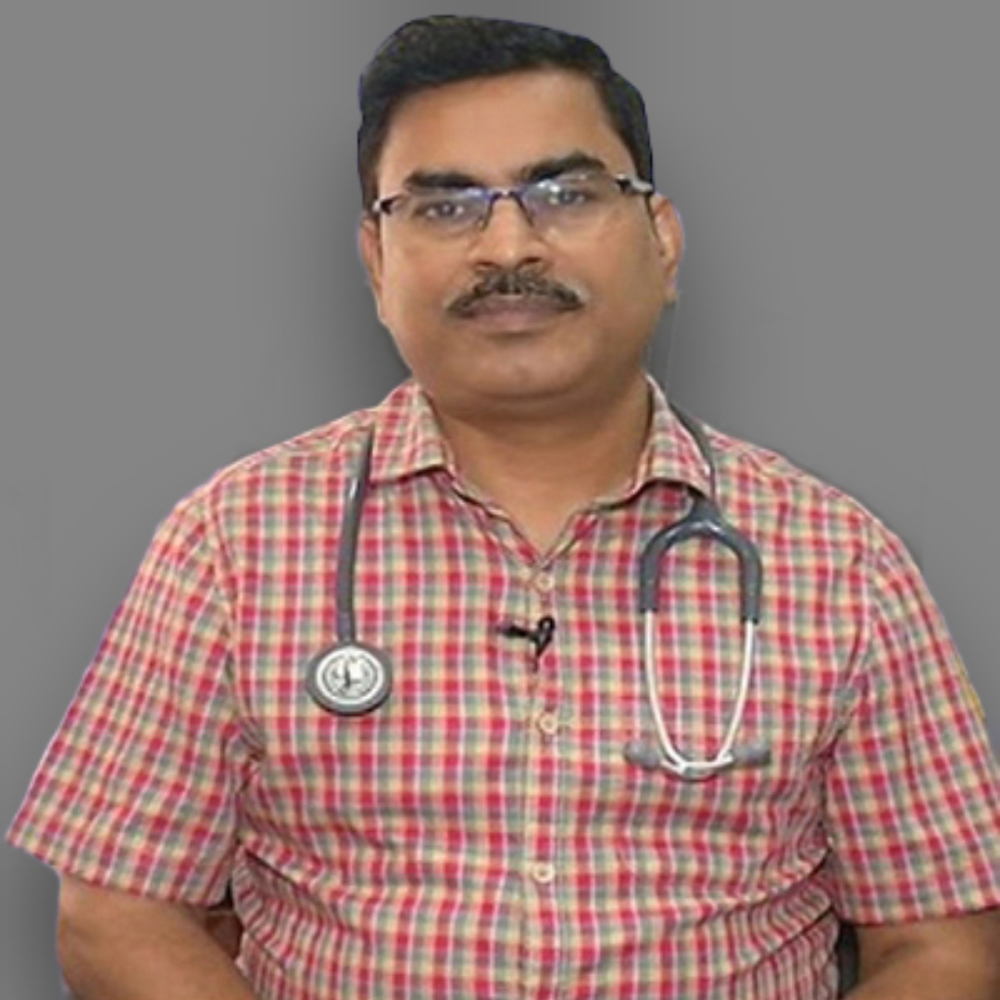
A professional doctor can help patients understand the underlying causes of fatty liver and recommend an appropriate treatment and management plan based on their individual condition. Dr. Harish Chandra Mishra approaches each patient with this understanding at the center of his practice.
As a Laparoscopic, Cancer & GI Surgeon, Dr. Mishra focuses on the diagnosis and surgical management of gastrointestinal and liver-related conditions, including complex cases associated with advanced fatty liver disease and its complications. His approach emphasizes accurate evaluation, personalized treatment planning, lifestyle and medical management where appropriate, and surgical intervention when required.
Fatty liver can range from a mild condition with few symptoms to more advanced liver disease involving inflammation, fibrosis, or other complications. Dr. Mishra takes a comprehensive approach to patient care, considering the severity of the condition, associated risk factors, and overall health before recommending the most suitable treatment pathway.
Visit Life Institute of Gastroenterology and Gynecology | Best 24/7 Surgical Hospital
Address :- Potapokhari, Block Chhaka, Naya Bazaar, Kataka, Odisha 753004

