


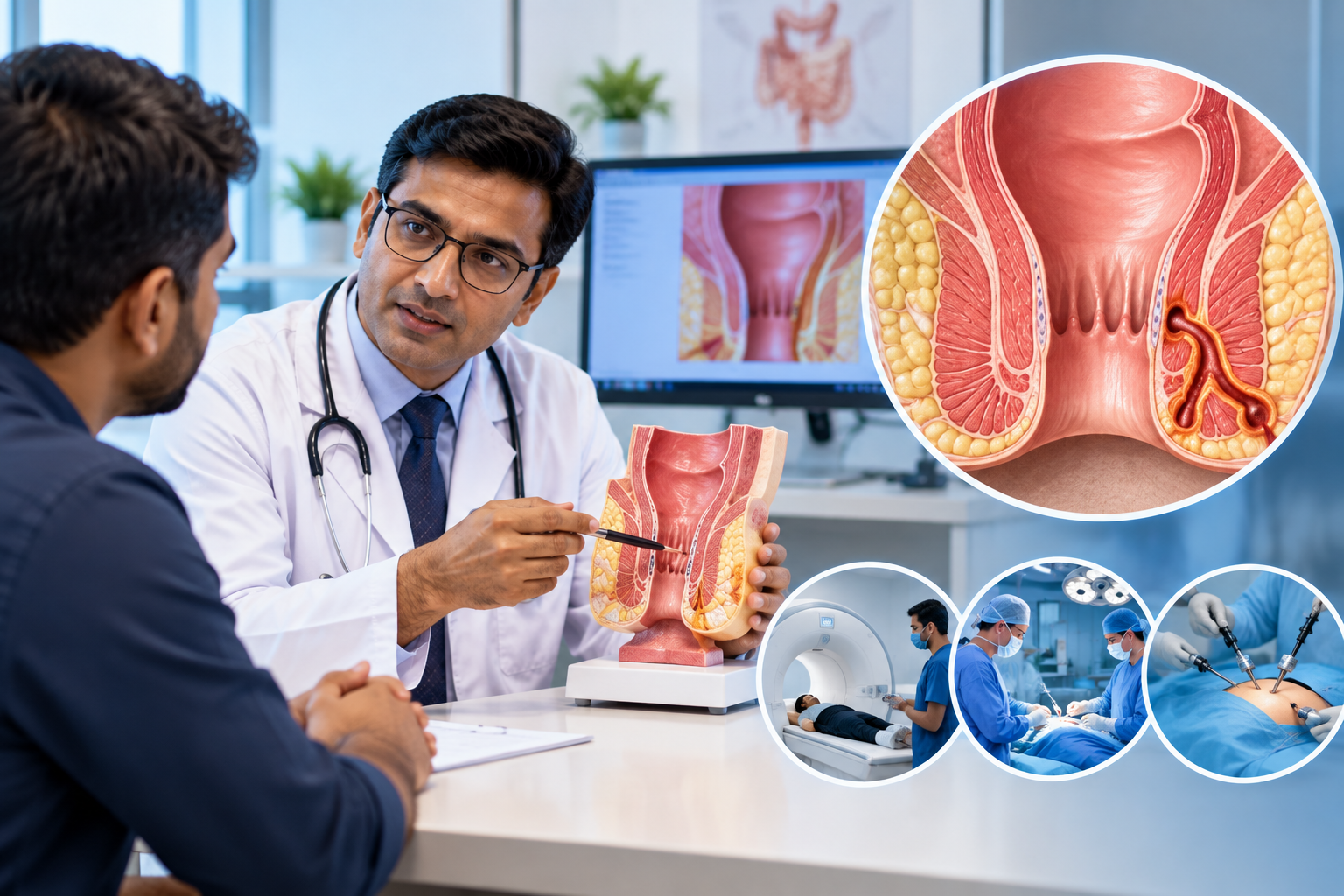

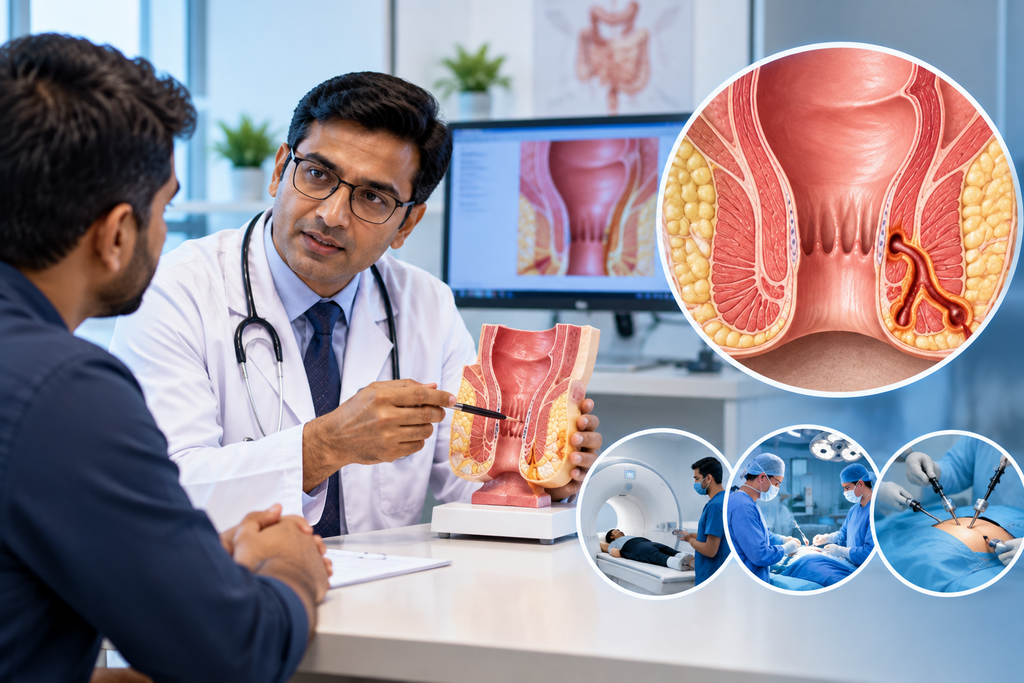
it often begins with a throbbing pain that makes sitting unbearable. You might notice swelling near the anus, then a discharge that brings brief relief—only for the cycle to repeat weeks later. This is how many patients describe their experience before learning they have an anal fistula: an abnormal tunnel that forms between the anal canal and the skin near the anus.
Most fistulas begin as an anal abscess, a painful collection of pus caused by an infected gland. When that abscess drains or fails to heal properly, the tract can remain, causing persistent pain, swelling, discharge of pus or fluid, skin irritation, and discomfort while sitting or passing stool. Some hope it will settle on its own. Most established fistulas, however, need definitive treatment—though not every case requires the same surgical approach. The right path depends on the fistula’s location, complexity, sphincter involvement, and underlying cause. Understanding Anal Fistula Treatment in Cuttack options can help patients make informed decisions about their care.
How Common Are Anal Fistulas?
The true prevalence of anal fistulas is difficult to determine because anorectal discomfort is frequently attributed to other conditions such as haemorrhoids. However, the relationship between anal abscesses and fistulas is well documented. Studies indicate that the incidence of an anal fistula developing from an anal abscess ranges from 15 to 38 percent. More recent data suggest that approximately 15–50% of patients with an anorectal abscess will go on to develop a fistula, with an overall incidence of around 20%.
Adult males are two to five times more likely to develop an abscess or fistula compared with women. The mean age of presentation is around 40 years, though the condition can affect people of all ages. In some populations, particularly in developing countries, the incidence may be higher due to differences in healthcare access and underlying conditions.
What Are the Symptoms of an Anal Fistula?
Symptoms of an anal fistula vary depending on the fistula’s location, depth, and whether an active infection is present. Common symptoms include:
- Persistent or recurrent anal pain
- Swelling near the anus
- Recurrent abscess formation
- Pus or fluid discharge from near the anus
- Blood-stained discharge
- Skin irritation and itching around the anal opening
- Pain while sitting, moving, or passing stool
- Fever and chills if an abscess is active
- A small opening or lump near the anus
- Difficulty controlling bowel movements in some cases
The NHS notes that the pain of an anal fistula is often described as a constant, throbbing discomfort that worsens when sitting down, moving around, or coughing. Some patients also report difficulty controlling bowel movements in certain situations. Symptoms may improve temporarily after drainage, only to return when the tract becomes blocked again.
What Does an Anal Fistula Look or Feel Like?
Patients often describe a small opening or pimple-like area near the anus. This is the external opening of the fistula tract. The skin around this opening may be irritated, red, or tender to touch. Recurrent swelling may occur as the tract fills with pus and then drains, leading to intermittent discharge of fluid that may have an unpleasant odour.
Some patients experience cycles of symptoms: the area becomes swollen and painful, then drains, providing relief, and then the cycle repeats. The external opening may appear to close temporarily, giving a false impression of healing, but it typically reopens when pressure builds again. This recurring pattern is a hallmark of an anal fistula and usually distinguishes it from a one-time abscess.
What Causes an Anal Fistula?
The most common cause of an anal fistula is a prior perianal or anal abscess that originated from an infected anal gland. Over 90 percent of anorectal fistulas are attributed to this cryptoglandular mechanism, where infection begins in the small glands located within the anal canal. When these glands become blocked and infected, an abscess forms, and the subsequent drainage creates the tract that becomes a fistula.
Less common causes include:
- Crohn’s disease and inflammatory bowel disease: These conditions cause chronic inflammation of the digestive tract and are strongly associated with fistula formation.
- Previous anorectal surgery: Surgical procedures in the anal region can occasionally lead to fistula formation.
- Trauma or injury: Direct injury to the anal area may create conditions for a fistula to develop.
- Tuberculosis and other infections: In selected cases, specific infections can contribute to fistula formation.
- Radiation-related tissue damage: Radiation therapy to the pelvic region can damage tissue and lead to fistula formation.
- Diverticulitis and other inflammatory conditions: Inflammation of the diverticula can sometimes extend to involve the anal region.
- Congenital causes: In infants, fistulas may be present at birth as a developmental anomaly.
It is important to distinguish between common and uncommon causes. Most fistulas arise from an anal abscess, while the other causes represent a smaller proportion of cases.
Who Is More Likely to Develop an Anal Fistula?
Several factors may increase the likelihood of developing an anal fistula:
- Previous anal abscess: This is the most significant risk factor. Approximately 15–50% of people who have an anal abscess will develop a fistula.
- Crohn’s disease: People with this inflammatory bowel condition have a higher risk of fistula formation, and fistulas in Crohn’s patients often require a different management approach.
- Recurrent perianal infections: Repeated episodes of infection in the anal region increase the chance of fistula formation.
- Previous anorectal procedures: Surgery in the anal area can occasionally result in fistula formation as a complication.
- Certain immune-related conditions: Conditions that affect immune function may impair healing and predispose to fistula formation.
Having a risk factor does not mean a fistula will definitely develop. Many people with these factors never experience a fistula, while others without obvious risk factors may develop one.
What Are the Possible Complications of an Anal Fistula?
Without appropriate treatment, an anal fistula can lead to several complications:
- Recurrent abscess: The fistula can become blocked, leading to another painful collection of pus that requires drainage.
- Persistent infection: The tract provides a pathway for ongoing infection, which may cause chronic discomfort and discharge.
- Ongoing drainage: Continuous or intermittent discharge can irritate the skin and affect quality of life.
- Extension or branching of the fistula: The tract may grow or develop secondary branches, making treatment more complex.
- More complex fistula formation: Simple fistulas can become complex over time, potentially involving more of the sphincter muscle.
- Recurrence after treatment: Even after surgery, fistulas can return, with recurrence rates ranging from approximately 6% for simple fistulas to over 25% for complex ones.
- Continence-related complications: Depending on the fistula’s location and the treatment approach, there may be a risk of changes in bowel control. Studies indicate that recurrence rates for anal fistula surgery range between 5 and 50%, with up to a 40% rate of fecal incontinence in some cases.
These complications are not inevitable, and appropriate treatment significantly reduces their likelihood. However, they highlight why persistent or recurrent symptoms should not be ignored.
How Is an Anal Fistula Diagnosed?
Medical History
The diagnostic process begins with a detailed medical history. The doctor will ask about:
- Previous episodes of anal abscess or drainage
- The nature and duration of pain or discomfort
- Any discharge of pus, fluid, or blood
- Bowel habits and any changes in bowel function
- Previous anorectal surgeries or procedures
- A history of Crohn’s disease or other inflammatory conditions
- Any fever or systemic symptoms
This information helps the clinician understand the likely cause and determine the appropriate diagnostic approach.
Physical Examination
A careful physical examination is essential. The doctor will inspect the anal area for external openings, swelling, redness, or signs of infection. A digital rectal examination may be performed to feel for internal openings, induration, or other abnormalities. The Goodsall rule may be used to help predict the internal opening’s location based on the external opening’s position.
Imaging When Needed
Not every patient requires imaging. However, when the fistula is complex, recurrent, or associated with Crohn’s disease, imaging can help map the tract and plan surgery. Options include:
- Endoanal ultrasound: This test uses a small probe inserted into the anal canal to create images of the sphincter muscles and fistula tract. It is particularly useful for identifying the relationship between the fistula and the sphincter complex.
- MRI: Magnetic resonance imaging provides detailed images of the pelvic floor and can identify secondary tracts, abscesses, and the exact relationship of the fistula to the sphincter muscles. It is often the preferred imaging modality for complex or recurrent fistulas.
- Fistula probe and dye studies: In some cases, a thin probe may be gently passed through the external opening to determine the tract’s direction and depth. A special dye may be injected to help identify the internal opening.
Additional Investigations
If an underlying condition such as Crohn’s disease is suspected, further tests such as colonoscopy, blood tests, or stool studies may be recommended. The diagnostic approach is tailored to the individual patient, and not every patient requires the same tests.
Can an Anal Fistula Heal Without Surgery?
Established anal fistulas generally do not heal permanently without definitive treatment. While the external opening may close temporarily, the underlying tract usually remains, and symptoms commonly return. Antibiotics may help control infection in selected situations, but they do not eliminate the fistula tract itself.
For fistulas associated with Crohn’s disease, medical therapy—such as biologic medications—may be used as part of the treatment strategy, sometimes alongside surgical drainage or seton placement. However, even in these cases, the fistula often requires procedural management.
A specialist should determine whether surgery, medical therapy, drainage, or a combination of approaches is appropriate. The decision depends on the fistula’s characteristics, the underlying cause, and the patient’s overall health.
What Are the Treatment Options for an Anal Fistula?
Fistulotomy
Fistulotomy is a surgical procedure in which the fistula tract is opened along its entire length, converting the tunnel into an open groove that heals from the inside out. This approach is generally recommended for simple, low fistulas that involve minimal sphincter muscle. For patients with a simple fistula-in-ano and normal anal sphincter function, lay-open fistulotomy is a strong recommendation in clinical guidelines. Because fistulotomy involves cutting through some tissue, the amount of sphincter muscle involved is carefully assessed beforehand.
Seton Placement
A seton is a soft thread, drain, or rubber band placed through the fistula tract and left in position for a period of time. Setons serve several purposes: they keep the tract draining, prevent recurrent abscess formation, and may be used as part of a staged treatment approach for complex fistulas. In some cases, a seton is placed first to allow inflammation to settle before definitive surgery is performed. The SETON trial is currently investigating whether routine preoperative seton placement before sphincter-preserving surgery improves outcomes.
LIFT Procedure
LIFT stands for Ligation of the Intersphincteric Fistula Tract. This is a sphincter-sparing procedure in which the fistula tract is identified in the space between the internal and external sphincter muscles, ligated (tied off), and divided. The LIFT procedure is recommended for transsphincteric fistulas and is considered a sphincter-preserving alternative to fistulotomy. Research indicates that LIFT offers comparable healing rates to conventional fistulotomy but with less postoperative morbidity, faster recovery, and better continence outcomes.
Advancement Flap
An advancement flap procedure involves creating a flap of tissue from the rectum or anal canal and advancing it over the internal opening of the fistula to close it. This approach is often considered when preserving sphincter function is a priority, such as in recurrent fistulas or fistulas associated with Crohn’s disease. For recurrent fistula-in-ano, endorectal advancement flap is recommended in clinical guidelines.
Other Sphincter-Sparing Options
Several other techniques have been developed, including fistula plug placement, fibrin glue injection, and video-assisted anal fistula treatment (VAAFT). However, clinical guidelines recommend against routine use of fistula plugs and fibrin glue due to lower healing rates. Minimally invasive approaches such as laser closure techniques may be used in selected cases, though long-term data on recurrence rates are still emerging.
No single procedure is universally best. The choice depends on the fistula’s anatomy, the amount of sphincter involvement, the underlying cause, and the surgeon’s expertise.
What Happens During Anal Fistula Surgery?
The surgical process typically follows these general steps:
- Preoperative evaluation: The surgeon reviews the patient’s history, examination findings, and any imaging studies to plan the procedure.
- Anesthesia: The procedure is performed under general, regional, or local anesthesia, depending on the complexity and the patient’s preferences.
- Identification of the fistula tract: The surgeon carefully identifies the internal and external openings and maps the tract.
- Selected surgical procedure: Based on the fistula’s characteristics, the surgeon performs the appropriate procedure—fistulotomy, seton placement, LIFT, advancement flap, or another technique.
- Management of associated abscess: If an abscess is present, it is drained during the same procedure.
- Wound care: The surgical wound is dressed appropriately, and instructions for home care are provided.
- Follow-up: Scheduled follow-up visits allow the surgeon to monitor healing and address any concerns.
The specific steps vary depending on the individual case, and the surgeon will explain the planned approach beforehand.
What Are the Risks of Anal Fistula Surgery?
As with any surgery, anal fistula surgery carries some risks:
- Infection: The surgical site can become infected, though this is uncommon with proper care.
- Bleeding: Some bleeding is expected, but significant bleeding is rare.
- Recurrence: The fistula may return, with rates varying by fistula complexity—approximately 6% for simple fistulas and over 25% for complex fistulas.
- Delayed healing: Some wounds take longer to heal than expected.
- Persistent drainage: Drainage may continue for some time after surgery.
- Pain or discomfort: Postoperative pain is common but manageable with prescribed medications.
- Changes in bowel control: Depending on the fistula’s location and the procedure performed, there may be a risk of continence changes. This risk is higher when more sphincter muscle is involved.
The risks depend on the complexity of the fistula and the amount of sphincter muscle involved. The surgeon will discuss these risks in detail before the procedure.
What Is Recovery Like After Anal Fistula Surgery?
Recovery varies significantly depending on the fistula’s complexity and the procedure performed. General recovery guidance includes:
- Pain management: Take pain medications as prescribed. Most people experience mild to moderate discomfort for the first week.
- Wound care: Keep the area clean and dry. Shower or bathe as usual, and pat the area dry gently.
- Sitz baths: Sitting in warm water for 15–20 minutes, especially after bowel movements, can help relieve discomfort and promote healing.
- Keeping stools soft: Drink plenty of fluids and eat a high-fibre diet to avoid constipation and straining.
- Hygiene: Change dressings as needed and keep the area clean.
- Follow-up appointments: Attend all scheduled follow-up visits to monitor healing.
- Gradual return to activities: Most people can return to work within 1–2 weeks, but strenuous activity should be avoided until cleared by the surgeon.
Simple fistulas often heal more quickly than complex ones, which may require staged treatment over a longer period. The surgeon will provide individualized guidance based on the healing progress.
What Is the Outlook for Someone With an Anal Fistula?
The outlook for someone with an anal fistula depends on several factors, including the fistula’s complexity, the underlying cause, and the treatment approach. Simple fistulas generally have a good prognosis with appropriate treatment and may require less extensive intervention. Complex or recurrent fistulas may require staged treatment and longer recovery times.
For patients with Crohn’s disease, management is more nuanced, and recurrence is more common. These patients often benefit from a multidisciplinary approach involving gastroenterologists and colorectal surgeons.
Follow-up care is important for monitoring healing and detecting any recurrence early. With appropriate treatment and follow-up, most patients experience significant improvement in symptoms and quality of life.
When Should You See a Doctor?
You should seek medical evaluation if you experience:
- Persistent anal pain that does not improve
- Recurrent swelling near the anus
- Repeated abscesses in the anal region
- Persistent drainage of pus or fluid
- Blood or pus near the anus
- A new opening or lump near the anus
- Symptoms that keep returning after temporary improvement
These symptoms may indicate an anal fistula or another anorectal condition that requires professional assessment. Early evaluation can help prevent complications and guide appropriate treatment.
When Is an Anal Fistula an Emergency?
While most anal fistulas are not emergencies, certain warning signs require urgent medical attention:
- Severe or rapidly worsening pain
- Rapidly increasing swelling in the anal area
- Fever or chills
- Significant redness, warmth, or tenderness around the anus
- Feeling acutely unwell, weak, or confused
- Difficulty sitting or walking due to severe pain
These symptoms may indicate a severe infection or a large abscess that requires prompt drainage and treatment. If you experience any of these warning signs, seek medical care immediately.
Anal Fistula Treatment in Cuttack
Patients in Cuttack and nearby areas of Odisha who have persistent anal pain, recurrent abscesses, discharge near the anus, or a diagnosed anal fistula can seek evaluation from an appropriately qualified surgeon. Depending on the case, evaluation may involve a colorectal surgeon, general surgeon, GI surgeon, or surgical gastroenterologist with experience in anorectal procedures.
The treatment selection for Anal Fistula Treatment in Cuttack depends on careful examination and fistula mapping. Not all fistulas require the same approach—some may be managed with a simple fistulotomy, while others may benefit from seton placement, LIFT, or an advancement flap. The choice of procedure is guided by the fistula’s anatomy, the amount of sphincter involvement, and the underlying cause.
Patients should look for a specialist who can provide a thorough evaluation, discuss treatment options clearly, and offer appropriate follow-up care. The goal is to achieve fistula closure while preserving sphincter function and minimizing the risk of recurrence.
How to Choose an Anal Fistula Specialist in Cuttack
When selecting a specialist for anal fistula treatment, consider the following factors:
- Relevant surgical qualifications: Look for a surgeon with training and experience in colorectal or anorectal surgery.
- Experience treating anal fistulas: Ask about their experience with both simple and complex fistulas.
- Experience with recurrent fistulas: Recurrent fistulas require additional expertise and careful planning.
- Familiarity with sphincter-sparing procedures: Techniques such as LIFT and advancement flaps require specific training and experience.
- Access to appropriate imaging: Endoanal ultrasound and MRI are valuable tools for mapping complex fistulas.
- Ability to provide postoperative follow-up: Regular follow-up is important for monitoring healing and detecting recurrence.
- Clear discussion of treatment options and risks: A good specialist will explain the different approaches, their benefits, and their risks without exaggeration.
Patients should feel comfortable asking questions and discussing their concerns openly with their surgeon.
Frequently Asked Questions
1. What is an anal fistula?
Ans :- An anal fistula is an abnormal tunnel connecting the anal canal to the skin near the anus. It typically develops after an anal gland becomes infected and forms an abscess. The fistula persists as a tract that can cause recurring pain, swelling, and discharge, and usually requires surgical treatment.
2. What causes an anal fistula?
Ans :- Most anal fistulas develop after an anal abscess caused by an infected anal gland. Less common causes include Crohn’s disease, previous anorectal surgery, trauma, tuberculosis, radiation damage, and other inflammatory conditions. A specialist can help identify the likely cause in your case.
3. Can an anal fistula heal on its own?
Ans :- Established anal fistulas usually do not heal permanently without definitive treatment. Symptoms may settle temporarily when the opening closes, but they commonly return. Antibiotics may help with infection but generally do not remove the tract. A specialist should assess whether treatment is needed.
4. Does every anal fistula require surgery?
Ans :- Not necessarily. Most persistent fistulas need some form of definitive treatment, often a procedure or surgery, but the approach differs widely. Some fistulas linked to Crohn’s disease may need medical therapy first or alongside. A specialist decides after examination and imaging.
What is the difference between an anal abscess and an anal fistula?
Ans :- An abscess is an acute collection of pus with pain, swelling, and sometimes fever. A fistula is the tunnel that can remain after an abscess drains, causing recurring discharge or repeated abscesses. An abscess is often the early stage, and a fistula the longer-term problem.
5. What are the symptoms of an anal fistula?
Ans :- Common symptoms include recurring anal pain, swelling, discharge of pus or fluid, blood-stained drainage, skin irritation, and pain when sitting or passing stool. A small opening or lump near the anus may be noticed. Fever can occur if an abscess is active.
6. What is fistulotomy?
Ans :- Fistulotomy is a surgical procedure in which the fistula tract is opened along its length so it can heal from the inside out. It is generally considered for selected simpler fistulas. Because it may involve cutting some muscle, sphincter involvement is carefully assessed first.
7. What is a seton?
A seton is a soft thread or drain placed through a fistula tract and left in position for a time. It keeps the tract draining, helps prevent repeated abscesses, and may be used as part of staged treatment for selected complex fistulas. Its role varies with the case.
8. Is anal fistula surgery painful?
Anesthesia is used so you do not feel pain during the procedure. Some discomfort afterward is common, and your surgeon will usually prescribe pain relief. The amount of pain varies with the procedure and the fistula’s complexity, and it generally improves as healing progresses.
Conclusion
An anal fistula rarely resolves without appropriate care. Persistent pain, recurrent abscesses, or ongoing discharge should not be ignored. Seeking Anal Fistula Treatment in Cuttack from a qualified surgeon can help identify the fistula’s type and determine the most suitable approach whether fistulotomy, seton placement, or a sphincter-sparing procedure. Early specialist evaluation supports better symptom control and helps preserve normal function. Do not delay assessment if symptoms persist or return.
Recurrent Anal Pain, Swelling, or Discharge? Don’t Let a Fistula Keep Interrupting Your Life.
Recurrent anal pain, swelling, or discharge isn’t something you should have to live with. An anal fistula will not resolve without proper treatment, and delaying care can lead to more complex problems. If symptoms keep returning after temporary relief, a specialist evaluation can identify the cause and recommend the right approach whether fistulotomy, seton placement, or a sphincter-sparing procedure. Do not let discomfort disrupt your work, sleep, or daily life. Consult an anal fistula surgeon in Cuttack for an accurate assessment and appropriate treatment plan.
Visit Life Institute of Gastroenterology and Gynecology | Best 24/7 Surgical Hospital | Cuttack, Odisha
Address :- Potapokhari, Block Chhaka, Naya Bazaar, Kataka, Odisha 753004
Visit Location :- https://maps.app.goo.gl/qwQC6zUPp7BS2myT7

