


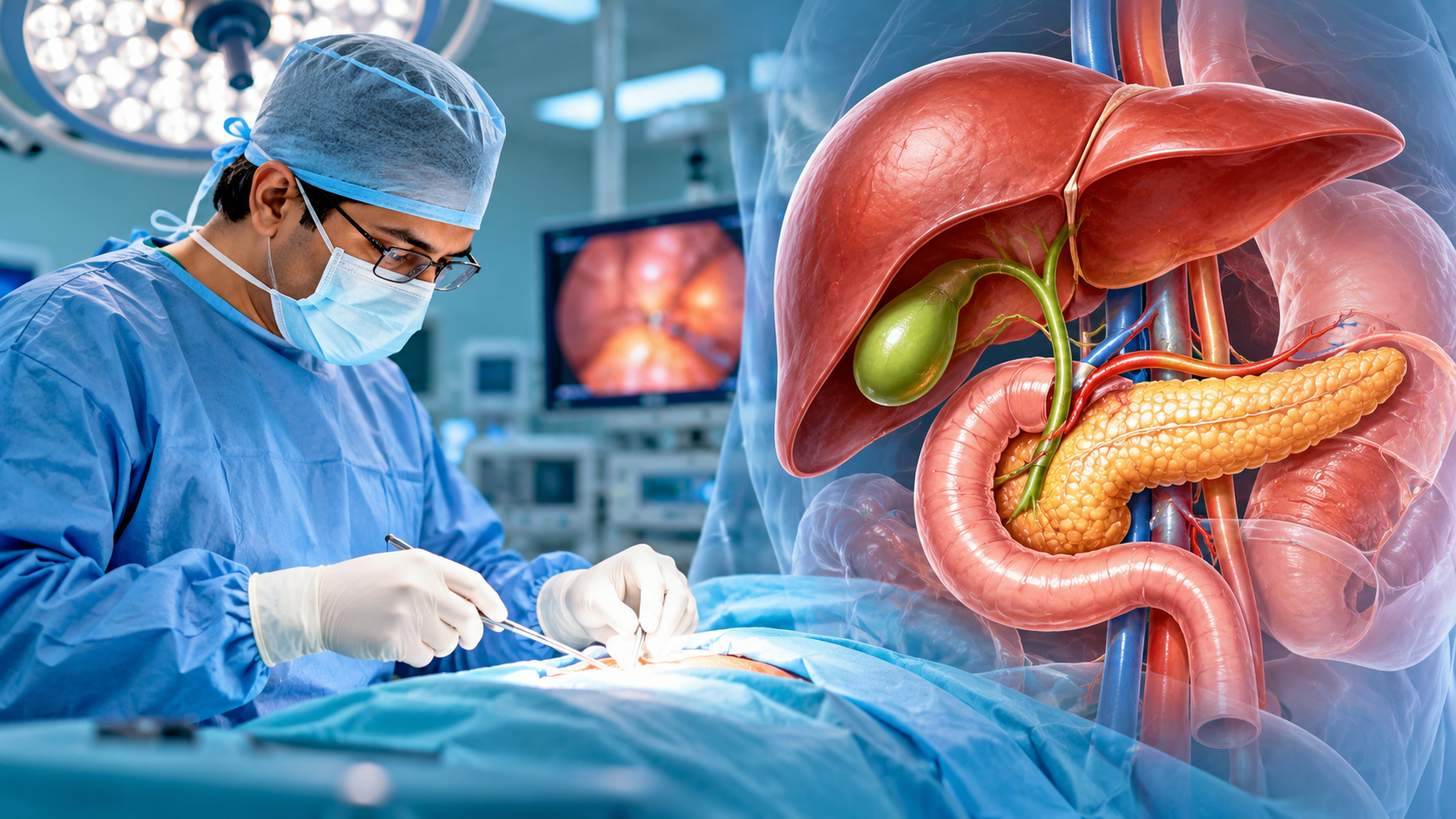

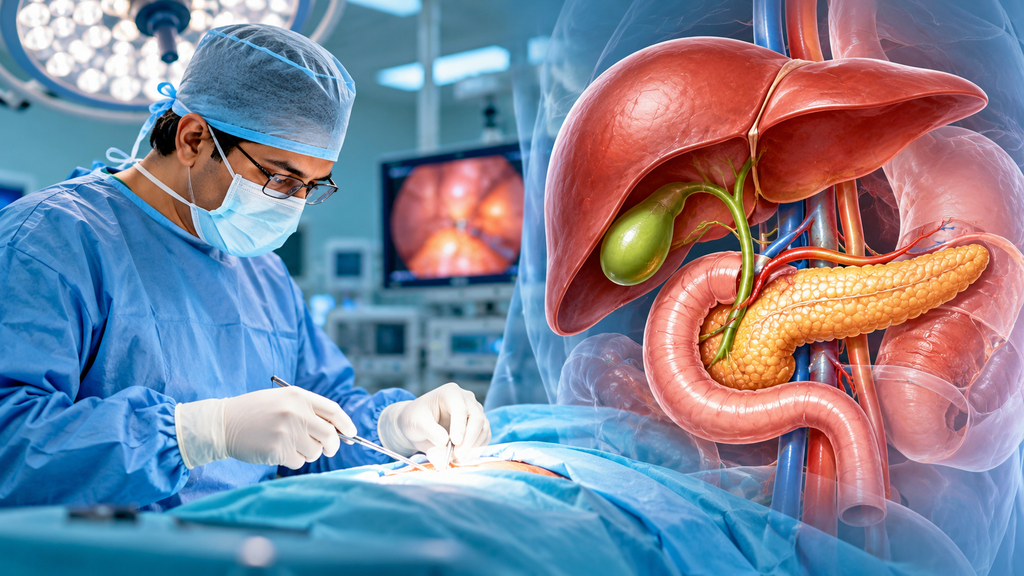
The liver, gallbladder and bile ducts work together as a closely connected system. The liver produces bile, the gallbladder stores it, and the bile ducts carry it to the small intestine to help with digestion. When something goes wrong in one part of this system, it can affect the others.
Hepatobiliary surgery is a specialised area of surgery that focuses on conditions affecting these organs. Some of these conditions are common and straightforward, while others are complex and require careful evaluation by a surgeon with specific training in liver, gallbladder and bile duct disorders.
This article explains what hepatobiliary surgery involves, the conditions a specialist may treat, and when someone might benefit from a consultation. It is written for patients and families in Cuttack and across Odisha who are seeking clear, reliable information about hepatobiliary surgery in Cuttack.
What Is Hepatobiliary Surgery?
Hepatobiliary” combines “hepato” (relating to the liver) and “biliary” (relating to the bile ducts and gallbladder). Hepatobiliary surgery is a specialised branch of surgery that deals with diseases of the liver, gallbladder, bile ducts and, in some cases, the pancreas.
The organs involved include:
- Liver – the largest internal organ, responsible for producing bile, filtering blood and supporting metabolism.
- Gallbladder – a small pouch that stores bile produced by the liver.
- Bile ducts – a network of tubes that carry bile from the liver and gallbladder to the small intestine.
Hepatobiliary surgeons evaluate and treat a wide range of conditions affecting these organs. Treatment does not always mean surgery. Depending on the condition, options may include medical management, endoscopic procedures, image-guided interventions, minimally invasive surgery, open surgery or cancer surgery. The appropriate approach depends on the specific diagnosis, severity, location and overall health of the patient.
What Conditions Are Treated by a Hepatobiliary Surgeon?
Gallstones and Gallbladder Disease
Gallstones are solid deposits that form in the gallbladder. Many people have gallstones without any symptoms, and these are often discovered incidentally during imaging for another reason. Asymptomatic gallstones generally do not require surgery.
Surgery such as laparoscopic cholecystectomy (gallbladder removal) may be considered when gallstones cause symptoms or complications. These include:
- Biliary colic (recurrent pain attacks)
- Acute or chronic cholecystitis (inflammation of the gallbladder)
- Cholangitis (infection of the bile ducts)
- Pancreatitis related to gallstones
- Obstructive jaundice
Not every person with gallstones needs surgery. The decision depends on symptoms, complications and individual assessment.
Gallbladder Polyps and Gallbladder Tumors
Gallbladder polyps are growths that project from the inner wall of the gallbladder. Many are benign, such as cholesterol polyps, but some may have malignant potential. Size, growth over time, appearance on imaging and symptoms all influence management decisions.
Guidelines generally recommend surgical consultation for polyps larger than 1 cm, symptomatic polyps, or polyps with concerning features. Smaller polyps may be monitored with follow-up imaging.
Gallbladder cancer is a less common but serious condition. Suspected or confirmed gallbladder cancer requires specialist evaluation and may involve complex surgical planning.
Liver Tumors and Liver Cancer
The liver can develop various types of tumors:
- Benign liver lesions – such as hemangiomas and focal nodular hyperplasia, which are often harmless and may not require treatment.
- Primary liver cancers – including hepatocellular carcinoma (HCC), which begins in the liver.
- Metastatic tumors – cancer that has spread to the liver from elsewhere in the body.
Treatment depends on the tumor type, size, number, location, liver function and whether the disease has spread. Options may include surveillance, local treatments such as ablation, surgery (liver resection), systemic therapy or other specialist approaches. Liver resection is generally considered for selected patients with preserved liver function and tumors that can be safely removed.
Bile Duct Disorders
The bile ducts can be affected by several conditions:
- Bile duct obstruction – blockage that prevents bile from flowing
- Bile duct stones – stones that have moved from the gallbladder into the bile ducts
- Bile duct strictures – abnormal narrowing, often caused by injury, scarring or inflammation
- Bile duct tumors – including cholangiocarcinoma
- Cholangitis – infection of the bile ducts
Bile duct problems often require coordination between surgeons, gastroenterologists and radiologists. Treatment may involve endoscopic procedures, stenting, surgical reconstruction or removal of diseased tissue, depending on the cause and location.
Pancreatic and Periampullary Conditions
Some hepatobiliary practices overlap with pancreatic and upper gastrointestinal surgery. The lower end of the bile duct meets the pancreatic duct at the ampulla of Vater, where they open into the small intestine.
Conditions involving the pancreas and periampullary region include pancreatic tumors, periampullary tumors and obstructions affecting the bile duct or pancreatic duct. Not every pancreatic condition requires surgery. Treatment may involve surveillance, endoscopic stenting, chemotherapy, surgery or a combination of approaches depending on the diagnosis and stage.
Liver Cysts and Other Liver Lesions
Liver cysts and lesions can be benign, infectious, parasitic or neoplastic. Simple liver cysts are common and often require no treatment unless they become large, cause symptoms or develop complications. Other lesions require evaluation based on their type, size, symptoms and imaging characteristics.
When Should You Consult a Hepatobiliary Surgeon?
You may benefit from specialist evaluation if you experience:
- Persistent upper abdominal pain
- Recurrent right upper abdominal pain
- Jaundice (yellowing of the skin or eyes)
- Dark urine or pale stools
- Unexplained weight loss
- Recurrent gallbladder attacks
- Fever with abdominal pain or jaundice
- Abnormal liver imaging
- A newly discovered liver or gallbladder lesion
- Bile duct obstruction
- Suspected liver, gallbladder or bile duct cancer
- Recurrent complications from known hepatobiliary disease
Symptoms alone do not establish a diagnosis. A proper evaluation is needed to determine the underlying cause.
How Are Hepatobiliary Conditions Diagnosed?
Diagnosis begins with a medical history, physical examination and blood tests, including liver function tests. Imaging plays a central role and may include:
- Ultrasound – often the first imaging test for gallbladder and liver concerns
- Contrast-enhanced CT – provides detailed images of the liver, bile ducts and surrounding structures
- MRI and MRCP – magnetic resonance cholangiopancreatography is a non-invasive way to visualise the bile and pancreatic ducts
- Endoscopic ultrasound (EUS) – used in selected situations
- ERCP – endoscopic retrograde cholangiopancreatography, which can both diagnose and treat bile duct problems
- Biopsy – tissue examination when clinically indicated
Different conditions require different investigations. Not every patient needs every test.
When Is Hepatobiliary Surgery Recommended?
Surgery may be considered when:
- A condition causes significant or recurrent symptoms
- There is infection or obstruction
- A complication develops
- A tumor is potentially removable
- Cancer treatment requires surgical resection
- A lesion has concerning features
- Conservative or non-surgical treatment is unsuitable or unsuccessful
Not every liver, gallbladder or bile duct condition requires surgery. The decision depends on the diagnosis, disease severity, anatomy, liver function and overall health of the patient.
Common Hepatobiliary Surgical Procedures
Laparoscopic Cholecystectomy
Removal of the gallbladder using minimally invasive techniques. This is a common procedure for symptomatic gallstones and certain gallbladder conditions. Most patients recover well, but individual recovery varies.
Liver Resection
Surgical removal of part of the liver. This may be considered for selected patients with certain liver tumors or other conditions, provided enough healthy liver tissue will remain.
Bile Duct Surgery
Selected bile duct problems may require surgical reconstruction or removal of diseased tissue. In some cases, the bile duct is rejoined to the small intestine.
Surgery for Liver Cancer
Liver resection may be considered for selected patients when the tumor can be safely removed and sufficient liver function can be preserved.
Surgery for Gallbladder or Bile Duct Cancer
Cancer surgery can be complex and may involve removal of the tumor and surrounding structures. The extent of surgery depends on the location and spread of the disease.
Complex Hepatobiliary Procedures
Some conditions require specialized planning and multidisciplinary evaluation involving surgeons, gastroenterologists, oncologists, radiologists and other specialists.
Laparoscopic vs Open Hepatobiliary Surgery
Minimally invasive (laparoscopic) surgery uses small incisions and a camera to perform procedures inside the abdomen. For selected patients, laparoscopic approaches may offer benefits such as less postoperative pain, shorter hospital stay and faster recovery compared with open surgery.
However, laparoscopic surgery is not suitable for every patient or every condition. Open surgery may be necessary when the disease is extensive, involves major blood vessels, or when the surgeon determines that open access is safer. The choice of approach depends on anatomy, disease severity, tumor characteristics and the surgeon’s assessment.
What Happens During a Hepatobiliary Surgical Consultation?
During a consultation, your surgeon will generally:
- Review your symptoms and medical history
- Examine previous reports and imaging
- Perform a physical examination where appropriate
- Assess liver and biliary function
- Discuss the diagnosis
- Explain treatment options
- Explain whether surgery is appropriate
- Discuss possible risks and expected recovery
- Plan follow-up care
Bringing previous imaging and laboratory reports to your appointment helps the surgeon understand your condition better.
What to Expect After Hepatobiliary Surgery
After surgery, patients are monitored in a recovery area. Pain management is provided under medical supervision. Diet is gradually advanced, usually starting with liquids and progressing as tolerated. Activity restrictions are advised according to the specific procedure and the patient’s condition. Wound care instructions are provided, and follow-up appointments are scheduled.
Liver and biliary function may be monitored after certain procedures. When surgery is performed for cancer, further surveillance may be recommended. Recovery timelines vary widely depending on the procedure and the individual patient.
Why Choose Specialist Evaluation for Hepatobiliary Conditions?
Hepatobiliary conditions can be complex. Specialist evaluation offers several advantages:
- Accurate interpretation of imaging studies
- Assessment of surgical suitability
- Understanding of liver and biliary anatomy
- Selection between surgical and non-surgical options
- Planning for complex procedures
- Coordination with other specialists when required
- Individualised treatment planning
A specialist can help determine whether surgery is appropriate or whether other approaches may be more suitable.
Frequently Asked Questions
1. What does a hepatobiliary surgeon treat?
A hepatobiliary surgeon treats conditions affecting the liver, gallbladder, bile ducts and, in some cases, the pancreas. This includes gallstones, gallbladder disease, liver tumors, bile duct obstruction, bile duct strictures and cancers of these organs.
2. What is the difference between a general surgeon and a hepatobiliary surgeon?
A hepatobiliary surgeon has additional training and expertise in complex liver, gallbladder and bile duct conditions. They often work as part of a multidisciplinary team and are experienced in both minimally invasive and open surgical approaches for these organs.
3. When should I see a hepatobiliary surgeon in Cuttack?
You should consider a consultation if you have persistent abdominal pain, jaundice, abnormal liver imaging, a newly discovered liver or gallbladder lesion, bile duct obstruction, or suspected liver, gallbladder or bile duct cancer.
4. Does every gallstone require surgery?
No. Many people have gallstones without symptoms, and these generally do not require surgery. Surgery is usually considered when gallstones cause symptoms or complications.
5. Can liver tumors be treated with surgery?
Some liver tumors can be treated with surgery, but this depends on the type of tumor, its size, location, number, liver function and whether the disease has spread. Not all liver tumors are suitable for resection.
6. What conditions require bile duct surgery?
Bile duct surgery may be needed for bile duct strictures, certain bile duct tumors, bile duct injuries and selected cases of bile duct obstruction that cannot be managed with endoscopic or radiological procedures alone.
7. Is hepatobiliary surgery always performed laparoscopically?
No. While laparoscopic approaches are used for many procedures, open surgery may be necessary for complex cases, large tumors, or when the surgeon determines that open access is safer.
8. How are liver, gallbladder and bile duct diseases diagnosed?
Diagnosis involves a combination of medical history, physical examination, blood tests, ultrasound, CT, MRI, MRCP, endoscopic ultrasound and sometimes ERCP or biopsy. The specific tests needed depend on the suspected condition.
Conclusion
Hepatobiliary surgery covers conditions involving the liver, gallbladder and bile ducts. These range from common gallbladder disorders to complex liver, bile duct and cancer-related conditions. Not every hepatobiliary condition requires surgery. Appropriate imaging, laboratory evaluation and specialist assessment help determine the correct treatment approach. If you or a family member are seeking evaluation for a liver, gallbladder or bile duct condition, hepatobiliary surgery in Cuttack offers access to specialist assessment and individualised treatment planning. Complex cases may benefit from multidisciplinary care involving surgeons, gastroenterologists, oncologists and other specialists.
About Dr. Harish Chandra Mishra

Laparoscopic, Cancer & GI Surgeon Cuttack, Odisha
Dr. Harish Chandra Mishra is a laparoscopic, cancer, and gastrointestinal surgeon based in Cuttack, Odisha, focused on the evaluation and surgical management of gastrointestinal and hepatobiliary conditions, including gallbladder cancer.
Book an Appointment
If you or a loved one are experiencing symptoms related to the liver, gallbladder or bile ducts, or if you have been advised to seek surgical evaluation, consulting a hepatobiliary surgeon in Cuttack can help you understand your options. A specialist can review your reports, assess your condition and discuss whether surgery or another treatment approach is appropriate for your situation.
To schedule a consultation with Dr. Harish Chandra Mishra, please contact the hospital.
Visit Life Institute of Gastroenterology and Gynecology | Best 24/7 Surgical Hospital.
Address :- Potapokhari, Block Chhaka, Naya Bazaar, Kataka, Odisha 753004

