


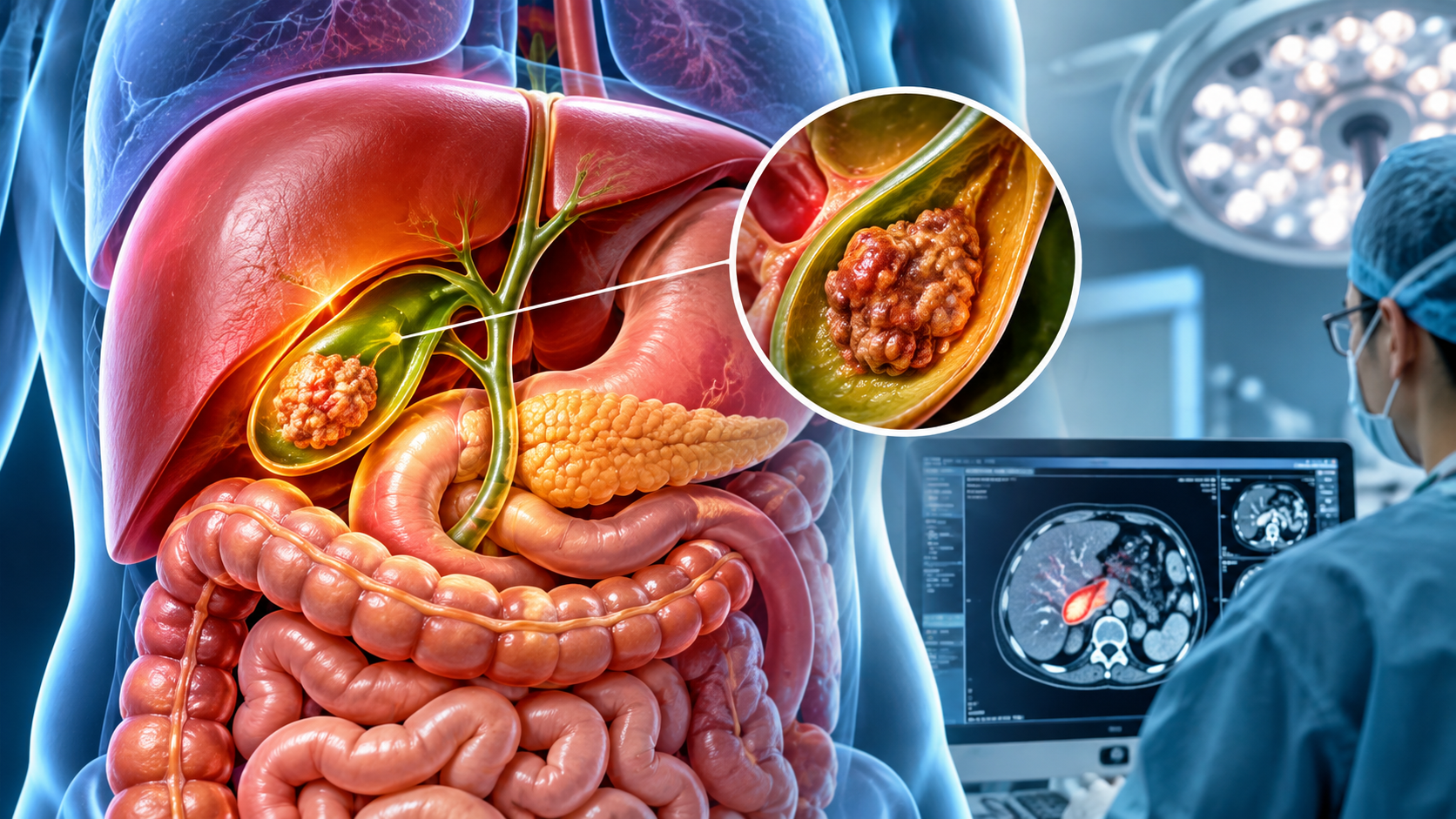

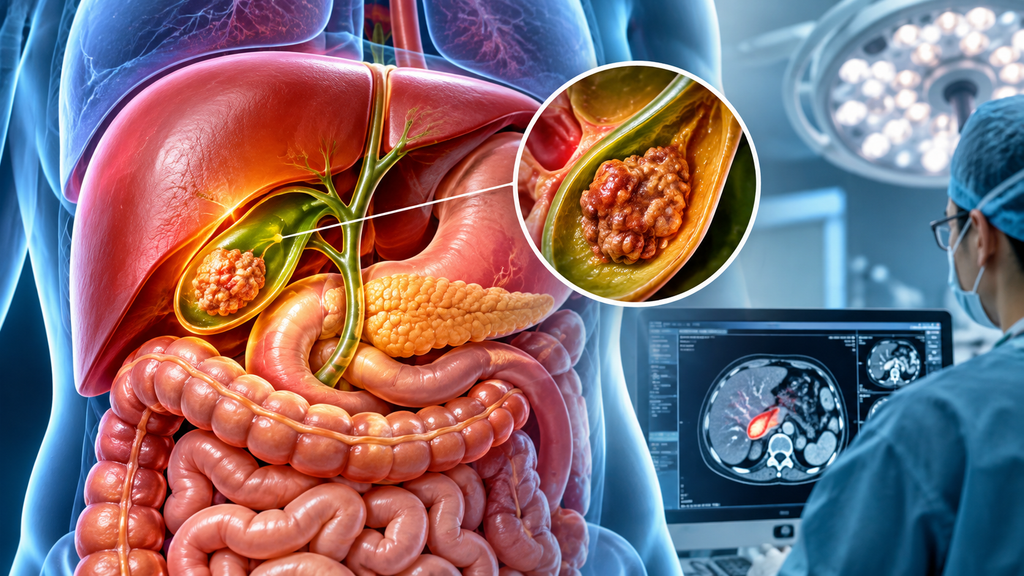
Gallbladder cancer is a relatively uncommon cancer that develops in the gallbladder a small, pear shaped organ located beneath the liver that stores and concentrates bile to aid digestion. Because early gallbladder cancer often produces few or non-specific symptoms, and because those symptoms overlap considerably with common, non-cancerous gallbladder and digestive conditions, it can be difficult to identify in its earliest stages based on symptoms alone.
It’s important to say clearly: abdominal discomfort, nausea, jaundice, or weight loss do not automatically mean cancer. These are symptoms with many possible explanations. What matters is that persistent or concerning symptoms are properly evaluated rather than ignored or self-diagnosed. This article explains the symptoms, risk factors, diagnostic process, and treatment options associated with gallbladder cancer, and outlines when patients in Cuttack might consider Gallbladder Cancer Treatment in Cuttack through a qualified specialist.
What Is Gallbladder Cancer?
The gallbladder plays a supporting role in digestion, storing bile produced by the liver and releasing it to help break down fats. Gallbladder cancer occurs when abnormal cells develop within the gallbladder tissue and begin to grow in an uncontrolled way. In some cases, these abnormal cells can spread to nearby structures, such as the liver or bile ducts, or to other parts of the body.
Most gallbladder cancers are a type called adenocarcinoma, arising from the glandular lining of the gallbladder, though this article keeps that detail general rather than technical.
It’s important to distinguish gallbladder cancer from more common, benign gallbladder conditions:
- Gallstones are hardened deposits in the gallbladder and are very common; the vast majority do not lead to cancer.
- Gallbladder polyps are growths on the gallbladder wall, most of which are benign, though some are monitored depending on their size and characteristics.
- Gallbladder cancer is a distinct, less common diagnosis that requires specific evaluation to confirm.
Having gallstones does not mean a person has or will develop gallbladder cancer.
What Causes Gallbladder Cancer?
There isn’t always one single identifiable cause of gallbladder cancer. Like most cancers, it develops through a series of complex cellular changes that researchers don’t fully understand in every case. What is better understood is a set of conditions and factors associated with a somewhat higher likelihood of gallbladder cancer developing.
It helps to distinguish between a risk factor and a cause. A risk factor is something associated with a statistically higher chance of a condition occurring it does not mean the condition will occur, and its absence doesn’t rule cancer out either. Most people with recognized risk factors for gallbladder cancer never develop it.
Symptoms of Gallbladder Cancer
Early gallbladder cancer often causes few noticeable symptoms, which is part of why persistent digestive complaints are worth taking seriously rather than dismissing. When symptoms do occur, they may include:
- Abdominal pain, particularly in the upper right abdomen
- Persistent nausea or vomiting
- Loss of appetite
- Unexplained weight loss
- Jaundice (yellowing of the skin or eyes)
- Abdominal swelling
- Fever, in some situations
- A palpable abdominal mass, typically in more advanced presentations
- Changes associated with bile duct obstruction, such as dark urine or pale stools
Each of these symptoms can occur with a wide range of non-cancerous conditions from gallstones and gallbladder inflammation to liver or digestive disorders. Having one or more of these symptoms does not mean a person has gallbladder cancer. It means the symptoms deserve a proper clinical evaluation to determine the cause.
Risk Factors for Gallbladder Cancer
Certain factors have been associated with a higher likelihood of gallbladder cancer in medical literature, including:
- Longstanding gallstones
- Chronic inflammation of the gallbladder
- Certain gallbladder polyps or structural abnormalities
- Porcelain gallbladder, in specific clinical contexts
- Certain bile duct abnormalities
- Older age
- Female sex
- Certain geographic or ethnic patterns, where documented in research
- Family or genetic factors, in selected cases
It bears repeating: having gallstones does not mean a person will develop gallbladder cancer — the great majority of people with gallstones never do. Risk factors help clinicians understand overall risk in a population; they cannot, by themselves, diagnose cancer in an individual.
When Should You See a Doctor?
Professional evaluation is reasonable for persistent or unexplained:
- Upper abdominal pain
- Jaundice
- Weight loss without a clear explanation
- Persistent nausea or vomiting
- Loss of appetite
- Abdominal swelling
- Changes suggestive of impaired bile flow
Certain presentations warrant more urgent evaluation, including new or worsening jaundice, severe abdominal pain, persistent vomiting, fever with significant abdominal symptoms, or rapid deterioration and marked weakness.
None of these symptoms, alone or together, confirm a cancer diagnosis. Several non-cancerous conditions — including gallstones, gallbladder inflammation, and liver or bile duct disorders — can produce very similar symptoms. The purpose of evaluation is to identify the actual cause, not to confirm a specific fear.
How Is Gallbladder Cancer Diagnosed?
Diagnosis typically starts with a detailed medical history, a review of symptoms, and a physical examination. Depending on the clinical picture, a doctor may consider further investigations, such as:
- Liver function tests
- Blood tests
- Abdominal ultrasound
- CT scan
- MRI
- MRCP
- Other imaging studies
- Endoscopic evaluation in selected situations
- Tissue examination (biopsy or pathology review) when appropriate
Imaging helps identify abnormalities within or around the gallbladder and assess whether there is any spread to nearby structures. Not every patient requires all of these tests the diagnostic pathway is tailored to the individual’s symptoms, examination findings, and clinical suspicion.
Understanding Gallbladder Cancer Stages
If gallbladder cancer is diagnosed, doctors use staging to describe how far it has spread. In general terms, staging considers:
- Early or localized disease — confined to the gallbladder itself
- Locally advanced disease — extending into nearby tissue or structures
- Regional lymph-node involvement — spread to nearby lymph nodes
- Distant spread (metastatic disease) — spread to other organs
Staging helps the treatment team determine whether surgical removal is a realistic option, whether additional treatments may be recommended, and how the overall treatment strategy should be shaped.
Treatment Options
Treatment for gallbladder cancer depends on several factors together: the stage of disease, the tumor’s location, whether it appears surgically removable, the patient’s overall health, and other individual clinical considerations.
Surgery
For appropriately selected patients with localized, resectable disease, surgery may be the main treatment approach with curative intent. The extent of surgery depends on the cancer’s location and stage it is not a single standardized operation for every patient.
Chemotherapy
Systemic anti-cancer medicines may be used as part of treatment, either alongside surgery or as the primary treatment in certain situations, based on the individual oncology plan.
Radiation Therapy
Radiation may be considered in selected cases, depending on the tumor’s characteristics and the overall treatment strategy.
Systemic Therapy for Advanced Disease
For patients with disease that cannot be surgically removed, or that has spread beyond the gallbladder, systemic treatment approaches may be recommended according to current oncology guidance.
Treatment planning for gallbladder cancer often involves a multidisciplinary team, including surgeons, medical oncologists, and radiologists. No treatment can be guaranteed to cure the disease, and the appropriate plan is always individualized.
When Is Surgery Required?
Surgery may be considered when the disease is localized and appears resectable — meaning it can potentially be completely removed. This includes:
- Early, localized gallbladder cancer
- Selected cases discovered incidentally during pathology review after a routine gallbladder removal
- Situations where complete surgical removal appears feasible based on imaging and staging
The extent of surgery depends on the cancer’s stage and location, and in some cases may be more extensive than a routine gallbladder removal, potentially involving nearby liver tissue or lymph nodes. The surgical approach laparoscopic or open is determined based on oncological principles and the specifics of each case; laparoscopic surgery is not automatically appropriate for every gallbladder cancer diagnosis.
What to Expect During Recovery
Recovery after gallbladder cancer surgery varies considerably depending on the type and extent of surgery performed, the patient’s overall health, whether additional treatment is needed, and whether complications occur. In general, recovery may involve:
- Hospital monitoring after surgery
- Pain management guided by the medical team
- A gradual return to eating and normal activity
- Wound care
- Follow-up appointments
- Review of the final pathology report
- Further cancer treatment, if recommended by the oncology team
There is no fixed recovery timeline that applies to every patient. Individualized instructions and follow-up planning come from the treating surgical and oncology team.
Gallbladder Cancer Care in Cuttack
Patients in Cuttack who are concerned about persistent gallbladder-related symptoms, or who have received a concerning imaging or pathology finding, may wish to consult a gallbladder cancer specialist in Cuttack for a thorough evaluation. When considering a gallbladder cancer surgeon it may help to think about:
- Relevant surgical qualifications
- Experience in gastrointestinal and cancer surgery
- A proper diagnostic evaluation before any treatment discussion
- A clear understanding of cancer staging
- An honest discussion of both surgical and non-surgical options
- Access to multidisciplinary care where appropriate
- Transparent communication throughout the process
- A clear follow-up plan
Whether the discussion centers on gallbladder cancer diagnosis in Cuttack or exploring gallbladder cancer treatment the goal of a specialist consultation is clarity understanding what the findings actually mean and what the reasonable next steps are.
Frequently Asked Questions
1. What are the early symptoms of gallbladder cancer?
Ans :- Early gallbladder cancer often causes few or no symptoms. When present, symptoms may include abdominal pain, nausea, or unexplained weight loss, though these are non-specific and have many possible causes.
2. Can gallstones increase the risk of gallbladder cancer?
Ans :- Longstanding gallstones are recognized as one of several risk factors, but the great majority of people with gallstones never develop gallbladder cancer.
3. Does having gallstones mean I have gallbladder cancer?
Ans :- No. Gallstones are extremely common and are usually unrelated to cancer. A specific evaluation is needed to distinguish between the two.
4. How is gallbladder cancer diagnosed?
Ans :- Diagnosis typically involves a medical history, physical examination, imaging studies such as ultrasound or CT scan, and, where appropriate, tissue examination.
5. Can gallbladder cancer be treated with surgery?
Ans :- Surgery may be a treatment option for patients with localized, resectable disease, determined after full staging and evaluation.
6. What determines whether gallbladder cancer is operable?
Ans :- Operability depends on the stage of disease, its location, whether it has spread, and the patient’s overall health, as assessed by the treating team.
7. What treatments are available for advanced gallbladder cancer?
Ans :- Advanced or unresectable disease is generally managed with systemic treatments such as chemotherapy, sometimes alongside radiation, based on individualized oncology planning.
8. When should I consult a gallbladder cancer specialist in Cuttack?
Ans :- Consultation is reasonable for persistent or unexplained abdominal symptoms, jaundice, weight loss, or when imaging or pathology findings raise concern and warrant specialist review.
Conclusion
Gallbladder cancer is an uncommon condition, and many of its associated symptoms overlap with far more common, non-cancerous gallbladder and digestive problems. Having risk factors, including gallstones, does not mean cancer is present. What matters most is that persistent or concerning symptoms are evaluated properly rather than assumed or ignored. Diagnosis generally involves clinical assessment along with appropriate imaging and investigations, and treatment depends on the stage of disease, whether it can be surgically removed, and the patient’s overall health. For appropriately selected patients, surgery can be an important part of treatment. Anyone exploring Gallbladder Cancer Treatment in Cuttack is encouraged to start with a thorough, professional evaluation.
About Dr. Harish Chandra Mishra

Laparoscopic, Cancer & GI Surgeon Cuttack, Odisha
Dr. Harish Chandra Mishra is a laparoscopic, cancer, and gastrointestinal surgeon based in Cuttack, Odisha, focused on the evaluation and surgical management of gastrointestinal and hepatobiliary conditions, including gallbladder cancer.
Book an Appointment
If you have persistent gallbladder-related symptoms or have been advised to seek specialist evaluation after an imaging or pathology finding, a consultation with a qualified cancer and GI surgeon can help you understand the appropriate next steps. Reach out to Dr. Harish Chandra Mishra’s clinic in Cuttack to schedule a consultation.
Visit Life Institute of Gastroenterology and Gynecology | Best 24/7 Surgical Hospital.
Address :- Potapokhari, Block Chhaka, Naya Bazaar, Kataka, Odisha 753004.

