


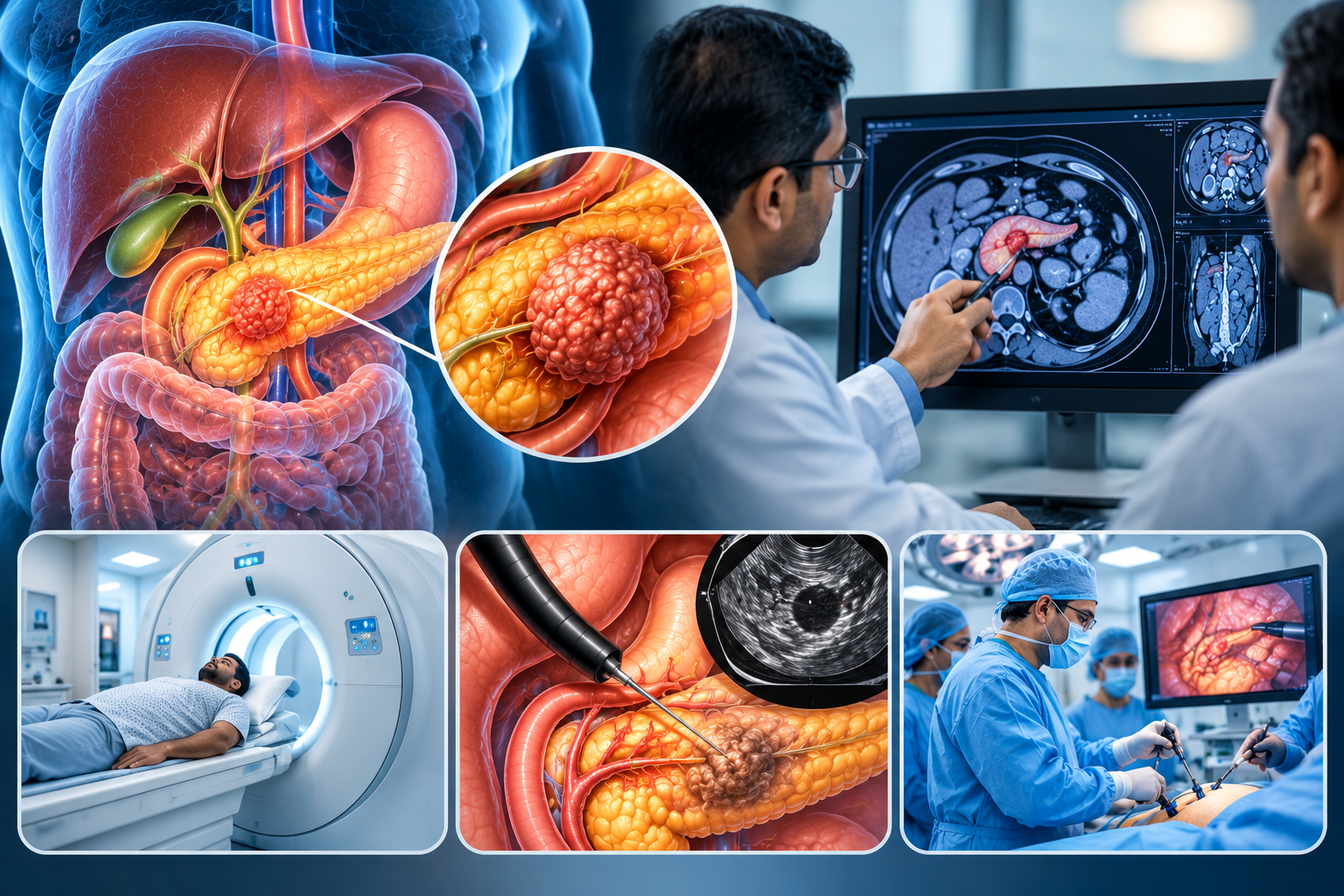

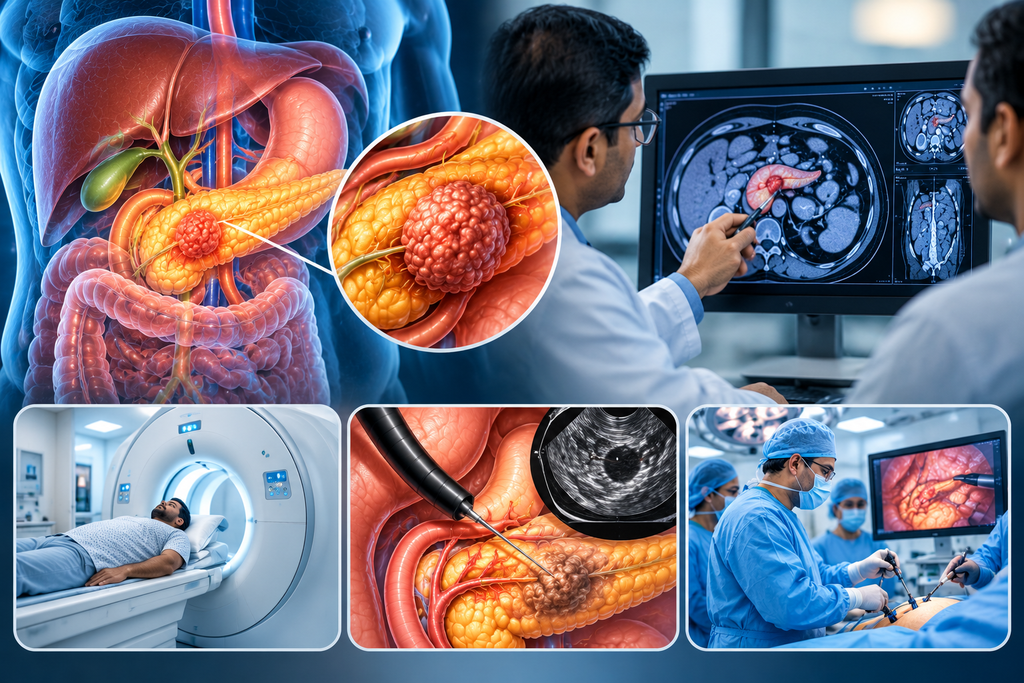
Hearing the words “pancreatic tumor” can understandably cause worry. However, it is important to know that a pancreatic tumor is a broad medical term that covers many different kinds of growths in the pancreas some non-cancerous, some with the potential to become cancerous over time, and others that are cancerous from the start. Symptoms alone cannot tell you, or your doctor, which category a tumor falls inA diagnosis of a pancreatic tumor often brings a wave of anxiety and questions. But here is what you need to know right away: a pancreatic tumor is not a single disease. It is a broad medical term that covers many different types of growths in the pancreas some are benign (non-cancerous), some are pre-cancerous and may change over time, and others are malignant (cancerous) from the very beginning.
Because symptoms like abdominal pain, unexplained weight loss, or jaundice can overlap with many other digestive conditions, you cannot determine the type of tumor simply by how you feel. For anyone researching pancreatic tumor treatment in Cuttack, understanding this distinction is the critical first step. A proper diagnosis requires a professional medical evaluation, advanced imaging, and, in some cases, tissue testing before any conclusions can be drawn. Only then can a doctor determine what the tumor actually is and plan the most appropriate course of action.to. That is why proper medical evaluation, imaging and, in some cases, tissue testing are needed before any conclusions are drawn.
What Is a Pancreatic Tumor?
The pancreas is a gland located deep in the upper abdomen. It plays two essential roles: producing digestive enzymes that help break down food, and producing hormones such as insulin that regulate blood sugar.
A pancreatic tumor refers to any abnormal growth of tissue within the pancreas. These growths can be:
- Solid – a mass made of tissue
- Cystic – a fluid-filled sac or pocket within the pancreas
Tumors are also classified as:
- Benign – non-cancerous, does not spread to other parts of the body
- Premalignant – not cancerous at present, but carries some potential to develop into cancer over time
- Malignant – cancerous, with the ability to invade nearby tissue or spread elsewhere
An important point for patients: a pancreatic lesion found incidentally on a scan does not automatically mean cancer. Many pancreatic lesions, particularly small cysts, are monitored rather than treated aggressively. The right approach depends on the specific characteristics of the lesion, which is determined through careful evaluation.
What Are the Different Types of Pancreatic Tumors?
Pancreatic adenocarcinoma is the most common form of pancreatic cancer. It arises from the cells lining the pancreatic ducts and is malignant.
Pancreatic neuroendocrine tumors (PNETs) develop from the hormone-producing cells of the pancreas. These behave differently from adenocarcinoma some grow slowly and remain localized for years, while others can be more aggressive. Some PNETs secrete hormones that cause distinctive symptoms, while others do not.
Cystic pancreatic lesions are fluid-filled growths that vary widely in nature. Some, such as certain simple cysts, carry very low risk. Others, such as certain mucinous cysts, carry a degree of malignant potential and require periodic monitoring or, in select cases, treatment. Not every cystic lesion needs surgery many are safely followed with imaging over time.
Other, less common pancreatic tumors exist, but are typically discussed only when relevant to an individual patient’s diagnosis rather than as a general concern.
Symptoms of Pancreatic Tumors
Symptoms vary considerably depending on the tumor’s location, size, whether it affects the bile duct or surrounding structures, whether it produces hormones, and whether the disease has spread.
Possible symptoms include:
- Persistent or recurring upper abdominal pain
- Pain radiating to the back
- Unexplained weight loss
- Loss of appetite
- Nausea
- Changes in digestion
- Jaundice (yellowing of the skin or eyes)
- Dark-colored urine
- Pale or clay-colored stools
- Itching of the skin
- New-onset or worsening diabetes in some patients
- Fatigue
- Abdominal discomfort or a feeling of fullness
It is important to understand that these symptoms are common to many gastrointestinal and pancreatic conditions that are not cancer, such as gallstones, pancreatitis, or digestive disorders. Having one or more of these symptoms is not proof of a pancreatic tumor or pancreatic cancer — it is simply a reason to seek medical evaluation.
When Should You See a Doctor?
You should consider a medical evaluation if you experience symptoms that are:
- Persistent or recurring over several weeks
- Unexplained by other known causes
- Progressively worsening
- Accompanied by jaundice or significant, unintentional weight loss
- Occurring in someone with a previously identified pancreatic lesion or known pancreatic disease
Jaundice, particularly when combined with pain or weight loss, generally warrants prompt medical attention. Seeking timely evaluation allows your doctor to identify the underlying cause early, whatever it may be.
What Causes Pancreatic Tumors?
The causes of pancreatic tumors vary by tumor type, and in many individual cases, no single clear cause can be identified. However, certain factors are recognized as increasing the risk of pancreatic cancer, including:
- Increasing age
- Cigarette smoking
- Chronic pancreatitis
- Certain inherited genetic conditions and gene mutations
- A family history of pancreatic cancer in selected cases
- Certain metabolic conditions, such as long-standing diabetes
It is important to distinguish between a risk factor and a direct cause. Having one or more risk factors does not mean a person will develop a pancreatic tumor, and pancreatic tumors can also occur in people with no identifiable risk factors at all.
How Are Pancreatic Tumors Diagnosed?
Diagnosing a pancreatic tumor typically involves combining clinical assessment with laboratory tests and imaging studies. Not every patient requires every test — the diagnostic pathway is tailored to the individual.
Common components of pancreatic tumor diagnosis in Cuttack and elsewhere include:
- Medical history and physical examination – to assess symptoms, risk factors and general health
- Blood tests, including liver function and pancreatic-related markers where appropriate
- Ultrasound – often an initial imaging step
- Contrast-enhanced CT scan – provides detailed images of the pancreas and surrounding structures
- MRI/MRCP – useful for evaluating the pancreatic and bile ducts, and characterizing cystic lesions
- Endoscopic ultrasound (EUS) – allows close, detailed imaging of the pancreas and can guide biopsy
- ERCP (Endoscopic Retrograde Cholangiopancreatography) – used in selected cases, particularly when bile duct obstruction needs to be addressed
- Tissue sampling or biopsy – performed in selected patients to confirm diagnosis
No single test can diagnose every type of pancreatic tumor on its own. Your specialist will decide which combination of investigations is appropriate based on your specific presentation.
What Is the Role of Biopsy in Pancreatic Tumors?
A biopsy involves obtaining a small tissue sample from the pancreas for laboratory analysis. It is often used to confirm whether a lesion is benign, premalignant or malignant.
EUS-guided biopsy is commonly used, as it allows tissue to be obtained with good accuracy while minimizing risk. However, biopsy is not required in every case. Whether a biopsy is necessary depends on factors such as the type of tumor suspected, whether surgery is already planned, and whether systemic (drug-based) treatment is being considered. In some situations, particularly when surgical removal is already indicated based on imaging, a biopsy may not change the treatment plan and can be deferred.
How Are Pancreatic Tumors Staged?
Staging is a process used mainly for malignant pancreatic tumors to understand the extent of disease. It generally evaluates:
- Tumor size and location
- Whether nearby blood vessels or organs are involved
- Whether nearby lymph nodes are affected
- Whether the cancer has spread to distant organs
Based on this assessment, pancreatic cancers are often categorized as:
- Resectable – can potentially be surgically removed
- Borderline resectable – may be removable, often after initial treatment to shrink the tumor
- Locally advanced – has grown into nearby structures, making straightforward surgical removal difficult
- Metastatic – has spread to distant parts of the body
Detailed imaging and specialist assessment are essential to determine the correct stage, as treatment decisions depend heavily on this classification.
Treatment Options for Pancreatic Tumors
Treatment for a pancreatic tumor is individualized and depends on the tumor type, whether it is benign, premalignant or malignant, its size and location, associated symptoms, evidence of growth or malignant potential, involvement of nearby structures, and the patient’s overall health.
Active Surveillance and Monitoring
Certain pancreatic cysts or low-risk lesions may simply be monitored over time with periodic imaging and clinical review, rather than treated immediately. Monitoring is a deliberate, medically guided strategy — not a decision to ignore the condition.
Surgical Treatment
Surgery may be considered for selected pancreatic tumors, particularly when malignancy is confirmed or strongly suspected, or when a lesion carries significant risk. Depending on the tumor’s location and characteristics, operations may include:
- Pancreaticoduodenectomy (Whipple procedure) – removal of the head of the pancreas along with parts of the bile duct, duodenum and, sometimes, part of the stomach, followed by reconstruction of the digestive tract
- Distal pancreatectomy – removal of the body and/or tail of the pancreas, sometimes along with the spleen
- Other pancreas-preserving or specialized procedures, used in select cases
The choice of operation depends largely on where the tumor is located within the pancreas and its relationship to nearby structures.
Chemotherapy and Systemic Treatment
Some malignant pancreatic tumors may require systemic (drug-based) treatment, either before surgery to shrink the tumor, after surgery to reduce recurrence risk, or as the main treatment when surgery is not possible. Specific drug regimens and dosing are determined individually by the treating oncology team.
Radiation Therapy
Radiation therapy may be considered for certain pancreatic cancers, depending on tumor characteristics, stage, and the overall treatment plan developed by the specialist team.
Endoscopic and Palliative Procedures
Some patients develop complications such as bile duct obstruction, jaundice, or blockage of the digestive tract. In such cases, procedures like stent placement may be used to relieve symptoms and support overall wellbeing, whether as a bridge to further treatment or as part of supportive care.
When Is Pancreatic Surgery Considered?
Surgery is one option among several, not a default answer for every pancreatic tumor. Several factors determine whether an operation is appropriate:
- Tumor location – some locations are more surgically accessible than others
- Blood vessel involvement – tumors closely involving major blood vessels may not be immediately operable
- Overall health and fitness for surgery – major pancreatic operations require adequate physical reserve
- Growth pattern and risk features – some lesions are safely monitored rather than removed
- Need for treatment before surgery – some cancers require chemotherapy or radiation first to improve the chances of a successful operation
- Multidisciplinary input – decisions often involve surgeons, oncologists, radiologists and other specialists working together
It is important to understand clearly: not every pancreatic tumor requires surgery, and not every pancreatic cancer is surgically removable. Surgery is one part of a broader, individualized treatment strategy not a universal solution.
What to Expect After Pancreatic Surgery or Treatment
Recovery and follow-up generally involve:
- A period of hospital monitoring after surgery
- Scheduled follow-up appointments
- Periodic imaging and laboratory tests
- Nutritional support and dietary guidance where needed
- Monitoring of digestive and pancreatic function
- Blood sugar monitoring, as pancreatic surgery can affect insulin production in some patients
- Ongoing surveillance for recurrence in patients treated for malignant disease
Recovery experiences vary between individuals, and your care team will guide you through a follow-up plan suited to your specific situation.
Pancreatic Tumor vs Pancreatic Cancer: Are They the Same?
These terms are often used interchangeably by patients, but they are not the same thing.
Pancreatic tumor is a broad term referring to any abnormal growth or lesion in the pancreas this may be benign, premalignant, or malignant.
Pancreatic cancer specifically refers to a malignant tumor arising in the pancreas, such as pancreatic adenocarcinoma or certain neuroendocrine tumors.
Imaging findings alone may not always determine the exact nature of a pancreatic lesion, which is why further evaluation sometimes including biopsy may be recommended before a definitive diagnosis is reached.
Pancreatic Tumor Evaluation in Cuttack, Odisha
For residents of Cuttack and the surrounding Odisha region, timely access to pancreatic tumor diagnosis in Cuttack can make a meaningful difference in the evaluation process. If you or a family member has been found to have a pancreatic lesion, or are experiencing persistent symptoms suggestive of pancreatic disease, seeking pancreatic tumor treatment in Cuttack from a qualified GI and cancer surgeon allows for coordinated imaging, laboratory testing and, where needed, surgical planning closer to home. A specialist familiar with pancreatic surgery in Cuttack can help guide you through the diagnostic pathway and explain which treatment approach, if any, is appropriate for your specific situation.
Frequently Asked Questions
1. What are the early symptoms of a pancreatic tumor?
Early symptoms can be vague and may include mild abdominal discomfort, changes in appetite, or unexplained fatigue. Because these are non-specific, many pancreatic tumors are found only after symptoms become more noticeable, or incidentally during imaging done for other reasons.
2. Does every pancreatic tumor mean cancer?
No. Pancreatic tumor is a broad term that includes benign, premalignant and malignant lesions. Many pancreatic tumors, particularly certain cysts, are not cancerous.
3. Can a pancreatic cyst become cancerous?
Some types of pancreatic cysts carry a degree of malignant potential and are monitored over time, while others carry very low risk. The specific type of cyst determines the appropriate follow-up plan.
4. How are pancreatic tumors diagnosed?
Diagnosis usually combines clinical history, blood tests and imaging studies such as CT, MRI/MRCP or endoscopic ultrasound. Biopsy may be added in selected cases.
5. Is a biopsy always required for a pancreatic tumor?
No. The need for biopsy depends on the suspected tumor type and the planned treatment approach. In some cases, imaging findings are sufficient to guide the next step.
6. When does a pancreatic tumor require surgery?
Surgery is generally considered when a tumor is malignant or has significant malignant potential, and when it is technically removable based on its location and relationship to nearby blood vessels.
7. What is the Whipple procedure?
The Whipple procedure (pancreaticoduodenectomy) is a major operation used for tumors in the head of the pancreas. It involves removing part of the pancreas along with nearby structures and reconstructing the digestive tract.
8. Which doctor should I consult for a pancreatic tumor?
A GI and cancer surgeon with experience in pancreatic disease can help guide diagnosis, coordinate necessary tests, and discuss appropriate treatment options based on your individual findings.
Conclusion
Pancreatic tumors encompass a wide range of conditions, from benign and premalignant lesions to malignant cancers. A pancreatic tumor does not automatically mean cancer, and many of the symptoms associated with pancreatic disease overlap with other, non-cancerous gastrointestinal conditions.
Proper imaging and specialist evaluation are essential to understand the true nature of a pancreatic lesion. Treatment, when needed, depends on the specific tumor type, its location, size, malignant potential, stage, and the patient’s overall health and surgery is appropriate only for selected patients rather than a universal requirement.
For those seeking pancreatic tumor treatment in Cuttack, a structured evaluation process can help clarify the diagnosis and guide the most appropriate next steps.
About Dr. Harish Chandra Mishra

Dr. Harish Chandra Mishra is a Laparoscopic, Cancer & GI Surgeon practicing in Cuttack, Odisha. He evaluates and manages patients with gastrointestinal and liver conditions, offering appropriate diagnostic assessment and treatment planning based on individual clinical needs Dr. Mishra offers comprehensive assessment using modern diagnostic tools, accurate staging, and individualized treatment planning. Whether your case requires minimally invasive surgery, open surgery, or coordination with other specialists, he ensures that every decision is based on sound oncological principles and your unique clinical needs.
Visit Life Institute of Gastroenterology and Gynecology | Best 24/7 Surgical Hospital.
Address :- Potapokhari, Block Chhaka, Naya Bazaar, Kataka, Odisha 753004.

