


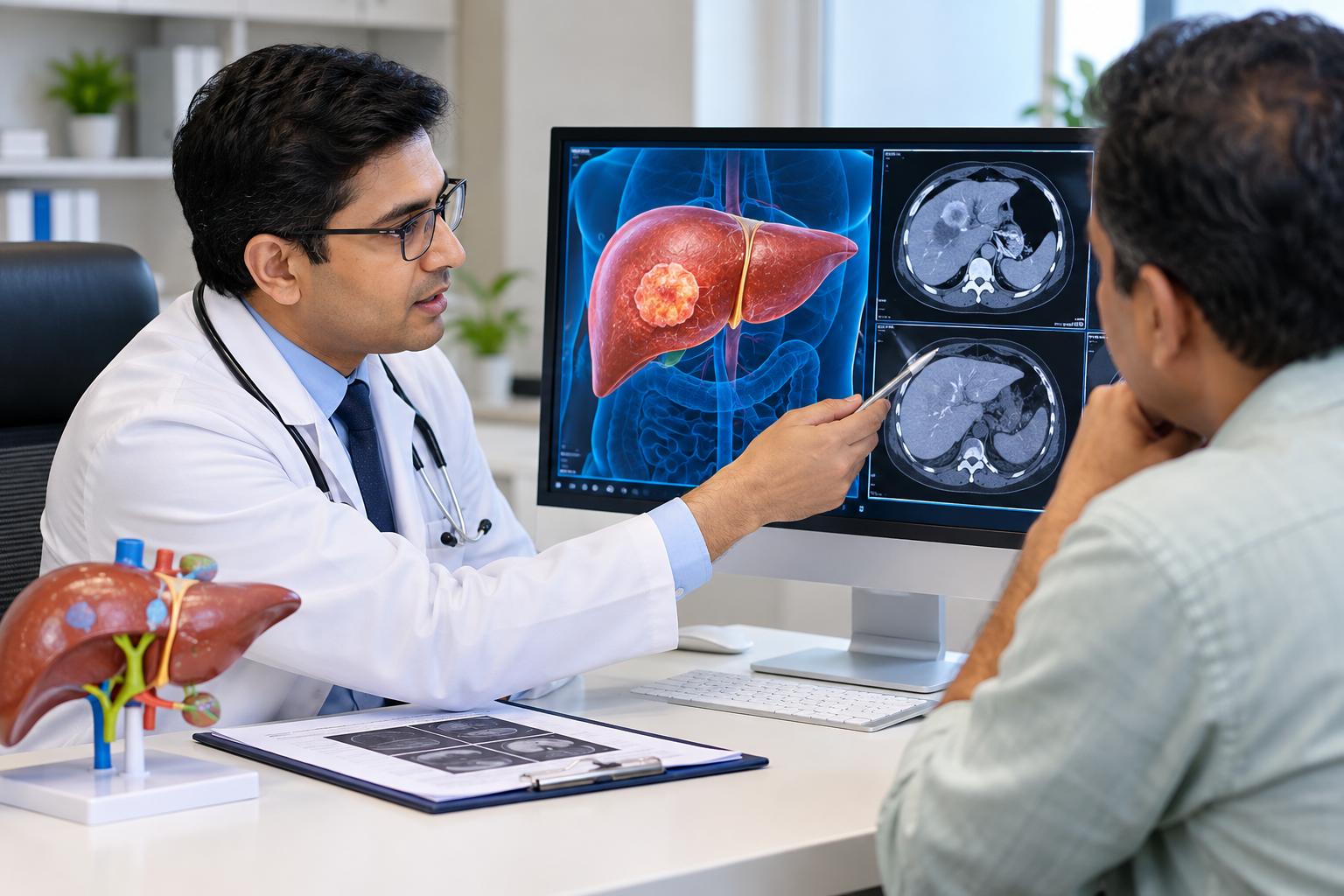
A liver tumor is an abnormal growth or mass in the liver. Some liver tumors are benign (non-cancerous) and may never cause serious problems, while others are malignant (cancerous) and require timely medical attention. Many liver masses are discovered incidentally during an ultrasound, CT scan, or MRI performed for unrelated reasons. Doctors evaluate a suspected liver tumor through medical history, physical examination, blood tests, and imaging studies. Accurate diagnosis is essential because it helps determine whether the tumor is harmless, requires monitoring, or needs treatment. If you are researching Liver Tumor Treatment in Cuttack, understanding the diagnostic process can help you make informed decisions with a qualified specialist.
What Is a Liver Tumor?
The term “liver tumor” refers to any abnormal growth or mass in the liver. It is a broad term that includes both non-cancerous (benign) and cancerous (malignant) growths. You may also hear the words “liver mass” or “liver lesion” used during imaging reports. These terms simply describe an area of tissue that looks different from the surrounding liver.
Not every liver tumor is liver cancer. In fact, many liver tumors are benign and do not spread to other parts of the body. Some tumors begin in the liver itself (primary liver tumors), while others spread to the liver from a different organ, such as the colon, breast, or lung (metastatic tumors). Because the liver filters blood from the digestive system, it is a common site for cancer to spread.
Understanding the type of tumor is the first step toward knowing whether it needs treatment or simple monitoring.
What Are the Different Types of Liver Tumors?
Benign Liver Tumors
Benign liver tumors are non-cancerous. They do not invade nearby tissues or spread to other organs. Common types include:
- Hemangioma: The most common benign liver tumor. It is made of blood vessels and usually causes no symptoms.
- Focal nodular hyperplasia (FNH): A benign growth that is often found incidentally. It rarely causes problems.
- Hepatocellular adenoma: A less common benign tumor that may sometimes bleed or, in rare cases, become cancerous. It may need monitoring or removal in certain situations.
Many benign liver tumors do not require treatment unless they cause symptoms, grow over time, carry a risk of bleeding, or raise other clinical concerns. Your doctor will decide if monitoring or intervention is needed.
Malignant Liver Tumors
Malignant liver tumors are cancerous. They can be primary (starting in the liver) or metastatic (spreading from elsewhere). Major categories include:
- Hepatocellular carcinoma (HCC): The most common form of primary liver cancer. It often occurs in people with underlying liver disease such as cirrhosis.
- Intrahepatic cholangiocarcinoma: A cancer that begins in the bile ducts within the liver.
- Other less common primary liver cancers: These are rare and require specialized evaluation.
- Metastatic tumors: Cancer that has spread to the liver from another organ. This is more common than primary liver cancer in many parts of the world.
Each type behaves differently and requires a tailored approach.
What Are the Symptoms of Liver Tumors?
Many liver tumors, especially small ones, cause no symptoms at all. They are often discovered by chance during an ultrasound or CT scan done for another reason.
When symptoms do occur, they may include:
- Upper abdominal discomfort or pain
- A feeling of fullness after eating
- Unexplained weight loss
- Loss of appetite
- Nausea
- Fatigue
- Abdominal swelling in certain cases
- Jaundice (yellowing of the skin or eyes) in some advanced or obstructive conditions
- Unexplained fever in selected situations
These symptoms are not specific to liver tumors. They can occur with many other conditions, so having them does not mean you have a liver tumor. However, persistent or unexplained symptoms should be evaluated by a doctor.
What Causes Liver Tumors?
The cause depends on the type of tumor. For malignant liver tumors, several risk factors have been identified:
- Chronic hepatitis B or hepatitis C infection
- Cirrhosis (scarring of the liver)
- Certain chronic liver diseases
- Metabolic liver disease, such as fatty liver disease
- Alcohol-related liver disease
- Certain inherited conditions
- Some environmental or medication-related factors
Having a risk factor does not mean you will develop liver cancer. Many people with these risk factors never develop tumors. Conversely, some people without known risk factors may still develop liver cancer. This is why proper evaluation is important.
How Are Liver Tumors Diagnosed?
Diagnosis usually involves a combination of medical history, physical examination, blood tests, and imaging. In some cases, a biopsy may be needed.
Medical History and Physical Examination
Your doctor will ask about:
- Your symptoms and how long you have had them
- Any previous liver disease or hepatitis
- Alcohol and medication history
- Family history of liver disease or cancer
- Previous cancer history
- Weight changes
- Signs of chronic liver disease
A physical examination may reveal an enlarged liver, jaundice, or other clues.
Blood Tests for Liver Tumors
Blood tests help assess liver function and look for specific markers.
- Liver function tests (LFTs): Measure enzymes and proteins that indicate how well the liver is working.
- Complete blood count (CBC): May be done to check for other conditions.
- Kidney function and other pre-treatment tests: May be needed if treatment is planned.
- Hepatitis B and C testing: Important if viral hepatitis is suspected.
- Alpha-fetoprotein (AFP): A tumor marker that may be elevated in some liver cancers. However, AFP alone cannot diagnose liver cancer, and a normal AFP does not completely rule it out.
Ultrasound for Liver Tumors
Abdominal ultrasound is often the first imaging test. It is painless, quick, and does not use radiation. It can identify a liver mass or abnormal area. If something is found, additional imaging is usually needed.
CT Scan for Liver Tumors
A contrast-enhanced CT scan provides detailed images of the liver. It can show the size, location, and number of lesions. It also helps doctors see blood vessels and nearby structures. CT is not required for every patient; it is used when more detail is needed.
MRI for Liver Tumors
MRI can provide very detailed images of the liver. Contrast-enhanced MRI can help characterize liver lesions and is particularly useful for differentiating certain types of tumors. It may be recommended after ultrasound or CT.
Contrast-Enhanced Imaging
Contrast agents are dyes that make certain tissues stand out on scans. They help reveal blood supply patterns, tumor characteristics, and the relationship of the tumor to blood vessels. This information helps doctors distinguish between different types of liver lesions.
PET Scan and Other Imaging Tests
PET/CT may be used in selected cancer-related situations, such as staging or looking for spread. It is not required for every liver tumor. Additional imaging depends on the suspected tumor type, symptoms, and clinical history.
Is a Liver Biopsy Always Needed?
No, a liver biopsy is not always needed. A biopsy involves removing a small sample of liver tissue for examination under a microscope. It can provide a definitive diagnosis in some cases.
However, many liver lesions can be diagnosed based on imaging characteristics and clinical history alone. For example, a typical hemangioma on ultrasound or CT may not require a biopsy. The decision to perform a biopsy depends on the suspected tumor type and imaging findings. Always discuss the risks and benefits with your specialist.
How Do Doctors Tell If a Liver Tumor Is Cancerous?
Doctors consider multiple factors:
- Patient history and risk factors
- Symptoms
- Blood test results
- Imaging findings (ultrasound, CT, MRI, PET)
- Tumor characteristics (size, number, location)
- Whether the lesion is solitary or multiple
- Whether there is evidence of disease elsewhere
- Biopsy findings when required
No single test can diagnose liver cancer with certainty. Diagnosis should be made by qualified medical professionals after a thorough evaluation.
What Happens After a Liver Tumor Is Diagnosed?
The next steps depend on whether the tumor is benign, primary malignant, metastatic, or uncertain. Doctors will evaluate:
- Tumor size
- Number of tumors
- Location within the liver
- Liver function
- Blood vessel involvement
- Spread to other organs
- Overall health
- Underlying liver disease
These factors guide treatment planning. Some patients may need a multidisciplinary team involving hepatologists, surgeons, oncologists, and radiologists.
Liver Tumor Treatment in Cuttack: What Treatment Options Are Available?
Treatment depends entirely on the type and stage of the tumor. Broad categories include:
Observation and Monitoring
For selected benign or low-risk lesions, regular monitoring may be all that is needed.
Surgical Removal
Surgery may be considered for certain benign tumors that cause symptoms or for malignant tumors that can be completely removed. The decision depends on the tumor’s location, size, and the patient’s liver function.
Ablation
Ablation techniques destroy tumors using heat, cold, or other energy-based methods. They are typically used for small tumors that cannot be removed surgically.
Embolization-Based Treatments
These procedures block or modify the blood supply to a tumor. They may be combined with targeted therapy in selected cases.
Systemic Cancer Treatment
Selected liver cancers may require medicines such as targeted therapies, immunotherapy, or other systemic treatments. The choice depends on the cancer type and stage.
Liver Transplantation
Transplantation may be an option for selected patients with specific liver cancers who meet certain clinical criteria.
If you are seeking Liver Tumor Treatment in Cuttack, consult a qualified specialist who can evaluate your specific situation and discuss appropriate options. Do not start any treatment without a proper diagnosis.
Does Every Liver Tumor Need Surgery?
No. Surgery is only one possible treatment. Many benign tumors do not need surgery. Even among malignant tumors, surgery may not be suitable if the cancer has spread or if liver function is poor.
Treatment decisions depend on:
- Tumor type
- Tumor size
- Number of lesions
- Tumor location
- Liver function
- Underlying liver disease
- Whether cancer has spread
- Overall health
Complex cases may require a multidisciplinary team approach.
When Should You See a Liver Specialist?
You should consider seeing a Liver Specialist if:
- A liver mass has been identified on ultrasound or another scan
- Liver enzymes are persistently abnormal
- You have unexplained liver-related symptoms
- You have a history of chronic hepatitis
- You have cirrhosis or another chronic liver disease
- You experience unexplained weight loss or jaundice
- You have a previous history of cancer
- A scan describes a suspicious or indeterminate liver lesion
Liver Tumor Diagnosis vs Liver Cancer Diagnosis
| Aspect | Liver Tumor | Liver Cancer |
|---|---|---|
| Meaning | Broad term for a mass or growth | Malignant tumor |
| Can be benign? | Yes | No |
| Can be primary or metastatic? | Yes | Yes |
| Requires evaluation? | Yes | Yes |
| Treatment | Depends on type | Depends on type and stage |
Not every liver tumor is cancer. Proper diagnosis is key.
Can a Liver Tumor Be Found by Accident?
Yes. Many liver lesions are discovered incidentally during imaging performed for another reason, such as:
- Routine abdominal ultrasound
- CT scans for unrelated symptoms
- MRI scans
- Evaluation of abdominal pain or other issues
An incidental finding does not automatically mean cancer. However, it should be evaluated by a specialist to determine its nature.
Frequently Asked Questions About Liver Tumors
1. What is the difference between a liver tumor and liver cancer?
A liver tumor is a broad term for any abnormal growth in the liver. It can be benign (non-cancerous) or malignant (cancerous). Liver cancer specifically refers to malignant tumors. Many liver tumors are benign and do not spread.
2. Can a liver tumor be detected without symptoms?
Yes. Many liver tumors, especially small ones, cause no symptoms and are found incidentally during imaging tests like ultrasound, CT, or MRI done for other reasons. This is why routine check-ups and proper evaluation of abnormal liver tests are important.
3. How do doctors confirm whether a liver tumor is benign or malignant?
Doctors use a combination of medical history, physical examination, blood tests (including liver function tests and tumor markers like AFP), and imaging studies (ultrasound, CT, MRI). In some cases, a biopsy may be needed to confirm the diagnosis.
4. Is a liver biopsy painful?
A liver biopsy is usually performed with local anesthesia. Most people feel some pressure or mild discomfort, but severe pain is uncommon. Your doctor will discuss the procedure, risks, and benefits with you beforehand.
5. What is the role of AFP testing in liver tumor diagnosis?
Alpha-fetoprotein (AFP) is a blood marker that may be elevated in some liver cancers, particularly hepatocellular carcinoma. However, AFP alone cannot diagnose liver cancer. A normal AFP level does not rule out cancer, and elevated AFP can occur in other conditions.
6. Can a benign liver tumor become cancerous?
Most benign liver tumors do not become cancerous. However, certain types, such as hepatocellular adenoma, may have a small risk of transformation in some cases. Your doctor will monitor such tumors and recommend treatment if needed.
7. How often should a liver tumor be monitored?
The frequency of monitoring depends on the type, size, and characteristics of the tumor, as well as your overall health. Some benign tumors may need only occasional scans, while others may require more frequent follow-up. Your specialist will create a personalized monitoring plan.
8. Is surgery always required for liver tumors?
No. Many benign liver tumors do not need surgery. Even some malignant tumors may be treated with other methods such as ablation, embolization, or systemic therapy. Treatment depends on the tumor type, size, location, liver function, and whether it has spread.
9. Can liver tumors be prevented?
Not all liver tumors can be prevented, but you can reduce your risk of malignant liver tumors by protecting against hepatitis B and C, limiting alcohol intake, maintaining a healthy weight, and managing underlying liver conditions. Regular check-ups are important if you have chronic liver disease.
Conclusion
A liver tumor is not always cancer. Many are benign and require only monitoring. Others may be malignant and need timely treatment. Accurate diagnosis involves a combination of medical history, physical examination, blood tests, and imaging. In some cases, a biopsy may be needed. If you are experiencing symptoms or have been told you have a liver mass, do not panic. Seek evaluation from a qualified Liver Tumor Treatment in Cuttack Early and accurate diagnosis can make a significant difference in outcomes. Whether you need a Gastroenterologist, a Liver Surgery, or a Liver Cancer, the right specialist can guide you through the process and help you understand your options for .
About Dr. Harish Chandra Mishra

A professional doctor can help patients understand the underlying causes of fatty liver and recommend an appropriate treatment and management plan based on their individual condition. Dr. Harish Chandra Mishra approaches each patient with this understanding at the center of his practice.
As a Laparoscopic, Cancer & GI Surgeon, Dr. Mishra focuses on the diagnosis and surgical management of gastrointestinal and liver-related conditions, including complex cases associated with advanced fatty liver disease and its complications. His approach emphasizes accurate evaluation, personalized treatment planning, lifestyle and medical management where appropriate, and surgical intervention when required.
Fatty liver can range from a mild condition with few symptoms to more advanced liver disease involving inflammation, fibrosis, or other complications. Dr. Mishra takes a comprehensive approach to patient care, considering the severity of the condition, associated risk factors, and overall health before recommending the most suitable treatment pathway.
Visit Life Institute of Gastroenterology and Gynecology | Best 24/7 Surgical Hospital
Address :- Potapokhari, Block Chhaka, Naya Bazaar, Kataka, Odisha 753004

