


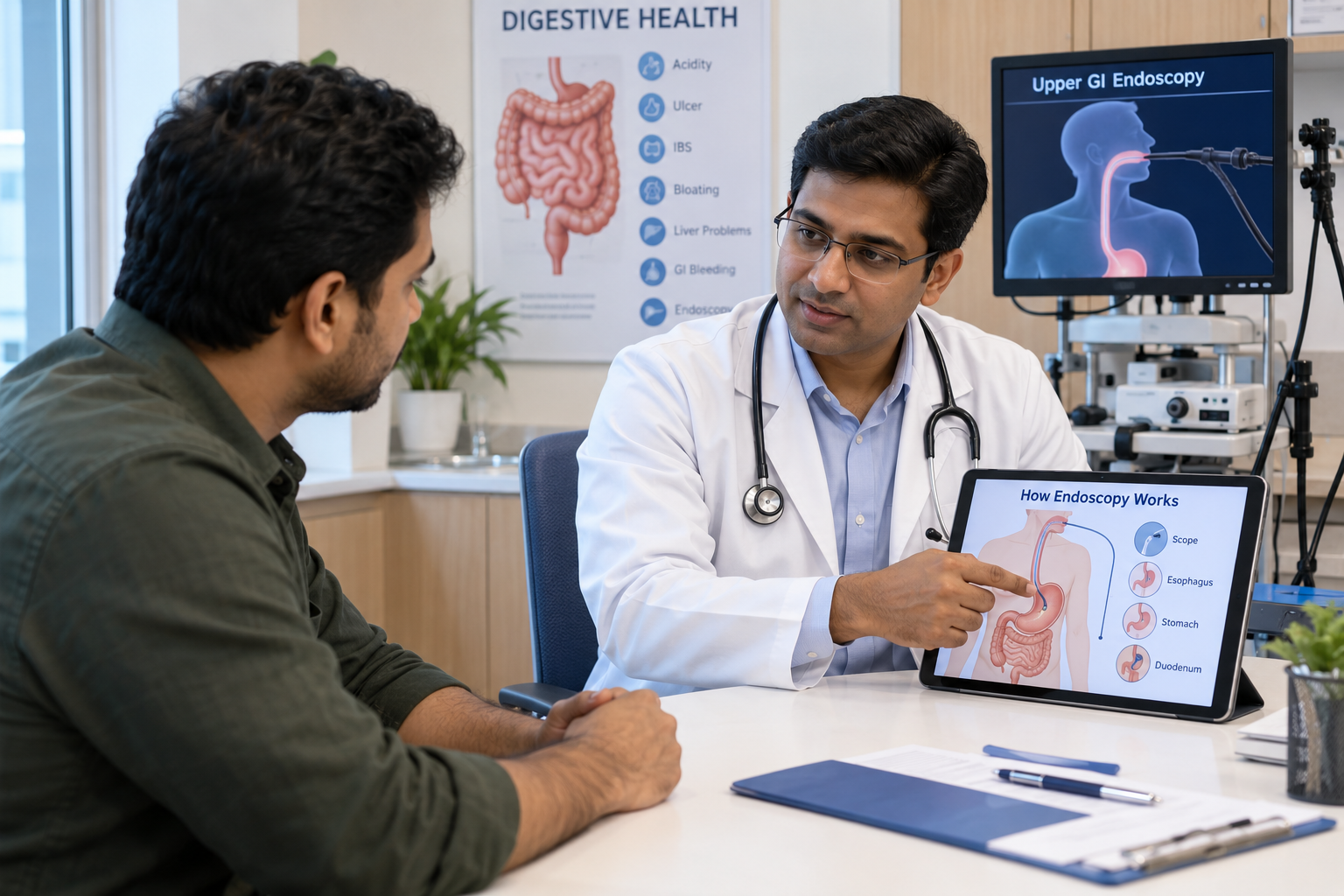

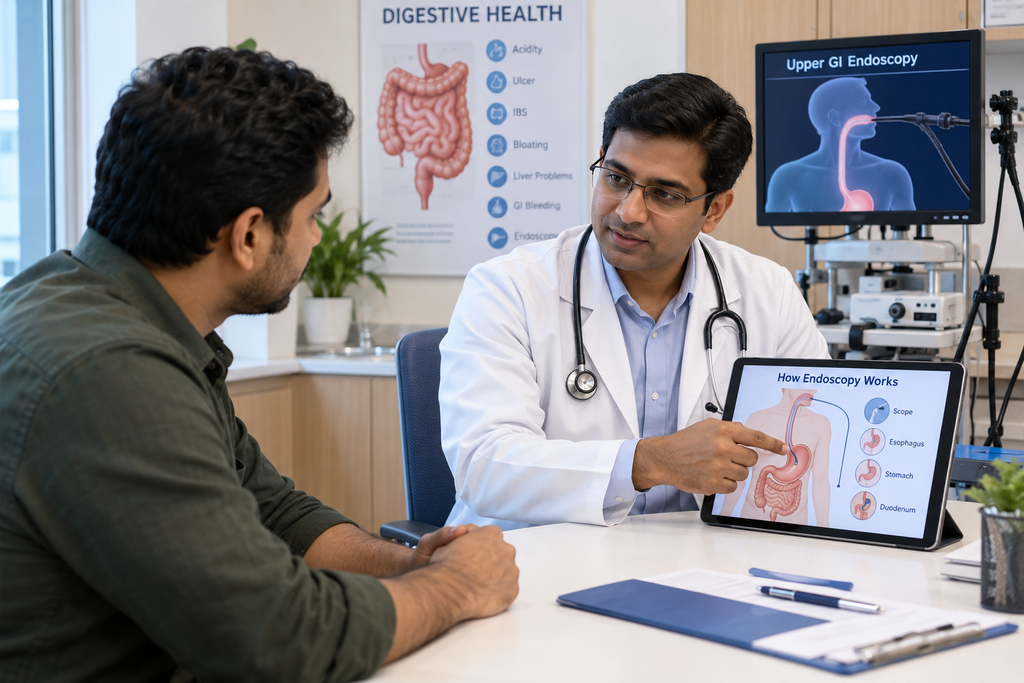
Ramesh had been ignoring his recurring acidity and stomach discomfort for months. He tried antacids, changed his diet, and even avoided his favourite street food. But when he started losing weight without trying and noticed black stools, his family insisted he see a doctor. After a detailed consultation, his gastroenterologist recommended a gastrointestinal endoscopy. The procedure revealed a bleeding ulcer that had been silently causing problems.
This story is more common than many realize. Symptoms like persistent acidity, abdominal discomfort, difficulty swallowing, recurrent vomiting, unexplained weight loss, black or bloody stools, and ongoing indigestion can sometimes require further evaluation. Gastrointestinal Endoscopy in Cuttack has become an important diagnostic tool that allows a doctor to directly examine the upper digestive tract and investigate these symptoms.
If you or a loved one has been advised to undergo an endoscopy, this guide will help you understand what the procedure involves, what conditions it can detect, and how to prepare. It will also help you know when to consult a gastroenterologist in Cuttack.
What Is Gastrointestinal Endoscopy?
A gastrointestinal endoscopy is a procedure that allows a doctor to look inside your upper digestive system using a thin, flexible tube called an endoscope. The endoscope has a tiny camera at its tip that sends images to a monitor, allowing the doctor to see the lining of your esophagus, stomach, and the first part of your small intestine (duodenum).
The esophagus is the food pipe that carries food from your mouth to your stomach. The stomach holds and begins digesting food. The duodenum is where further digestion and nutrient absorption begin. An upper GI endoscopy examines all three of these areas.
This procedure is also commonly called gastroscopy or EGD (esophagogastroduodenoscopy). Your doctor may use these terms interchangeably.
Why Do Doctors Recommend Gastrointestinal Endoscopy?
A gastroenterologist may recommend an endoscopy for several reasons. It is not a routine test for everyone with digestive symptoms. The decision depends on your symptoms, medical history, age, risk factors, examination findings, and the doctor’s clinical judgment.
Common reasons for recommending an endoscopy include:
- Persistent abdominal or upper abdominal pain
- Difficulty swallowing (dysphagia)
- Painful swallowing
- Persistent heartburn or acid reflux
- Chronic indigestion
- Recurrent vomiting
- Unexplained nausea
- Gastrointestinal bleeding
- Black or tarry stools
- Unexplained anemia in appropriate clinical circumstances
- Unexplained weight loss
- Persistent symptoms despite initial treatment
- Suspected ulcers or other upper GI conditions
An endoscopy can help find the cause of symptoms such as upper belly pain, bloating, trouble swallowing, or persistent heartburn. It also allows doctors to collect tissue samples (biopsy) to test for conditions that may be causing anemia, bleeding, inflammation, or diarrhea.
However, not everyone with these symptoms automatically needs an endoscopy. Your doctor will assess your individual situation before recommending the procedure.
What Problems Can Gastrointestinal Endoscopy Detect?
This is the most important question for most patients. An upper GI endoscopy can help identify several conditions affecting the esophagus, stomach, and duodenum. Here are the key problems it can detect:
A. Gastritis
Gastritis is inflammation of the stomach lining. It can cause symptoms like upper abdominal pain, nausea, and a feeling of fullness. During an endoscopy, the doctor can directly visualise the stomach lining and identify areas of inflammation, redness, or irritation. If needed, a small tissue sample (biopsy) can be taken to confirm the diagnosis and check for causes such as H. pylori infection.
B. Peptic Ulcers
Peptic ulcers are open sores that develop on the lining of the stomach (gastric ulcers) or the first part of the small intestine (duodenal ulcers). Endoscopy allows the doctor to see these ulcers directly, assess their size and appearance, and take biopsies if necessary. It can also help identify if an ulcer is bleeding. Sometimes, the doctor can treat a bleeding ulcer during the same procedure.
C. Gastroesophageal Reflux Disease (GERD)
GERD occurs when stomach acid frequently flows back into the esophagus, causing symptoms like heartburn and acid regurgitation. Endoscopy can evaluate the esophagus for damage caused by chronic acid exposure, such as erosions or inflammation. It can also help identify complications of GERD.
D. Esophagitis
Esophagitis is inflammation of the esophagus. It can be caused by acid reflux, infections, certain medications, or allergic conditions. Endoscopy can visualise the inflamed lining of the esophagus and, if needed, take biopsies to determine the underlying cause.
E. Gastrointestinal Bleeding
Endoscopy is an important tool for identifying the source of upper GI bleeding. The doctor can look for bleeding ulcers, eroded blood vessels, tears in the esophagus (Mallory-Weiss tears), or other abnormalities. If you notice blood in your vomit or black, tarry stools, seek urgent medical attention. Endoscopy may sometimes be performed urgently in such situations.
F. Esophageal Strictures
A stricture is a narrowing of the esophagus that can make swallowing difficult. Endoscopy can identify the narrowed area and, in some cases, the doctor can widen it using special instruments during the procedure (dilatation).
G. Hiatal Hernia
A hiatal hernia occurs when the upper part of the stomach pushes through the diaphragm into the chest. This can contribute to acid reflux and other symptoms. Endoscopy can help identify a hiatal hernia during the examination.
H. Barrett’s Esophagus
Barrett’s esophagus is a condition in which the lining of the esophagus changes, often due to long-standing acid reflux. It is associated with an increased risk of esophageal cancer. Endoscopy with biopsy is used to diagnose Barrett’s esophagus and monitor for precancerous changes. Special imaging techniques like narrow band imaging can help detect these changes more clearly.
I. Polyps or Abnormal Growths
Endoscopy can identify abnormal tissue or growths in the upper digestive tract. If suspicious areas are seen, the doctor can take a biopsy (a small tissue sample) for laboratory examination. Some polyps can also be removed during the procedure.
J. Suspected Gastrointestinal Cancer
Endoscopy plays a crucial role in evaluating suspected cancers of the esophagus, stomach, and duodenum. It allows the doctor to visualize suspicious lesions and take multiple tissue samples (biopsies) for pathological examination. However, endoscopy alone cannot confirm cancer. A biopsy and pathology evaluation are required to establish a diagnosis. Early evaluation of concerning symptoms is important because it can help detect problems at an earlier, more treatable stage.
Can Endoscopy Detect Stomach Cancer?
This is a common and understandable concern. Endoscopy is the primary test used when a doctor suspects stomach cancer. During the procedure, the doctor can identify suspicious areas in the stomach lining and take biopsy samples. These samples are then examined under a microscope by a pathologist to check for cancer cells.
It is important to understand that the visual appearance of an area during endoscopy alone cannot confirm cancer. Some benign conditions can look suspicious, and some early cancers may not have obvious visual features. This is why biopsy and pathology evaluation are essential.
If you have persistent symptoms such as indigestion, feeling full quickly, unexplained weight loss, or vomiting, consult a gastroenterologist. Early evaluation does not mean you have cancer, but it can help rule out serious conditions or detect them early when treatment is most effective.
Can Endoscopy Detect Ulcers and Gastritis?
Yes. Endoscopy is an excellent tool for detecting both ulcers and gastritis. It allows the doctor to:
- Directly visualise inflammation of the stomach lining (gastritis)
- Identify the presence, location, and size of ulcers
- Check for signs of bleeding from ulcers
- Take biopsies to check for H. pylori infection or other causes
- Identify abnormal tissue that may require further evaluation
Your doctor may also recommend additional tests depending on what is found. For example, if an ulcer is seen, testing for H. pylori infection is common because treating the infection is an important part of ulcer management.
Can Endoscopy Help Find the Cause of Acid Reflux?
Acid reflux occurs when stomach contents flow back into the esophagus. Occasional heartburn is common and does not necessarily require an endoscopy. However, when reflux symptoms are persistent, severe, or associated with warning signs (such as difficulty swallowing, weight loss, or bleeding), an endoscopy may be recommended.
During endoscopy, the doctor can look for:
- Esophagitis: Inflammation or damage to the esophageal lining caused by acid
- Barrett’s esophagus: Changes in the esophageal lining associated with chronic reflux
- Strictures: Narrowing of the esophagus that can result from chronic acid damage
- Hiatal hernia: Which can contribute to reflux
Not every person with occasional heartburn needs an endoscopy. Your gastroenterologist will consider the frequency, severity, and duration of your symptoms, along with other factors, before recommending the procedure.
What Happens During a Gastrointestinal Endoscopy?
Understanding the procedure can help reduce anxiety. Here is a step-by-step overview:
Step 1: Preparation
You will receive specific instructions about fasting and medication adjustments. This is important for your safety and for the procedure to be effective.
Step 2: Sedation / Anesthesia
Sedation or anesthesia may be used depending on the procedure, your health, and the clinical setting. The type of sedation can vary. Some patients receive a mild sedative to help them relax, while others may receive deeper sedation. You will be monitored throughout the procedure.
Step 3: Inserting the Endoscope
A flexible tube with a camera is gently passed through your mouth and into your esophagus, stomach, and duodenum. You may be given a throat spray to numb the area and make the procedure more comfortable.
Step 4: Examination
The doctor carefully examines the lining of your upper digestive tract on a monitor.
Step 5: Biopsy (If Needed)
Small tissue samples may be taken if the doctor sees an area that needs further evaluation. This is a painless procedure.
Step 6: Completion
The endoscope is gently removed. The entire procedure usually takes about 15 to 30 minutes.
Is Gastrointestinal Endoscopy Painful?
This is a common concern. Most patients do not experience significant pain during the procedure, especially when sedation is used. Sedation helps reduce discomfort and anxiety, and many people do not remember the procedure afterwards.
After the procedure, you may experience:
- Temporary throat discomfort or a mild sore throat
- Bloating or a feeling of fullness due to air used during the procedure
- Mild nausea
These symptoms are usually temporary and resolve on their own. Individual experiences vary, and some people may feel more discomfort than others. If you experience significant or unusual symptoms after the procedure, report them to your medical team immediately.
How Should You Prepare for an Endoscopy?
Your gastroenterologist or endoscopy center will provide specific preparation instructions. Here is a general checklist of what may be discussed:
- Fasting: You will likely need to stop eating and drinking for a certain period before the procedure. This is usually 6 hours for solid food and 2 hours for clear liquids.
- Medications: Tell your doctor about all prescription and over-the-counter medicines, vitamins, and supplements you take. This includes aspirin, blood thinners, diabetes medications, and iron supplements.
- Diabetes medications: You may need special instructions if you take insulin or other diabetes medications.
- Blood-thinning medications: Your doctor may ask you to adjust or temporarily stop some of these medicines.
- Allergies: Inform your doctor about any allergies you have.
- Existing medical conditions: Share your complete medical history.
- Transportation: If you receive sedation, you will not be able to drive yourself home. Arrange for a responsible adult to accompany you and take you home.
Important: Do not stop or change any medication without your doctor’s specific instructions. Follow the preparation instructions provided by your gastroenterologist or endoscopy center.
What Happens After Endoscopy?
After the procedure, you will be observed for a short period while the sedation wears off. Here is what you can generally expect:
- Short observation period: You will rest until you are alert and stable.
- Throat irritation: A mild sore throat is common and usually resolves within a day.
- Bloating or gas: You may feel bloated due to air used during the procedure. This usually passes quickly.
- Resuming food: Your doctor will tell you when you can eat and drink again, usually once your swallowing reflex has returned.
- Resuming activities: You should not drive, operate machinery, or make important decisions for the rest of the day if you received sedation.
- Biopsy results: If a biopsy was taken, the results may take several days to a week or more to be available. Your doctor will discuss preliminary findings immediately after the procedure, but biopsy results require laboratory processing and will be discussed at a follow-up appointment.
Are There Any Risks of Gastrointestinal Endoscopy?
Gastrointestinal endoscopy is a commonly performed procedure, but like any medical procedure, it carries some risks. The individual risk depends on your overall health and the type of procedure performed.
Possible complications, though uncommon, include:
- Bleeding: Particularly if a biopsy or certain therapeutic procedures are performed
- Infection: A rare risk
- Reaction to sedation: Including breathing or heart problems
- Perforation: A tear in the wall of the digestive tract, which is uncommon
Most complications are minor and manageable. Your gastroenterologist will discuss the risks and benefits with you before the procedure.
When Should You See a Gastroenterologist?
You should consider consulting a gastroenterologist if you experience:
- Persistent abdominal pain
- Recurrent acidity or heartburn
- Difficulty swallowing
- Persistent vomiting
- Recurrent indigestion
- Unexplained weight loss
- Blood in vomit
- Black or tarry stools
- Unexplained anemia
- Persistent changes in digestive symptoms
Seek prompt medical attention if you experience:
- Vomiting blood
- Black, tarry stools
- Severe abdominal pain
- Fainting or significant weakness
These can be signs of a serious condition that requires urgent evaluation.
Who Should Not Delay Evaluation?
Some people may be tempted to self-treat persistent digestive symptoms with over-the-counter remedies. However, certain warning signs should not be ignored. You should not delay evaluation if you have:
- Gastrointestinal bleeding
- Unexplained weight loss
- Difficulty swallowing
- Persistent vomiting
- Significant anemia
- Family or personal history of relevant gastrointestinal disease
- Persistent or worsening symptoms
Having these symptoms does not mean you have a serious disease. But it does mean that professional evaluation is important to find the cause and rule out serious conditions.
Gastrointestinal Endoscopy in Cuttack
If you are looking for Gastrointestinal Endoscopy in Cuttack, it is important to choose a qualified and experienced gastroenterologist who can evaluate your symptoms thoroughly and recommend the right diagnostic approach.
When choosing an endoscopy service or gastroenterologist in Cuttack, consider the following:
- Qualified gastroenterologist: Look for a doctor with proper training and credentials in medical gastroenterology. A GI specialist should have experience in performing endoscopy and interpreting findings.
- Appropriate clinical evaluation: A good gastro doctor will evaluate your symptoms, medical history, and risk factors before recommending an endoscopy.
- Proper patient preparation: Clear instructions about fasting and medication adjustments are essential.
- Appropriate sedation and monitoring: The procedure should be performed with appropriate sedation and monitoring for your safety and comfort.
- Availability of biopsy: If needed, biopsy services should be available for proper diagnosis.
- Proper interpretation of findings: The endoscopy doctor should explain the findings clearly and discuss what they mean for your health.
- Pathology support: If a biopsy is taken, reliable pathology services are important for accurate results.
- Appropriate follow-up: Your doctor should explain the results and provide guidance on the next steps.
When you meet your gastroenterologist, ask questions about the procedure, what it involves, and what you can expect. A good doctor will take the time to explain everything clearly.
Gastrointestinal Endoscopy vs Other Digestive Tests
Different digestive tests help evaluate different parts of the digestive system and answer different clinical questions. Here is a simple comparison:
| Test | What It Helps Evaluate | Common Purpose |
|---|---|---|
| Upper GI Endoscopy | Esophagus, stomach, duodenum | Detect ulcers, gastritis, GERD, Barrett’s esophagus, and other upper GI conditions |
| Colonoscopy | Large intestine (colon) and rectum | Screen for colon polyps and colorectal cancer, evaluate lower GI symptoms |
| Ultrasound | Abdominal organs (liver, gallbladder, pancreas, kidneys) | Evaluate organ structure, detect gallstones, liver disease, and other abnormalities |
| CT Scan | Abdominal and pelvic organs | Provide detailed cross-sectional images for evaluating tumours, inflammation, and other conditions |
| MRI | Soft tissues and organs | Detailed imaging of organs, especially useful for liver, pancreas, and biliary system |
| Blood Tests | Various markers | Detect anemia, infection, liver function abnormalities, and other indicators |
No single test is universally better than another. The appropriate test depends on your symptoms, medical history, and your doctor’s assessment. Sometimes, more than one test may be needed to reach a diagnosis.
Frequently Asked Questions
1. What is gastrointestinal endoscopy?
Ans:- Gastrointestinal endoscopy is a procedure that uses a thin, flexible tube with a camera to examine the upper digestive tract. It allows the doctor to look at the esophagus, stomach, and duodenum to investigate symptoms and diagnose conditions.
2. What problems can gastrointestinal endoscopy detect?
Ans:- It can detect gastritis, peptic ulcers, GERD, esophagitis, esophageal strictures, hiatal hernia, Barrett’s esophagus, polyps, and suspicious growths. Biopsies can be taken to evaluate for conditions like cancer when needed.
3. Is gastrointestinal endoscopy painful?
Ans:- Most patients do not experience significant pain during endoscopy, especially with sedation. After the procedure, you may have a temporary sore throat or bloating. Individual experiences vary, and any unusual symptoms should be reported to your doctor.
4. How should I prepare for an endoscopy?
Ans:- You will typically need to fast for several hours before the procedure. Your doctor will provide specific instructions about medications, including blood thinners and diabetes medications. You should also arrange for someone to take you home if you receive sedation.
5. Can endoscopy detect stomach ulcers?
Ans:- Yes. Endoscopy is an excellent tool for detecting stomach and duodenal ulcers. The doctor can see the ulcer directly, assess its size and appearance, and take biopsies if needed. It can also help identify if an ulcer is bleeding.
6. Can endoscopy detect gastritis?
Ans:- Yes. Endoscopy allows the doctor to visualise inflammation of the stomach lining. Biopsies can be taken to confirm the diagnosis and check for causes such as H. pylori infection.
7. Can endoscopy detect stomach cancer?
Ans:- Endoscopy is the primary test for evaluating suspected stomach cancer. It allows the doctor to see suspicious areas and take biopsy samples. However, endoscopy alone cannot confirm cancer pathology examination of the biopsy is required.
8. Can endoscopy find the cause of acid reflux?
Ans:- Endoscopy can identify damage to the esophagus from chronic acid reflux, such as esophagitis, strictures, and Barrett’s esophagus. Not everyone with occasional heartburn needs an endoscopy, but it may be recommended for persistent or concerning symptoms.
About Dr. Harish Chandra Mishra
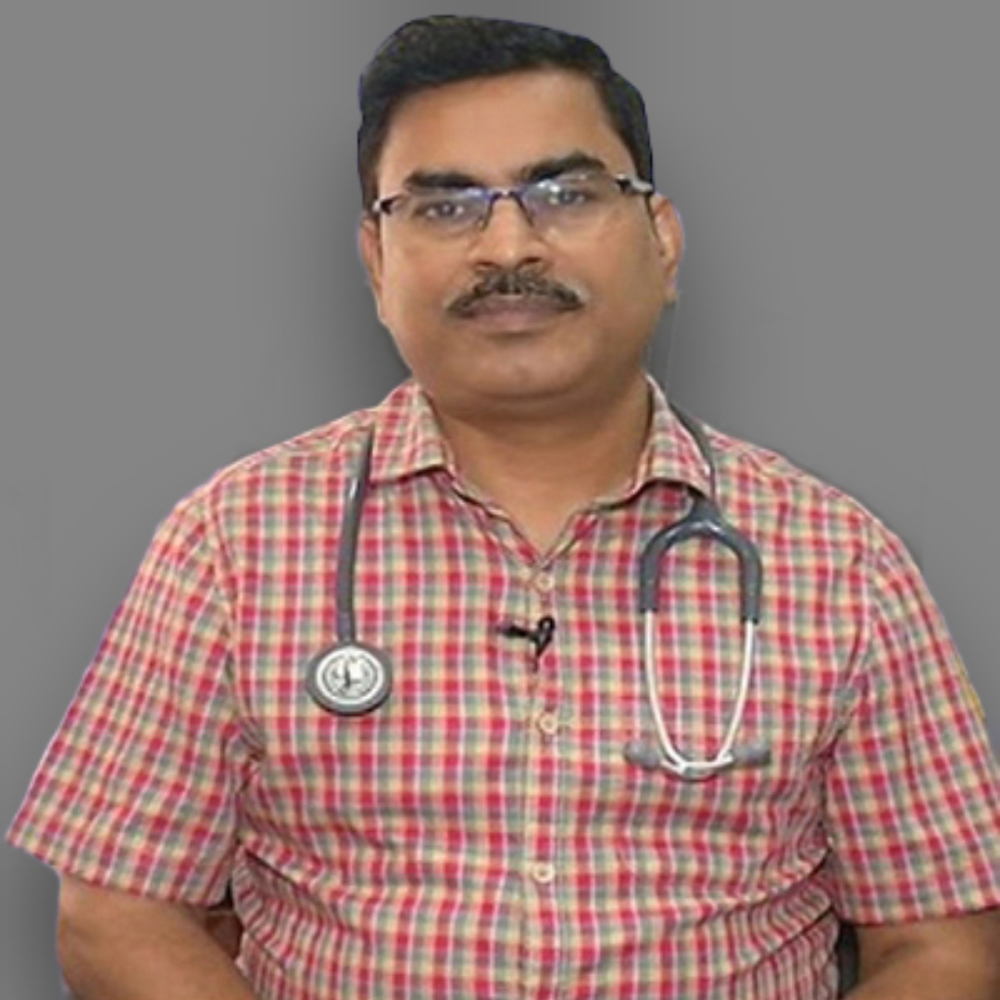
A professional doctor can help patients understand the gastrointenstanial endoscopy and recommend an appropriate treatment and management plan based on their individual condition. Dr. Harish Chandra Mishra approaches each patient with this understanding at the center of his practice.
As a Laparoscopic, Cancer & GI Surgeon, Dr. Mishra focuses on the diagnosis and surgical management of gastrointestinal and liver-related conditions, including complex cases associated with advanced fatty liver disease and its complications. His approach emphasizes accurate evaluation, personalized treatment planning, lifestyle and medical management where appropriate, and surgical intervention when required.
Visit Life Institute of Gastroenterology and Gynecology | Best 24/7 Surgical Hospital
Address :- Potapokhari, Block Chhaka, Naya Bazaar, Kataka, Odisha 753004

